



You probably know at least one older person who always seems to have people around, or at least never seems crushed by loneliness. They are not at a party every night. They are not wildly outgoing. Still, they have a quiet ease with being on their own and being with others.
For a long time, I thought people like that were just lucky. Lucky to have a close family. Lucky to have a long marriage. Lucky to live in the right neighborhood. Then I watched one neighbor in their seventies slowly build a rich social life from almost nothing, after a big move to a new city.
They started with small things. A weekly coffee in the courtyard. A short walk with anyone who said yes. A habit of checking in on one or two people when the weather was bad. It did not look dramatic.
Over time, it became clear. They were not waiting for connection to fall into their lap. They were doing a handful of small, very human things, again and again. It added up to a life that looked pretty “unlonely,” even when they spent time alone.
Psychologists who study aging and social health see the same pattern. It is not about being popular. It is about how you shape your days, your energy and your expectations of yourself and other people. Here are 9 subtle things people who feel less lonely in later life tend to do differently and how you can borrow them at any age.
1. They Make Face-to-Face Time a Priority

People who stay unlonely in later years do not rely only on texts or social media. They treat in-person contact like something that deserves a real spot in the week, not just a “maybe if I am free.” Even one coffee or walk can make a big difference to how connected you feel.
Researchers supported by the National Institutes of Health have found that older adults who have more regular in-person contact tend to report lower levels of loneliness than those who mainly connect by phone or online. You do not need a huge social circle, but regular face time with even one or two people can soften that heavy, isolated feeling. You can read more in this study on social contact and loneliness in later life.
In practice, that might look simple. You might pick a regular day to meet a friend at the same café. Maybe you join a weekly board game night at the library. Maybe you invite a neighbor to share a walk on Tuesdays. The key is a small, repeatable plan, not a grand social life.
Importantly, people who protect face-to-face time also protect their schedule around it. They write it down. They say, “I am busy then,” even if it is “only” lunch with one friend. That sends a quiet signal to your brain that your relationships matter, not just your tasks.
If this feels like a big leap, you can start tiny. Decide that once a week you will see one person in real life, even for 20 minutes. Over a few months, that one habit can start to feel like a lifeline.
2. They Invest Deeply in a Few Close Relationships

People who feel less lonely as they age are often not the ones with the most contacts. They are the ones with a trusted inner circle. That circle might be two lifelong friends, one adult child, or a partner and a neighbor. The number is not the point. The depth is.
They make time for real conversations, not just quick updates. They ask follow-up questions. They remember the things that matter to the other person, like a health scare, a job worry, or a small win. Over years, that builds a sense of “this person really knows me” on both sides.
These people also allow themselves to be known. They share when they are scared, confused, or sad. Not with everyone, but with the few they trust. That mutual honesty is one of the strongest cushions against loneliness, because you no longer feel like you have to hold everything alone.
Of course, close relationships take effort and can be messy. The people who stay unlonely keep showing up anyway. They apologize when needed. They forgive small things. They may take a step back to cool off, but they rarely slam the door shut on everyone at once.
If your close circle feels thin, you can still invest. Pick one relationship that feels safe enough, then try one small upgrade. Call instead of texting. Share something a bit more real than usual. Suggest a regular check-in. Deepening one bond is often more powerful than adding ten new contacts.
3. They Also Chat with Neighbors and Other “Weak Ties”
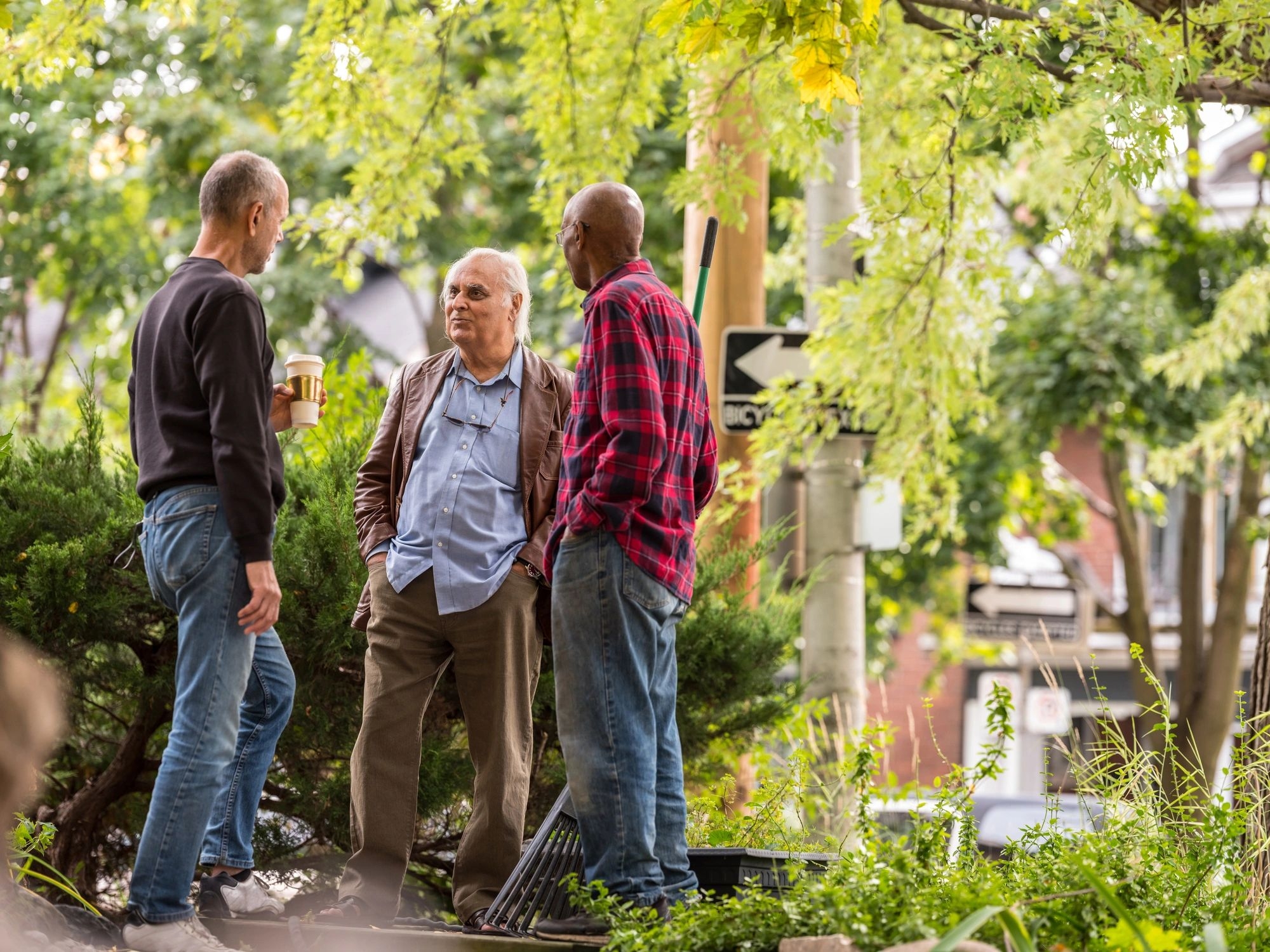
Strong bonds are not the whole picture. People who avoid deep loneliness in later life also nurture what psychologists call “weak ties.” These are the people you are friendly with, but not close to. The barista who knows your order. The neighbor you wave to. The person you see on the same bus every morning.
It might not sound important, but these small, light touchpoints give your day a sense of belonging. You feel like you are part of a living network, not an island. A quick chat about the weather or the local sports team can lift your mood more than you expect.
In many studies, casual interactions are linked with higher happiness and a stronger feeling of community. You do not have to become best friends with everyone on your street. You just say hello, make eye contact and let yourself enjoy those brief sparks of connection.
To build more of these, you can start where you already are. Say “morning” when you pass someone walking their dog. Ask the cashier how their day is going. Mention the flowers in a neighbor’s yard. People who resist loneliness tend to do these things naturally, but you can choose to do them on purpose.
Over time, these weak ties can turn into medium or even strong ties. Even if they do not, they still add color and warmth to your daily life, which can reduce that sense of empty space around you.
4. They Follow Simple Weekly Social Routines

A big secret of unlonely older adults is routine. Instead of waiting to “feel social,” they build small, predictable social habits into their week. This takes some of the pressure off, especially if you are shy or tired. The plan is already there. You just show up.
These routines can be very low-key. A Saturday morning market walk with a neighbor. Calling a sibling every Sunday evening. Attending the same fitness class each Monday. Volunteering at a local food bank on the first Thursday of the month. None of these are glamorous, but together they form a sturdy net under you.
Routine also helps when life gets stressful. When health issues, money worries, or family problems show up, your social life does not vanish completely, because some of it runs on habit. You still have that weekly group, that class, that call. That steadiness is a quiet form of emotional protection.
Interestingly, these routines often work best when they are not too flexible. People who stay connected will say, “I always go on Wednesdays,” instead of “I might go if I feel like it.” Treating a social routine like an appointment makes it easier to keep and friends learn they can count on seeing you there.
If your calendar feels blank, you can start with one repeatable thing. Choose a time and place that are realistic for your energy. Stick to it for a month, even if you feel awkward. Over time, your brain begins to expect this social touchpoint and it feels more natural.
5. They Look for Chances to Be Helpful
People who feel less lonely in their later years rarely see themselves only as someone who needs help. They also see themselves as someone who can give. They look for small ways to be useful and that helps them feel more connected and alive.
This does not have to be formal volunteering, although that is great if it fits your life. It can be checking on a neighbor during a storm. Offering to watch a friend’s pet. Bringing an extra snack to share at a club meeting. Sending a “thinking of you” message when someone is going through a hard time.
Being helpful gives you a sense of purpose. It reminds you that you still have skills, time, or kindness that other people value. That can soften the sting of feeling left out. Instead of thinking “no one needs me,” you start to notice how much your small actions actually matter.
There is another benefit. Helping often leads to more contact. When you offer support, people remember it. They are more likely to reach out to you later, invite you to things, or accept your help again. So your acts of kindness quietly plant seeds for future connection.
If you are not sure where to start, pick one thing you already do well, like cooking, tech help, or listening and offer it in a small, concrete way. Even one act of everyday generosity a week can shift how linked-in you feel.
6. They Protect Themselves from Draining Interactions
Staying unlonely is not only about adding people. It is also about choosing where your energy goes. People who feel steady and connected in later life tend to protect themselves from relationships that are hostile, belittling, or constantly stressful.
They do not expect every interaction to be perfect and they know no relationship is easy all the time. Still, they notice patterns. If someone always leaves them feeling smaller or more exhausted, they start to pull back. They limit how often they see that person, or how long they stay.
Healthy older adults also set gentle boundaries. They might say, “I do not want to talk about politics right now,” or “I need to go home and rest soon.” These simple phrases help them stay present in a conversation without pushing themselves past their limits.
By guarding their energy, they have more room for nourishing connections. When you are not constantly recovering from draining encounters, it is easier to notice and enjoy the relationships that do bring you comfort, humor and care.
If this feels hard, you can start by paying attention. After you see or call someone, ask yourself, “Do I feel lighter or heavier?” Over several weeks, you will see patterns. You can then make tiny adjustments, like shortening one visit, or skipping one call and seeing how that affects your mood.
7. They Stay Curious and Keep Trying New Things
One powerful trait shows up again and again in people who age with less loneliness. They stay curious. They do not decide that life is “over” socially at a certain age. Instead, they keep trying new activities, new hobbies and sometimes even new versions of themselves.
That might look like joining a beginner’s painting class, even if they have never drawn before. Or taking a short online course and joining the study group. Or checking out a local walking club, book club, or gardening workshop. Curiosity gives them a reason to leave the house and a topic to talk about with others.
When you are curious, you also become more interesting to other people. You have stories, questions and ideas that are not only about your aches or your past. People sense that your mind is open. This can attract both younger and older friends, which often makes life richer.
Still, you do not need to be constantly busy. Some of the most meaningful changes come from small, gentle experiments. Attending one community event a month. Trying a new park. Joining a short-term project. Each step expands your world a bit and reduces that stuck, closed-in feeling that feeds loneliness.
It is normal to feel nervous before trying something new, especially later in life. The people who stay unlonely feel that same nervousness, but they move with it instead of waiting for it to disappear. Over time, their confidence grows and so does their network.
8. They Join Groups That Give Them a Sense of Purpose
Beyond casual chats and activities, many unlonely older adults are part of at least one group that feels meaningful to them. This could be a faith community, a choir, a walking group, a political club, a crafting circle, or a volunteer team. The details vary, but the effect is similar. They feel part of something bigger than themselves.
These groups often give structure to the week, but they also give an identity. You are not just “someone who is alone at home.” You are a singer. A mentor. A gardener. A regular at the community center. That identity can be very protective for your mental health and sense of belonging.
Groups that share a purpose also create natural chances to bond. You are working on the same project, learning the same song, or walking the same trail. You have built-in talking points and you see the same faces again and again, so friendships have time to form gradually.
Importantly, the most helpful groups are usually ones where you can contribute, not only receive. When you bring snacks, help set up chairs, or share your experience, you move from “guest” to member. That shift can make your connection to the group feel much stronger.
If you are not sure what kind of group would feel meaningful, think about what you wish the world had more of. Kindness. Climate action. Art. Local history. Then look for a group, even a small one, that nudges life a little in that direction. Showing up there regularly can slowly rewrite your story of who you are.
And if no group fits, you can start tiny. Invite two people to a monthly tea, a shared walk, or a puzzle afternoon. It does not need a name to give you a sense of shared purpose.
9. They Treat Loneliness as a Signal, Not a Personal Failure

Perhaps the most subtle difference of all is how unlonely people think about loneliness itself. They do not see it as proof that they are broken or unlovable. They see it as a normal human signal, like hunger or thirst, that something needs attention.
When they feel lonely, they try not to spiral into shame. Instead, they ask simple questions. “Have I seen anyone face to face this week?” “Have I been spending too much time with people who drain me?” “Is there one small reach-out I could try today?” This turns loneliness into a cue for gentle action, not harsh self-judgment.
They also understand that feeling lonely does not always mean you are literally alone. You can sit in a room full of people and still feel unseen. So they look for ways to be more real in their interactions and to seek out spaces where they feel safe being themselves.
Over years, this mindset builds resilience. When life changes, like retirement, moves, or losses, stir up loneliness, they are less likely to give up. They may feel the ache very strongly, but they also trust that it can shift, especially if they keep taking small steps toward connection.
If you tend to judge yourself for feeling lonely, it can help to pause and remind yourself that your brain is wired for connection at every age. Wanting more of it simply means you are human. From there, you can choose one of the habits in this article to try and give yourself credit for every tiny move you make toward others.