

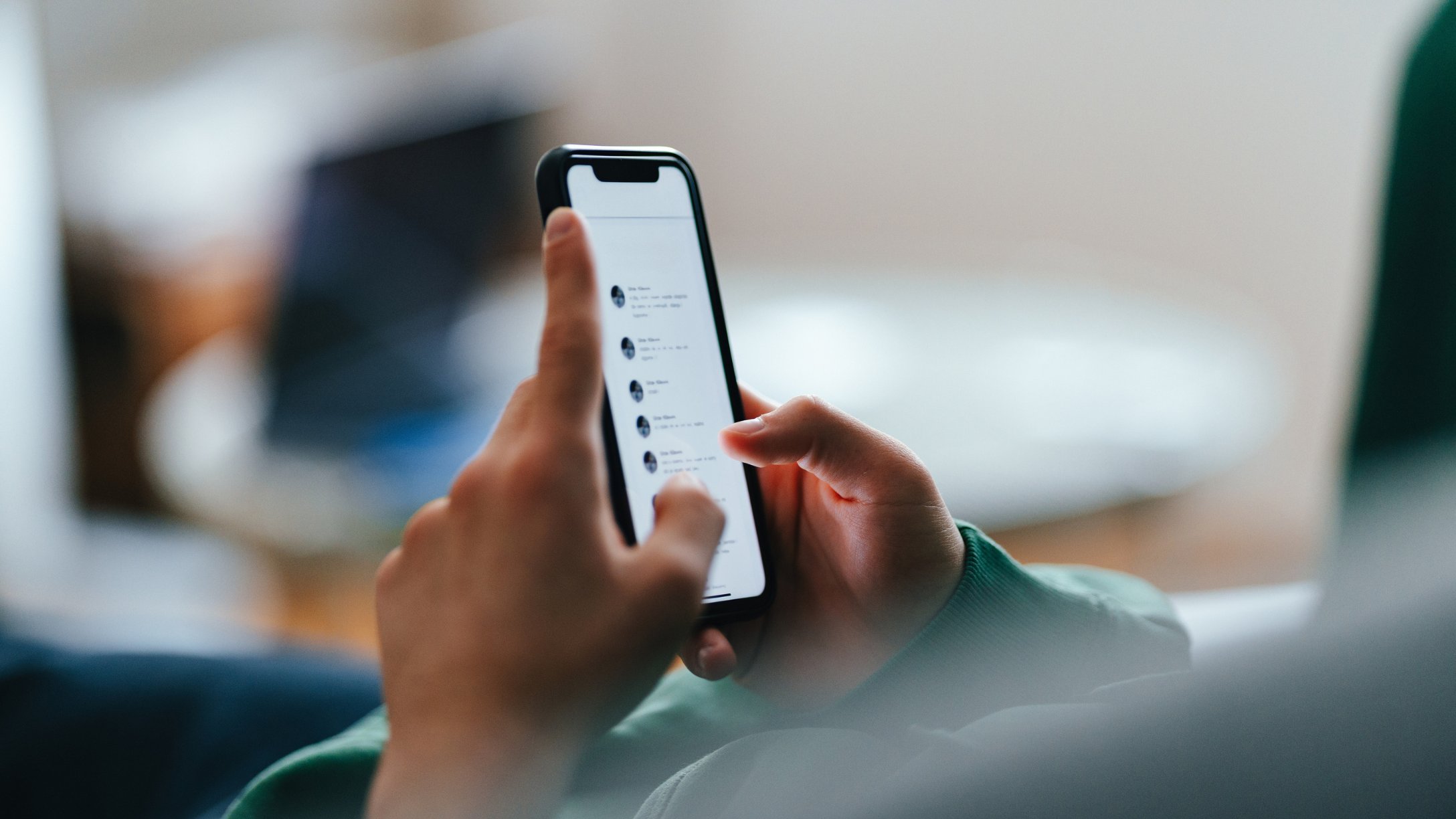
I remember one evening when I picked up my phone for what felt like a tiny break. I was waiting for water to boil. That was the whole reason. The next thing I knew, the kitchen had gone quiet, the water was gone and I had somehow traveled through strangers’ vacations, a debate about protein powder and three videos of people reorganizing drawers.
I laughed at myself at first. Then I felt that familiar little drop in my chest. I had spent all that time around people’s thoughts, faces, jokes and updates, yet I felt oddly alone. The room was the same. My energy was different. That contrast stayed with me.
Over time, I started noticing how often this happened. A quick glance turned into a stretch of lost time. A few likes could lift my mood for a minute. A quiet post could sit in my mind longer than I wanted to admit. I could feel my attention leaning toward the feed before I had even made a conscious choice.
The thing is, social media often borrows the shape of connection. You see faces. You read emotions. You get small bursts of response. Your brain can read that as social activity, even when your deeper need for warmth, presence and real exchange stays partly unmet. That is why scrolling can feel full in the moment and empty afterward.
Once I saw that pattern, I stopped framing it as a simple self-control issue. I started seeing a reward loop. Tiny cues pulled me in. Small social signals kept me there. The whole experience felt interactive, personal and alive. Yet the emotional payoff often faded quickly, which made it easy to go back for more.
1. You Open the App on Autopilot
I noticed this one in the middle of ordinary moments. I would unlock my phone to check the weather, then somehow land inside an app before I even remembered what I meant to do. My thumb seemed to know the route better than my mind did. That startled me, because it felt so smooth and so fast.
Psychologists often talk about cues and routines. A cue can be boredom, stress, silence, or the tiny pause between tasks. The routine becomes opening the app. The reward is immediate stimulation, social novelty, or the chance of seeing something that makes you feel included. A PubMed study on social media engagement points to reward learning as part of the process, which helps explain why the behavior can start to run with very little conscious effort.
Sometimes the cue is so small you barely notice it. A meeting ends. You stand in line. You feel a dip in energy. Your hand moves. That is how a habit becomes an autopilot reach. It fits neatly into empty seconds, so it rarely announces itself in a dramatic way.
My friend once told me, “I don’t even decide anymore. I just appear there.” I knew exactly what that meant. These loops can become part of the body’s rhythm. You are between things and the app steps in to fill the gap.
If this sign feels familiar, it helps to simply notice the cue with honesty. The educational takeaway here is simple. Repetition teaches the brain what to do next. When a behavior gets linked to many tiny pauses in your day, it starts showing up automatically. Awareness gives you back a little space before the tap.
2. A Quick Check Turns Into a Long Scroll
There was a time when I truly believed I could check one thing and leave. I would tell myself I was going in for a message, a headline, or one video. Ten minutes later, I was deep in a chain of content that had very little to do with why I opened the app in the first place. But boy, was I wrong about how brief that visit would be.
This happens because many platforms are built around frictionless continuation. One post leads to another. A new item appears before your attention fully closes on the last one. Your brain stays engaged because it keeps expecting a fresh payoff. That creates a time slip feeling. You stay because the next piece might be funnier, warmer, more useful, or more exciting.
I once sat down for what I thought was a two-minute breather after a long task. When I looked up, the light in the room had changed. That detail still sticks with me. It felt like time had moved behind my back while I was busy consuming little bursts of other people’s lives.
Another reason this sign matters is emotional pacing. A feed gives you novelty at high speed. Your attention gets trained to expect rapid change. That can make stopping feel oddly hard, because stillness starts to feel flat compared with the constant stream of fresh material.
When you keep telling yourself it will be one minute and it keeps becoming twenty, that pattern is offering useful information. Your intention is short. The platform experience is long. In practical terms, that gap shows how quickly reward-based design can stretch your sense of time.
3. Likes Start Shaping What You Post
I admit this one took me longer to recognize. I like to think of myself as someone who shares what feels real. Then one day I deleted a caption because it felt too plain and rewrote it in a way that I knew would probably get a warmer reaction. It was a small moment, yet it showed me how easily outside feedback can slip into the creative process.
Likes, comments and views work as social rewards. They can make you feel seen. They can also teach you which version of yourself gets the best response. Over time, that can shape what you post, how often you post and even what parts of your life feel worth sharing.
Years ago, I posted something simple and personal that meant a lot to me. It barely landed. A lighter post after that got a big reaction. I could feel my brain filing away the lesson. Without saying it out loud, I had started learning what performed well.
That learning process matters because it can shift your attention from expression to approval. You may begin thinking ahead to audience reaction before you even enjoy the moment itself. The result can feel subtle. You are still posting as you. Yet the version of you that gets selected may become narrower and more polished.
This sign does not mean you are shallow. It means social feedback is powerful. Humans are wired to care about response from other humans. In digital spaces, those signals are counted and displayed, which makes them especially easy to track and especially hard to ignore.
4. Silence After Posting Feels Bigger Than It Should
I remember sharing something I felt good about, then checking back sooner than I wanted to admit. A few minutes passed. Then a few more. Nothing happened. The quiet started feeling strangely loud, as if the silence itself had something to say about me.
That reaction can feel confusing, because one post should not carry that much emotional weight. Yet online platforms make response visible and measurable. When engagement is immediate, silence can take on a meaning your mind fills in quickly. It can feel like disinterest, distance, or social cooling, even when many other explanations exist.
The thing is, humans are sensitive to feedback. In everyday life, you can hear tone, see facial expression and sense context. Online, you often get numbers or nothing. That leaves a lot of room for interpretation. A quiet pressure builds in that empty space.
My friend once sent me a thoughtful message after seeing one of my posts. It arrived hours later. By then, I had already told myself a small story about being overlooked. That moment reminded me how fast the mind can turn silence into a verdict.
Educationally, this sign shows how digital cues can magnify uncertainty. The brain likes closure. When you post and wait, your attention stays hooked on the unresolved outcome. That anticipation can keep you checking, wondering and assigning meaning where there may only be timing.
When silence feels larger than the post itself, it often points to how much emotional significance has gathered around online response. That is useful to notice. It shows where your sense of being seen may have started leaning too heavily on the feed.
5. You Keep Refreshing for One More Reward
I have caught myself doing this with almost comic precision. Open app. Refresh. Look. Close it. Open it again a minute later. Refresh. It can happen even when I know very well that the odds of something deeply life-changing appearing in that tiny window are low.
This is where the loop becomes especially sticky. Intermittent rewards are powerful. When the payoff comes sometimes and you cannot fully predict when, your attention stays engaged. That uncertain pattern can be more gripping than a steady one. You keep returning for the tiny payoff that might arrive on the next pull.
One afternoon I was waiting for a reply from someone I care about. Every new alert made my heart jump a little. Most of them had nothing to do with that conversation. Still, I kept checking. I was chasing possibility more than information.
Refresh behavior also creates its own emotional tempo. You get a brief lift from expecting something, then a small drop when the moment passes. That up and down rhythm can make you feel restless. The mind starts looking for the next quick rise.
From a psychology angle, this matters because anticipation itself can be rewarding. You are not only responding to what appears. You are also responding to the chance that something good could appear. That chance keeps attention alive.
If you recognize yourself here, the useful insight is that repeated checking often grows from uncertainty plus reward. That combination can turn a small digital behavior into a recurring habit that fills more mental space than you intended.
6. Real Conversations Start to Feel Slower
It took me a long time to realize that my patience had changed. A real conversation began to feel demanding in ways that never used to bother me. There were pauses, repetitions, side stories and moments where nothing especially entertaining happened. My attention had quietly gotten used to faster rewards.
Face-to-face connection moves at a slower human pace. People think before they speak. Emotions unfold in layers. A meaningful exchange can wander before it lands somewhere honest. When your brain spends hours with rapid-fire content, that natural pace can start feeling harder to settle into.
I saw this clearly during coffee with a friend. They were telling me something important. Part of me cared deeply. Another part kept expecting the rhythm of a feed, a new hit every few seconds. I hated that split in my attention, because it showed me how much the medium had shaped my tolerance for real-life tempo.
Sometimes readers think this means they have become less social. A better reading is that attention adapts to environment. Fast, varied input trains one style of focus. Human conversation asks for another. The mismatch can make ordinary connection feel less stimulating at first.
There is also a subtle emotional cost here. Real conversations often deliver warmth, repair, humor and trust, yet they ask you to stay present long enough to receive those benefits. Scrolling offers speed and variety. Deep connection asks for time.
When conversations feel slower, that sign is worth treating with care. It can reveal that your attention has been tuned to instant shifts, while the deeper parts of social life still need steadier presence to fully register.
7. Your Mood Rises and Falls With the Feed
I remember waking up in a decent mood, then feeling oddly flat before breakfast because of a few minutes online. Nothing dramatic had happened. I had just absorbed a mix of polished photos, strong opinions, exciting updates and a few things that poked at my insecurity. My emotional weather had changed before the day even started.
The feed can influence mood quickly because it delivers social comparison, novelty, validation, outrage, humor and exclusion in one stream. Your nervous system responds to all of that. A kind comment can lift you. A cold silence can sting. A beautiful image can inspire you or make you feel behind.
My friend once said scrolling felt like “borrowing everyone else’s energy.” I think about that line a lot. Some days the borrowed energy feels exciting. Other days it leaves you drained, agitated, or oddly small.
Psychologically, this sign points to mood outsourcing. Your inner state starts leaning on external digital cues that change by the minute. That can make your emotional life feel less steady, because the source of the shift is constantly moving.
There is also the issue of compression. In one short session you may see celebration, tragedy, envy, humor, conflict, beauty and self-promotion. That is a lot for the mind to process. Even when each piece is small, the pileup can affect how you feel in your own body.
8. You Leave the App Feeling Less Connected
This is the part that finally made the whole pattern click for me. I could spend a long time around people’s content and still come away hungry for actual warmth. I had consumed a lot of social material. I had not always experienced much genuine closeness.
Scrolling can create the feeling of company because you are surrounded by voices, faces, jokes and personal moments. That can soothe loneliness for a while. Yet deeper connection often depends on mutual attention, shared context and emotional exchange. Those ingredients are thinner in many feed-based experiences.
I once finished a long scroll session and looked around my room with a strange sense of distance. I knew more about people I had not spoken to than about what I was actually feeling. That was a hard little truth to sit with.
A lot of people recognize this as a connection gap. You are near signals of social life, yet your need for being known may still be waiting. The app gives you updates. It may give you laughter. It can even give you comfort. But the emotional aftertaste can remain light.
From an educational point of view, this sign matters because the brain can treat social cues as meaningful inputs while your heart still wants richer forms of contact. That mismatch helps explain why a session can feel engaging in the moment and unsatisfying once it ends.
When you leave the app less connected, the useful question is simple. Did this experience leave you feeling more seen, more grounded and more in touch with others, or did it mainly keep your attention occupied? That answer can reveal a lot.
9. You Promise to Stop, Then Reach for It Again
I have had this conversation with myself more times than I can count. Just one more minute. After this post. After this reply. After this refresh. The promise feels sincere each time. Then a few moments later, my hand is back on the phone.
This pattern often reflects a habit loop that has become deeply rehearsed. Cue, action, reward. Repeat that enough times and the sequence grows easier to trigger. Your intention still exists, yet it has to compete with a behavior the brain has practiced many times.
There was an evening when I put my phone in another room, felt proud of myself, then walked in to “check one thing” and stayed there far longer than planned. I laughed because the move was so transparent. I also felt humbled. Awareness helps and repetition still carries a lot of force.
Sometimes people interpret this cycle as proof of weak character. A more useful frame is learned behavior under strong reinforcement. Digital environments are very good at inviting return. They use novelty, social reward, unpredictability and endless availability. Those features make reaching again feel natural.
The hopeful part is that patterns become visible before they become changeable. Once you can name the pull, you can study it with more honesty. You can notice when it peaks, what emotion tends to come before it and what kind of reward you expect from it.
I still catch myself in this loop sometimes. The difference now is that I understand what I’m looking at. And that understanding matters. It turns a vague sense of being pulled around into something clearer, kinder and more workable.