


I used to think making the bed was pointless. You just mess it up again at night, so why bother. Most mornings I would rush past the crumpled sheets, grab my bag and head out the door.
On those days my room looked how my brain felt. Scattered. A little chaotic. Like the day had started before I was ready for it.
Then, almost as a joke, I decided to try a simple rule. Bed first, phone second. No scrolling until the blanket was pulled tight and the pillows were in place. It took less than a minute, which surprised me, because I had built it up in my head as this long, boring chore.
What surprised me even more was how that tiny act shifted my mood. The room felt calmer. I felt a little more in charge. Nothing huge, just a quiet click into place, as if I had already kept one promise to myself before 8 a.m.
If you are someone who makes your bed every morning, you might have noticed a similar feeling. You are not just straightening sheets. You are building subtle strengths that can show up in how you work, care for others and handle stress.
Let’s look at what those strengths might be and why this small habit says more about you than you think.
1. You follow through on what you start
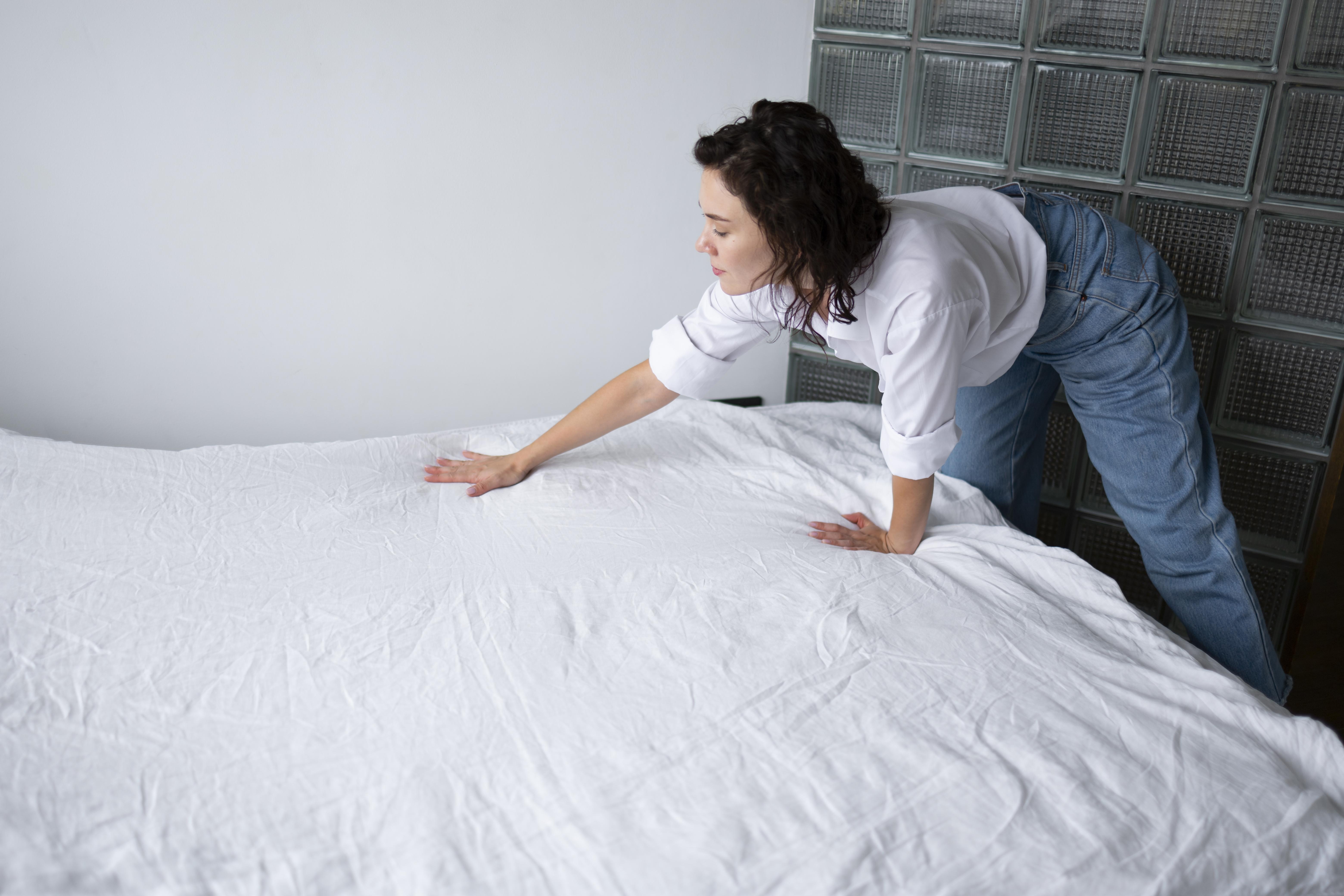
Every time you make your bed, you finish a tiny project from start to end. You pull up the sheet, smooth the blanket, fluff the pillows. It is simple, but you still see it through. Over time you train your brain to expect follow-through, not half-done tasks.
Think about how that shows up in the rest of your life. You are more likely to answer that email, return that library book, or finish the last 10 percent of a work project. You are used to closing loops instead of leaving them open.
Often, people underestimate how much small daily actions shape identity. When you act like someone who completes things, you quietly start to believe you are that kind of person. That belief makes it easier to tackle bigger goals that used to feel out of reach.
On days when motivation is low, this tiny habit can act as a reminder. You may not get everything done, but you did start the day by finishing one clear task. That can give you a nudge to take the next small step, then the next.
It also separates you from the idea that progress has to be dramatic. You know that small daily promises kept over and over are powerful, even if nobody else sees them.
In short, your made bed is proof that you can start something and actually complete it, even when no one is watching.
2. You create calm in small ways

Walk into a room with a messy bed and your eyes go straight to it. It can feel like visual noise. When the bed is neat, the room instantly feels calmer, even if nothing else has changed. You are creating a tiny pocket of order in a busy world.
Researchers sometimes talk about how surroundings can influence stress and focus. Clutter can make it harder for your brain to relax. By keeping your bed tidy, you remove one source of that low-level mental buzz. You reduce what some people call emotional clutter.
Even if the rest of your day is full of demands, you know there is one calm corner waiting for you. That matters more than it seems. It can be the difference between coming home to a space that adds stress and a space that gently takes it away.
Sometimes the only control you have is over small things. Lining up the pillows. Straightening the blanket. Opening the curtains for a bit of light. These small actions send the message that you are not helpless. You can shape your environment, even in modest ways.
Over time this can change how you respond to chaos. Instead of thinking, “Everything is a mess, why try,” you think, “I can make a little order right here.” That mindset can ripple out into how you handle work, relationships and big life changes.
3. You handle daily stress with more control
People who make their bed every morning often have a higher sense of control over daily life. Not because the bed itself does magic, but because the habit reflects qualities like planning and consistency. Research on the conscientiousness research personality trait shows it is linked with better coping and lower stress over time.
When you start your day with one predictable action, you create a small anchor. No matter what happens next, you already did something stable and familiar. That can steady you when plans change or problems pop up.
Think about a hectic morning. Maybe you spill coffee, get a stressful message, or run into traffic. If your bed is a pile of blankets, the whole scene can feel extra chaotic. If it is made, you at least have one thing that feels in place. Your room mirrors the kind of day you want to have, not the kind you fear.
Another quiet strength here is your ability to pause. Making the bed forces you to slow down for a moment. You are not grabbing your phone or reacting to something. You are doing a simple task at your own pace. That pause can act like a tiny reset button for your nervous system.
Over time, this habit can support a wider sense of control. You know you can influence how your day feels, even in subtle ways. This makes stress feel less like something that crushes you and more like something you can move through.
It is not about perfection. It is about giving yourself one small, steady place to stand when life feels unstable.
4. You stay organized without making a big deal of it
Some people think of “organized” as color-coded planners and labeled containers. For you, it might be much simpler. You make your bed, you know where your keys are, you put clothes in a hamper instead of the floor. You are quietly building everyday structure without a lot of fuss.
Often, the bed is the largest object in the room. When it is tidy, everything around it tends to fall in line. You might find it easier to put books back on the shelf or toss trash in the bin. The made bed becomes the standard the rest of the room starts to match.
What is interesting is that you are doing this naturally. You are not giving long speeches about routines. You are just living them. The people around you may notice that things tend to run a little smoother when you are involved, even if they cannot point to exactly why.
At work or school, this same habit can show up in small but important ways. You are the one who remembers the deadline, who writes things down, who tidies up the shared space when you leave. Your bed habit has trained your brain to look for order and create it.
There is also a quiet respect in how you care for your things. You do not have to be fancy or obsessed with cleaning. You simply treat your space as something that matters. That is a kind of quiet self-discipline that many people overlook in themselves.
5. You respect your future self

Every morning when you make your bed, you are doing a favor for the future you who will walk back into that room later. You are saying, “I care about how you will feel tonight.” That might sound small, but it is actually a big shift in how you relate to yourself.
Imagine the difference between coming home to a tangled pile of sheets and walking into a room where the bed is made and ready. One scene adds a tiny weight to your shoulders. The other quietly lifts it. You gave your future self an easy win after a long day.
Respecting your future self shows up in many areas of life. It is saving a bit of money, packing lunch, or setting out clothes at night. Your bed habit is one more way you practice that skill. You are building a pattern of kindness toward the person you will be in a few hours or a few years.
This respect also helps with choices in the moment. When you are tempted to leave things for “later,” you might remember that later you is still you. You know how frustrating it feels to walk into a mess, so you take the extra minute now. That is a sign of real maturity.
Most people focus on how they treat others. That matters. But how you treat yourself in these small, private ways matters too. Making your bed is a daily reminder that you deserve a space that feels cared for, even if no one else will see it.
6. You bring steady energy to your mornings
How you start your day often shapes how you move through it. When your first actions are calm and intentional, your energy tends to follow. By making your bed, you give your morning a clear starting line instead of a scattered stumble.
For many people, mornings are a blur of alarms, quick messages and rushing. You have quietly built in a different rhythm. There is a short, predictable moment when you stand still, pull the blanket up and smooth it out. This creates a pocket of steady energy before the rush begins.
Think about what that tells your brain. You are not just reacting to the day. You are taking one simple action on purpose. That sense of intention can carry into the next choice. Maybe you drink some water, open a window, or write down a priority. One grounded action invites another.
Also, a made bed can act as a boundary. It can keep you from crawling back under the covers when you are trying to build better habits. There is a mental difference between “I just rolled out” and “My day has started.” Your neat bed becomes a visual line you have already crossed.
Over time, these mornings add up. You may find that you feel a little more awake, a little more ready and a little more confident facing what is ahead. You have already created one small win and those wins are not only about tasks. They are about how you feel in your own skin.
7. You turn tiny habits into real momentum
The most powerful thing about your bed habit is not the bed itself. It is what it says about your relationship with habits in general. You understand that a micro habit can spark bigger change, even if the action looks small from the outside.
Once you prove to yourself that you can keep one simple habit, it becomes easier to stack others. Make the bed, drink water, stretch for one minute. None of these take much time on their own. Together, they create a chain of tiny wins that boosts your confidence.
Psychologists often talk about how repeated actions shape identity. When you keep a habit day after day, you stop thinking, “I am trying to be more organized.” You start thinking, “I am someone who cares for my space.” That shift can unlock a lot of other changes, because your actions now match a deeper story you believe about yourself.
You also know that progress does not have to be loud to be real. There is no applause for a neatly made bed. No one is handing out awards. Yet you show up and do it anyway. That willingness to work without instant rewards is one of the strongest predictors of long term growth.
In the long run, these are compounding habits. Like interest on savings, their impact grows over time. A calmer room leads to a clearer mind. A clearer mind leads to better choices. Better choices lead to a life that feels a little more yours each day.
So if you make your bed every morning, do not brush it off as “nothing.” It is a visible sign of the quiet strength you already have and a hint of everything else you are capable of building from here.