


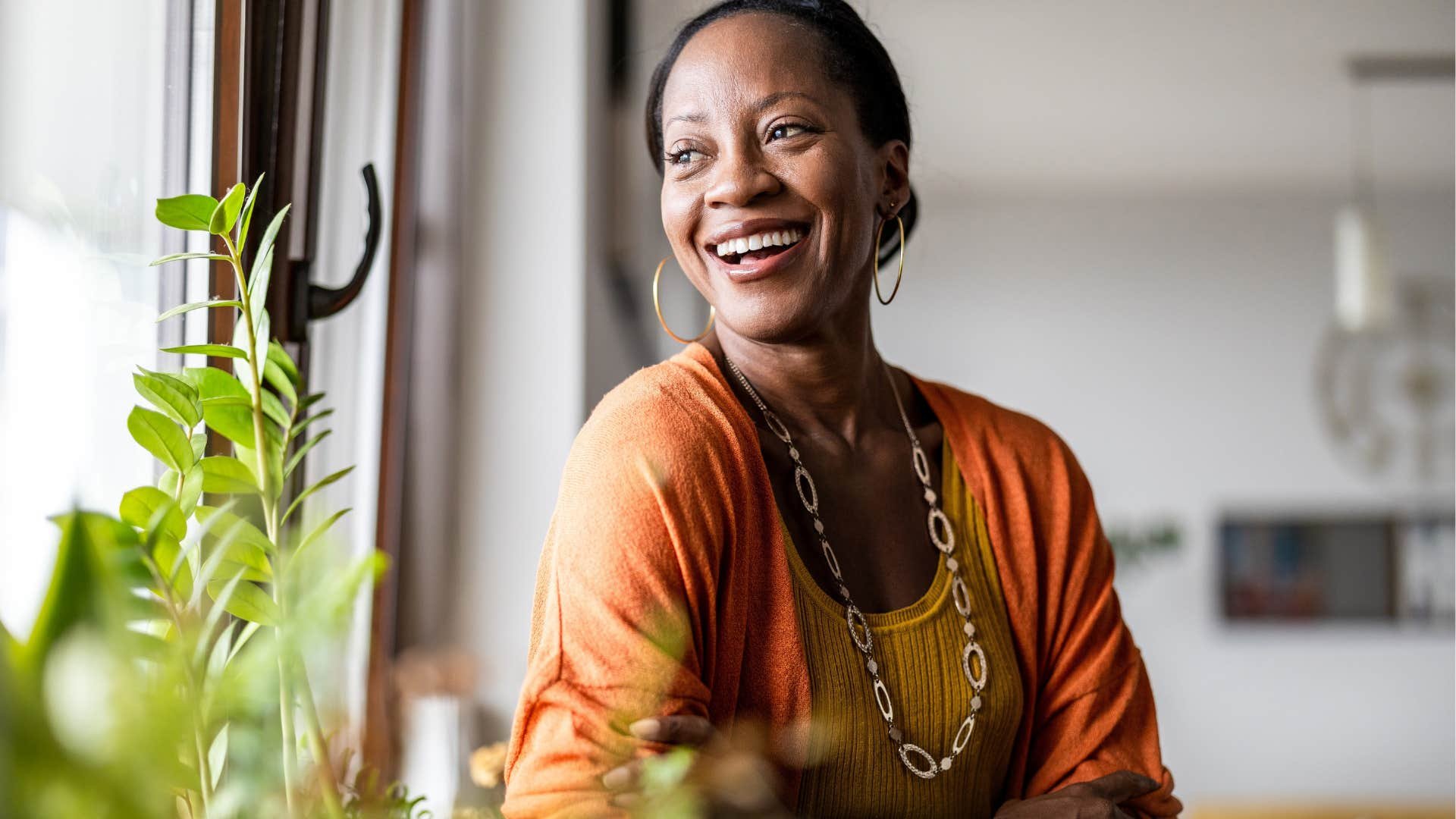
This as-told-to essay was submitted by Irene K. to Cottonwood Psychology and edited for length and clarity.
I remember the exact sentence, because it startled me as it left my mouth. I was standing in line at a Starbucks in Naperville, Illinois, waiting for a plain coffee and the barista asked if I wanted to try the seasonal drink. I smiled and said, “Maybe after I’m done with everything.” I meant it like a joke. It landed like a diagnosis.
It was late October, the kind of Midwestern day where the sun shows up, but it feels like it’s already thinking about leaving. I had my “responsible” errands stacked up in my head like laundry baskets. Pick up allergy meds at Walgreens. Text my daughter about Thanksgiving plans. Call the mortgage company because the escrow line made no sense again.
On the drive home, I kept repeating that sentence. After I’m done with everything. I was 64. I had already done a lot of “everything.” I raised kids. I kept a marriage afloat through job changes, grief and plain old fatigue. I paid bills, packed lunches, helped with math homework and kept a tiny garden alive behind our split-level.
If you’re a person who gets things done, you know how easy it is to start treating life like a checklist. You tell yourself you’ll breathe when the list gets shorter. Then you look up and the list has children of its own. New lists. New obligations. New reasons to wait.
That week, I started noticing how many of my sentences began with “after.” After the mortgage. After the kids graduate. After retirement. After I lose the weight. After we finally fix the deck. I had built a whole future home in my head and I kept moving the address.
I’ll be honest, I didn’t feel dramatic. I felt practical. That was the problem. I had turned practicality into a lifestyle and it left very little space for joy that wasn’t earned, scheduled and approved.
1. The moment I heard myself say, “After I’m done with everything”
Two days after the Starbucks moment, I met my friend David for soup at Panera Bread. David has been my friend since we worked together at a community college outside Chicago. He has the kind of calm face that makes you confess things without planning to. I told him about my sentence and he laughed, then went quiet.
“Irene,” he said, “what would ‘done with everything’ even look like?” The thing is, I had no picture. I only had a feeling, a vague sense that life would someday become lighter and I would finally have permission to enjoy it.
When you live for permission, you start collecting invisible hall passes. You give yourself one for finishing the kitchen remodel. One for surviving the busy season at work. One for getting the kids settled. The rules feel sensible in the moment, because they are built out of real responsibilities. Over time, the rules take over your calendar and your body starts to treat rest like a reward.
I drove home past neighborhoods where the porch lights came on early. I watched a woman walking her dog, unhurried, as if she had nowhere to “get to” before she could exist. That image stayed with me all evening, because it felt like an emotional language I used to speak.
Years ago, I used to paint. Nothing fancy, just acrylics on cheap canvases from Michaels. I painted lake scenes after visiting Madison, Wisconsin and street scenes after a weekend in Milwaukee. That night, I realized how long it had been since I had picked up a brush. I told myself I would paint again after things settled down. Apparently, things never settled down.
So I wrote the sentence on a sticky note and put it on the fridge: After I’m done with everything. Not as a punchline, as a mirror.
2. How the mortgage became my measuring stick for “real life”
There was a time when the mortgage felt like a finish line. My husband, Mark and I bought our house in the late 1980s, when everything felt big and fragile at the same time. We were proud and scared. We kept the closing paperwork in a manila folder like it was a newborn.
Over the years, the house turned into a scoreboard. Every payment was proof we were doing adulthood “right.” I could feel my shoulders relax each month when the automatic draft went through. If you’ve ever tied your sense of safety to a number, you know how soothing it is and how sneaky it can become.
The psychology piece here is simple, even if it feels personal. The brain loves concrete markers. A mortgage balance is concrete. So is a retirement account, a college acceptance letter, a paid-off car. These markers give you a clear signal that you’re moving forward. The tricky part is when your worth starts riding on milestones.
I remember standing in Home Depot in Aurora, staring at paint samples, telling myself we would choose the “good” color after the mortgage was lower. Why did that make sense to me? It was a tiny example of a bigger habit. I treated enjoyment like an upgrade package and I stayed in the basic model.
Mark and I are steady people. We rarely fought about money. We fought about time. He wanted to take weekend trips. I wanted to “use the weekend to catch up.” That phrase, catch up, became my religion. I chased it for decades and I rarely caught it.
When the mortgage finally got close to paid off, I expected a wave of freedom. Instead, I felt a weird emptiness, like I had spent years climbing a ladder and found a second ladder waiting at the top.
3. The “after” list that kept growing, even when I kept delivering
I admit I was proud of being dependable. I liked being the person who remembered birthdays, who brought the side dish, who showed up early. In our family, I was the glue. In my mind, glue does not take naps.
My “after” list lived in my planner. After the kids’ braces are done. After my son finishes grad school. After Mom’s health stabilizes. After the new supervisor learns the job. I kept delivering. The list kept growing, like it was being fed behind my back.
In everyday psychology, this can look like a pattern of delayed gratification that never ends. Delayed gratification is useful. It helps you save money, finish degrees, keep commitments. It also needs an endpoint. Your nervous system needs moments where it gets to exhale and say, “We’re safe and we’re here.” Without those moments, you can start living in a low-grade sprint.
I remember sitting in my car outside Trader Joe’s, hands on the steering wheel, feeling tired in a way that did not match my day. Nothing tragic had happened. I just felt over-managed. The kind of tired that comes from constantly tracking what’s next.
My daughter called while I was unloading groceries. She said, “Mom, you sound far away.” I told her I was fine. Then I heard myself add, “It’s just a busy season.” I had been using “busy season” as a description for twenty years.
That night I made a list of everything I was waiting for. Then I made a second list of what I missed. Painting. Walking by the river in downtown Geneva. Listening to music in the kitchen without multitasking. Small pleasures I kept postponing had piled up into a quiet sadness.
4. The day my calendar looked full and my life felt thin
My calendar was gorgeous. Color-coded. Reminders set. Appointments confirmed. On paper, it looked like a successful life. In my body, it felt like a hallway with no windows.
I remember a Tuesday in early December. I went from a dentist appointment to work, then to the post office, then to my mom’s assisted living in Downers Grove. I brought her a little poinsettia from Jewel-Osco. She smiled and I felt love and guilt at the same time, because I was already thinking about traffic.
If you’ve ever tried to love someone while hurrying, you know the feeling. Your heart shows up. Your attention lags behind. You’re present in pieces. That can happen even when you care deeply.
Later that day, I sat in a parking lot outside my son’s old high school, waiting to pick up a donation drop-off. I watched students pour out of the building, laughing, shoving each other’s shoulders, living in the moment with the kind of ease adults forget is possible. I felt a flash of envy that surprised me.
It took me a long time to realize that a “full” life and a “filled” life can feel different. A full life has tasks. A filled life has meaning, connection and moments you can actually remember. I wanted more memories. I had plenty of receipts.
That evening, I told Mark, “My days are packed and I feel strangely lonely inside them.” He didn’t try to fix it. He just nodded. Sometimes the best gift is being believed.
5. The invisible rule I lived by: I earn joy later
When I was a kid, my dad used to say, “Work first, then play.” He said it kindly. He grew up with very little and work was his love language. I absorbed that rule so deeply that I kept applying it even when the “work” was endless.
In my 30s, joy became something I scheduled for vacations. In my 40s, I scheduled it for “after the kids settle down.” In my 50s, I scheduled it for retirement. By my 60s, joy started to feel like a luxury item, like a throw blanket you buy when the bills are finally quiet.
If you’re reading this and thinking, “But life is expensive, Irene,” I get it. Responsibilities are real. The psychological pattern I’m talking about shows up when your brain starts treating joy as a prize and treats rest as laziness. Over time, the body learns to stay braced.
My friend Sarah from accounting once told me, “You’re always saving the good candles.” She had come over for coffee, noticed my untouched candle stash and laughed. I laughed too, then felt exposed. I was saving scents for a future version of my life, a version where nothing would spill or break.
That night I lit one of the candles. I put on a playlist from NPR Music and cooked spaghetti like it was a small celebration. Mark walked in and said, “What’s the occasion?” I said, “Tuesday.” My voice shook a little, because giving myself joy for no reason felt like learning a new language.
“Earn joy later” had been my invisible rule. I started practicing a new one: joy belongs in the middle of life, too.
6. What shifting time horizons do to our priorities
Years ago, I heard someone say that getting older changes your relationship with time. I nodded politely, the way you do with ideas that sound true but stay abstract. Then I turned 64 and time got loud.
I noticed it on a random morning while scrolling through photos on my phone. My son’s face shifted across the years, baby cheeks to teenage grin to adult steadiness. My daughter’s prom picture looked like it belonged to another person’s life. I felt tenderness and a sharp awareness that the future I kept waiting for had already arrived and moved on.
Psychologists have studied how your sense of time left can shape what you care about. When time feels wide open, you might chase novelty, achievements and expanding horizons. When time feels more limited, you often value emotional meaning, closeness and what feels deeply satisfying in the present.
That change does not mean you stop planning. It means your priorities get more honest. You start asking, “Who do I want to be with?” and “What do I want my days to feel like?” I started noticing what actually replenished me. A slow walk near the Fox River. A phone call where I listened instead of rushing. A Saturday morning where I drank coffee without reading the news.
I took this idea to my therapist in Wheaton. I told her I felt like I was waking up late. She said, “You’re waking up on time for the life you’re in.” That sentence gave me a soft place to stand. Time horizons shape motivation and my motivation was changing.
The next week, I signed up for a beginner watercolor class at a small studio in downtown Chicago. It felt slightly ridiculous. It also felt like oxygen.
7. The grief that surprised me and the relief right behind it
I expected my “wake-up” to feel empowering. Parts of it did. Other parts felt like grief. Real grief. The kind that shows up in the cereal aisle when you’re choosing between brands and suddenly feel tears for no clear reason.
I grieved the weekends I spent cleaning as if company were coming, when no one was coming. I grieved the evenings I rushed through dinner to answer emails that could have waited. I grieved the way I sometimes treated my own body like a machine that needed maintenance, not kindness.
If you’ve ever regretted something ordinary, you know how confusing it is. Big regrets make sense to the brain. Ordinary regrets feel embarrassing. Yet ordinary life is where most of our years happen. So ordinary regrets carry weight.
Then relief arrived, almost quietly. I realized I did not need to fix the past in order to live differently now. I could honor the younger version of me who was trying her best. I could also give my current self a new deal.
One afternoon, I drove to Lake Michigan and parked near Evanston. I walked along the water, hands stuffed in my coat pockets, letting the wind sting my cheeks. I watched a couple share a thermos of coffee and laugh like they had nowhere else to be. I felt grief and relief at once and I let both feelings stay.
That night I wrote in my journal, I can start in the middle. I underlined it twice.
8. The small, stubborn practices that pulled me back into today
The thing is, insight feels great. Habits still run your life. I needed practices that could survive a busy week, a family emergency, a bad mood and a random Wednesday.
I started with something tiny. Every morning, before my phone, I sat on the edge of my bed and named three things I could sense. The warmth of the blanket. The sound of the furnace. The weight of my feet on the floor. It took one minute. It brought me into my body, which is where the present lives.
Then I chose one “today” activity each week. Not a chore, a present-day pleasure. I went to a local bookstore and wandered without buying anything. I tried a new soup at a Vietnamese place in Chicago’s Uptown. I took myself to the Art Institute for two hours and left before I got tired, which felt like a mature kind of self-respect.
My friend David suggested a simple question: “What would make today feel like a day you lived?” Some days the answer was big, like calling my sister in Seattle and actually talking. Other days it was small, like sitting on the back step with Mark and watching the neighbor’s kids play.
I also started practicing a gentler way of planning. I still used my calendar. I kept appointments. I paid bills. I also blocked off time for “nothing.” Just a rectangle on the calendar that said, “Open.” At first, that made me anxious. Later, it started to feel like freedom with a boundary.
On Sundays, I set out my watercolors on the kitchen table. Even if I only painted for fifteen minutes, the supplies sat there like an invitation. It reminded me that my life was allowed to include beauty that didn’t produce anything.
9. The conversations that changed when I stopped waiting to be “finished”
My relationships changed when I stopped treating life like a project I needed to complete. I started speaking differently, too. Fewer “I’ll do that later” promises. More honest sentences like, “I’m tired and I want to rest.”
I remember sitting with Mark at a little coffee shop in downtown Geneva. I told him I had spent years waiting for the “real” part of life. He stared into his mug for a long moment, then said, “I thought you liked the way we did things.” His voice was gentle and I heard a loneliness in it that made my chest tighten.
We talked for a long time, the kind of talk where you pause and let the truth land. I told him I had been scared. Scared that if I relaxed, everything would fall apart. Scared that joy would make me careless. Scared that I would disappoint people. Saying it out loud made it smaller.
If you’re someone who holds a lot, you might assume other people need you to keep holding. Often, they want to hold with you. The shift comes when you let them see your real emotional math. You give them a chance to be close.
My daughter and I had a similar conversation. We were walking in a neighborhood park, bundled up, talking about her job. I told her I was learning to enjoy my days again. She squeezed my arm and said, “I want that for you, Mom.” It felt like being blessed by the person I had been trying to protect.
Later, I apologized to myself for the years I treated connection like something to get to after productivity. Then I invited myself to connect anyway, imperfectly, right now.
10. Planning for the future while staying loyal to my present
I still plan. I still care about the future. I still want my finances in order and my family supported. I also want to recognize my life while I’m living it.
Here’s what changed. I stopped using the future as my only source of hope. Hope lives in the future, yes. It also lives in a Tuesday candle, a Saturday walk, a phone call you make before a crisis forces it.
I met with a financial advisor in Oak Brook and I updated some practical things. Beneficiaries, a will, the boring stuff that actually reduces background stress. Doing that gave me more space to enjoy the present, because my brain was not constantly running quiet “what if” loops.
Then I created what I call a “two-list plan.” List one is future care: doctor appointments, savings goals, home maintenance. List two is present loyalty: one friend date a week, one creative hour, one small outing. I treat both lists as real. Balance becomes a daily choice and I practice it the way you practice any skill, with repetition.
A few weeks ago, I took a train into Chicago just to see the city in winter light. I walked past the river, grabbed a pastry and sat on a bench watching people hurry and laugh and text and live. I felt a quiet gratitude for the version of me who finally stopped waiting to be done with everything.
When you start living like the present matters, you begin to notice how often it was trying to get your attention all along.
Psychology Note From Us:
- Delayed joy can become a habit. When you consistently reward yourself only after major tasks, your brain starts pairing rest with “earned permission,” which makes everyday enjoyment feel risky or undeserved.
- Milestones help and they also narrow attention. Concrete markers like mortgages, promotions and graduation dates reduce uncertainty. They can also pull focus away from the daily experiences that build meaning and connection.
- Time perspective shapes motivation. Research on socioemotional selectivity theory describes how perceived time left influences goals and priorities, often increasing the desire for emotionally meaningful experiences as people age. See: Carstensen, Isaacowitz and Charles (1999) on PubMed.
- “Full” is different from “fulfilling.” A packed schedule can still feel thin when your day lacks moments of presence, autonomy and relationship nourishment.
- Micro-practices work because they are repeatable. Short grounding habits, tiny weekly pleasures and calendar space for rest help retrain the nervous system toward safety and enjoyment in ordinary time.
- Relational honesty invites support. Naming fear, tiredness and longing in conversation often strengthens closeness, because it gives other people a clear way to show up.