


I still wake up at 6:12 a.m. like I am punching a clock. I check the weather, I make coffee and I do one quick scan of the news with WWNO low in the background. Retirement has been kind to me, but my body keeps its own schedule, like an old library due date stamped into muscle memory.
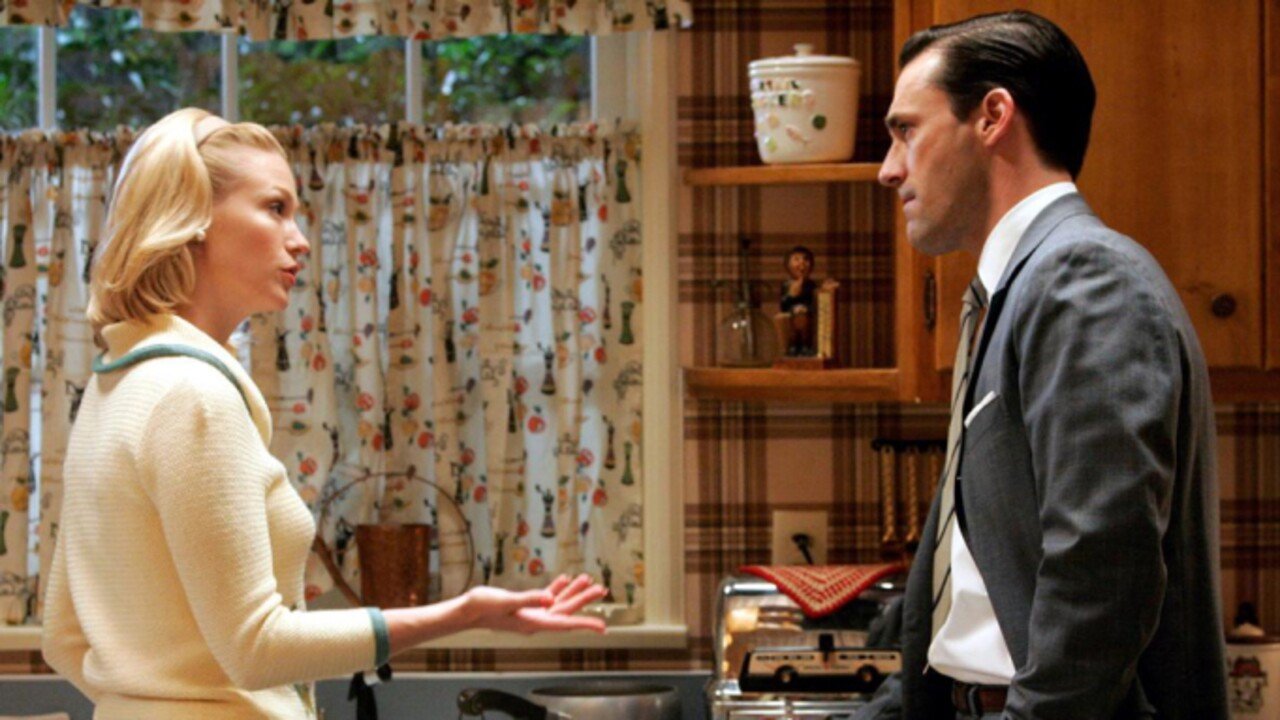
Some mornings, while Beignet is circling the same patch of grass at Lafreniere Park, I get a flashback of my childhood kitchen. The light was always a little yellow. The air always smelled like something practical, toast, bacon grease, whatever could be made fast. My father’s work shoes sat near the back door like a warning sign. He left early, he came home late and the rest of us learned how to move around that absence.
As a kid, I turned time into math. I counted hours, days, paychecks and the small proof of him, the coffee ring on the table, the snapped-off corner of a newspaper, the clink of keys he forgot in the bowl by the phone. If you grew up this way, you might know that feeling. You feel close to someone’s effort while you feel far from their attention.
Back then, nobody used words like “emotional availability” in my neighborhood. We talked about heat, rain and whether the Saints were going to make you proud or make you mute at the dinner table. We talked about “providing” like it was a holy act. You did your part. You kept moving.
In my working years at the Jefferson Parish Library, I became an expert at solving. I could locate the right resource in minutes. I could calm a frantic parent at the desk with my best “calm voice” and a laminated schedule. I brought that same energy home. I believed usefulness would keep everyone safe, including me.
At 72, with my house paid off and my grandkids growing like weeds after summer rain, I finally have the quiet to name what I felt. My father worked sixty-hour weeks. He called it sacrifice. I felt the shape of his choice in our kitchen and I carried it into my own life without even noticing the weight in my hands.
1) The story he tells about “providing”
I remember my father standing in the doorway, one hand on the frame, sweat darkening the back of his shirt. He would say something like, “We had food. We had a roof. You were taken care of.” His voice held pride, the kind that comes from doing something hard for a long time. When you hear a line like that, you can feel how much he wants it to count.
Years ago, when I was still working at the East Bank Regional Library, I saw the same story on different faces. Men would come in during lunch break, tie still on and ask for investment books or job listings. Some of them looked exhausted. Some of them looked scared. Many of them looked like they had been trained to measure love in hours worked.
Providing is a real form of care. Money keeps lights on. A steady job can steady a household. Many parents carry the fear of falling behind and they try to outrun it with extra shifts. If you grew up watching that, you may have learned that love equals labor. You may have learned that rest equals risk.
I admit I inherited some of that. Even now, I feel calmer when I am “being helpful.” I can organize three grocery lists under the magnet clip on my refrigerator. I can alphabetize the spice shelf. I can plan a month of dinners in my head. The old story whispers, “Stay useful and you stay needed.”
My husband Danny has his own version. He jokes when tense and he suggests a spur-of-the-moment road trip like a magic trick. I tighten up and ask for the numbers. We both want to protect the same life. We just speak different dialects of safety.
The thing is, the providing story can get so big that it takes up the whole room. It can leave little space for the smaller needs, the daily check-ins, the soft questions, the “tell me more” moments. When that happens, a family can look fine from the outside and still feel lonely from the inside.
When I picture my father, I picture him believing his own story. I also picture a kitchen chair that stayed empty. Both pictures are true. Holding both is where my grown-up honesty lives now.
2) What I remember, coffee rings, quiet rooms and a locked front door
My childhood kitchen had a sound I can still hear. It was the quiet right after the door clicked shut. My mother would keep moving. The radio might be on. A pot might be simmering. Still, the house felt like it exhaled and held its breath at the same time. That is what kitchen silence can do.
I remember the coffee rings. I remember the way the table felt sticky in spots, even after you wiped it. I remember the calendar where bills were written down in neat handwriting. When you grow up around long work hours, you start to read objects as messages. You read a wallet on the counter as “he was here.” You read an empty driveway as “he is still gone.”
There was also the front door routine. Locked, checked, checked again. That habit followed me into adulthood. Before hurricane season, I check storm shutters like it is a prayer. I keep a flashlight in the same drawer. I keep important papers in the same tote bag. You could call it preparedness. You could also call it the nervous system remembering old uncertainty.
My friend Renee Landry, who spent her career as a school counselor, once said something to me over coffee and beignets at Cafe du Monde in City Park. She said, “Kids can handle a lot. They struggle when they cannot read what something means.” That stuck. You can handle a busy parent. You struggle when you feel like your wanting them makes you ungrateful.
Even in my current kitchen in Metairie, I can feel those old patterns. I have index cards with recipes and phone numbers. I have library tote bags hanging on the same two hooks by the back door. I can keep a household humming. I can also drift into old loneliness without meaning to. The room looks the same. The feeling changes when someone sits down and stays.
3) How kids translate absence into meaning
It took me a long time to realize that kids become translators. They take adult choices and turn them into beliefs about themselves. If a parent is gone a lot, a child’s mind tries to make a simple story. “Work is more important.” “I am too much.” “My feelings are an inconvenience.” These beliefs can settle in quietly, like dust.
I saw this at the library too, in the children’s section where I spent so many Saturdays. A child would tug a parent’s sleeve and get waved off. You could see the child’s face shift. They would pick up a book and pretend they never asked. You learn fast what gets you attention and what gets you dismissed.
When you grow up around constant busyness, you often become an expert observer. You watch tone. You watch timing. You watch what kind of mood makes it safe to speak. That skill can look like maturity. Inside, it can feel like constant scanning.
I think of my granddaughter Lucie, born February 14, 2013, with her careful eyes and her exacting follow-up questions. She notices everything. If I cancel a Library Saturday, she wants the real reason, with dates and details. She is polite about it, but she tracks. I respect that. I also want to teach her that love does not require detective work.
Here is the educational part that matters: kids do not only miss the parent. They miss the steady rhythm of being noticed. Your body learns closeness by repetition. A hug at the same time each night. A question asked at the dinner table. A parent who pauses and listens, even for two minutes. When those repeats are rare, your system adapts by expecting less.
I admit my own adaptation looked impressive. I made good grades. I stayed responsible. I learned how to be “fine.” Later, when stress hit, I woke at 3:00 a.m. and ran mental checklists like a librarian counting overdue books. The old translation was still running in the background.
4) The family myth of sacrifice and who gets to name it
Every family has a story they tell at gatherings. In mine, the story was: “Your father worked so hard for you.” It was said with pride and sometimes with a sharp edge that warned you to stay grateful. If you have a family myth like this, you know how it can freeze a conversation before it starts.
Once, as an adult, I tried to gently bring up what it felt like. My father’s face tightened and he started listing bills he paid, overtime he worked, things he gave up. The room filled with numbers. My feelings shrank. I went back to my old role, nodding and smoothing the moment.
Patricia Gomez, an old library colleague who still meets me at East Bank Regional “just to browse,” said something wise while we stood near the large-print shelves. She said, “Families love the story that keeps the peace.” That is fair. Some truths feel like they could blow the roof off. People choose the story that keeps everyone seated at the table.
Sacrifice is a complicated word. It can mean love, duty, fear, pride and habit all tangled together. The person who works long hours often feels the strain and wants it recognized. The person waiting at home feels the distance and wants it named. Both can be true at the same time and that is where conversations get sticky.
Who gets to name it? In many families, the worker gets the microphone. The kids get the footnotes. As a grown woman, I am learning to speak in my own full sentences. I can honor the effort and still tell the truth about the cost. I can practice naming the feeling without making it a courtroom.
5) Why closeness comes from small repeats, meals, rides and ordinary talk
Closeness rarely arrives with fireworks. It arrives with small repeats. You sit in the same chair. You ask the same simple question. You show up again. You do it when you feel awkward and when you feel tired and when you think it “should not matter.” It matters.
When my kids were younger, I sometimes tried to compensate for distance with efficiency. If Camille needed something, I would bring it fast. If Julian had a task, I would help him finish it. If Sophie texted, I would craft a thoughtful response like I was writing a reference letter. My love looked organized. My kids wanted more warmth in the moment.
Camille, born August 12, 1981, has always wanted direct emotional language. She can handle a plain sentence like “I miss you” better than a bag of groceries. I learned that the hard way. She once told me, gently, “Mama, I know you love me. I want to hear it.” I still remember standing by my kitchen sink in Metairie, dishwater running, feeling both proud of her honesty and embarrassed by my own stiffness.
Julian, born February 5, 1984, connects best while doing things side-by-side. He will talk while loading a car, fixing something small, or walking through a hardware store. If you have someone like that in your life, you can stop pushing for eye contact and start building talk into tasks. That is closeness too.
Sophie, born October 28, 1989, sends voice notes and photos. She gives me a low-pressure doorway. I can answer with a plain voice note back. I do not have to polish every word. Some families grow closer through modern tools. The tool matters less than the steady rhythm.
These days, my favorite closeness ritual is “Library Saturday” with one grandkid at a time. Phone stays in my bag except for one photo. We go to East Bank Regional, then Storyland in City Park, then a snack. Theo, born September 30, 2016, brings every feeling at full volume. Ava, born May 22, 2018, draws everything she notices. Marco, born January 9, 2021, brings toddler chaos with perfect timing. I do not need a grand speech. I need ordinary talk, a shared bench and a routine that keeps happening.
6) The sentence I practice when I want to argue
When you finally name an old hurt, you may want to argue your case like you are presenting evidence. I have that impulse. I spent decades helping people find the “right answer.” My first instinct is still to line up facts and make a clean point. Relationships rarely respond to clean points.
My practiced sentence is simple: I hear you. Sometimes I add, “Let me think a minute.” It buys me time. It signals respect. It keeps my nervous system from speeding into a lecture. If you grew up around long work hours, you might have learned to fight for attention. This sentence helps you slow down and stay connected.
Dr. Marcus Bennett, my neighbor who is an internist at Ochsner, once gave me a practical reality check when I was spiraling about my borderline blood pressure reading in September 2024. He said, “Focus on the next right step.” That advice works for feelings too. You do not need to solve the whole family story in one conversation. You can take one step, then another.
When Danny and I get tense about money, he jokes. I plan. We can loop that disagreement for an hour if we let it. Now I try to say, “That is fair,” and then ask one question that pulls us back to the same side. “What are you hoping the trip gives you?” He often says, “A break.” I can understand that. I also want a break and my version looks like a cushion in the checking account.
This is where the psychology shows up in real life: when you practice one steady sentence, your body learns a new pattern. You become someone who can stay in the room. You become someone who can hold love and disappointment in the same hand without dropping either.
7) What I do with my own family now, one reachable ritual at a time
Retirement has turned me into a person who measures life in small rituals. Monday literacy volunteer shift. Wednesday Dorignac’s grocery run. Friday coffee with Renee. Sunday late afternoon is my Sunday call window and calendar reset. These repeats keep me grounded, especially when the afternoon gets too quiet and my mind starts adding errands like it is stacking books on a cart.
I used to think love required big gestures. Now I aim for attention over advice. When Camille calls, I try to ask, “How are you, really?” Then I pause long enough for the real answer. When Julian is in town, I invite him to help me with something small. We talk while our hands are busy. When Sophie sends a photo, I reply with warmth before logistics. I do it even when it feels unfamiliar.
There was a time when I believed my job was to keep everyone calm. That belief made me useful and it made me tired. These days, I let my family see me as a person with limits. I can say, “I have a full day, I can talk for ten minutes.” Most people do well with clear boundaries. The ones who do not usually feel anxious themselves.
On my Beignet walks, especially in what I call soup weather walks, I practice a simple habit. I choose one person to reach out to without a task attached. No reminder about appointments. No “did you eat?” text. Just a line like, “Thinking of you.” It feels small. It changes the tone of a relationship over time.
I also try to repair quickly when I miss. If I slip into my old “practical help” mode with Camille, I send a follow-up. “I want to say this plainly. I care about you.” That kind of message would have embarrassed me at 40. At 72, it feels like clean living.
And when I catch myself replaying my father’s story, I remember I have choices now. I can honor the past and still build something different. I can offer my grandkids a steady, warm adult. I can offer my own nervous system good-enough presence.
8) The question I still carry on my morning walk
Some mornings I take myself to the Sydney and Walda Besthoff Sculpture Garden and sit alone without a plan or a timer. I used to treat unstructured time like a problem to solve. Now I let it be a container. I watch the light shift on the path. I listen to my own thoughts without chasing them.
I think about my father more tenderly these days. I imagine the pressure he felt. I imagine the pride. I imagine the fear of coming up short. I also think about that empty kitchen chair and what it trained me to believe. You can carry compassion and clarity together. That combination is what finally feels adult to me.
If you grew up with a parent who was always working, you might still be counting. You count how long it takes someone to text back. You count the days between visits. You count your own productivity as proof you deserve rest. Counting becomes a way to feel safe. It also keeps your heart on a tight leash.
So here is the question I keep carrying, especially when Beignet pulls toward the same bench at Lafreniere Park and I pause like I always do. What would change if I measured love less by hours and more by presence? What would change if you did that too?
I am still learning and I am still practicing. The kitchen is quieter now and I finally know how to sit down in it.
Note from Cottonwood Psychology:
- Many families build a “providing” story that helps them feel stable. Stability matters and kids also need repeated moments of being noticed, heard and included in everyday life.
- Children often create personal meaning from a parent’s absence. These meanings can show up later as over-responsibility, constant scanning for mood, or a strong drive to earn approval through productivity.
- Small, consistent rituals support closeness because the nervous system learns safety through repetition. Think shared meals, short check-ins, rides to errands, bedtime routines and predictable weekend traditions.
- Repair conversations help when old patterns show up. A simple line like “I hear you,” plus one clear feeling statement, can lower defensiveness and make space for connection.
- Research connects parents’ work schedules with family closeness and teen well-being. One example is this peer-reviewed article available through NIH’s PubMed Central:
https://pmc.ncbi.nlm.nih.gov/articles/PMC2950649/. - If you grew up around long work hours, you can build new “closeness reps” now. A reachable goal helps, such as one weekly call window, one device-free meal, or one standing walk-and-talk with someone you love.