


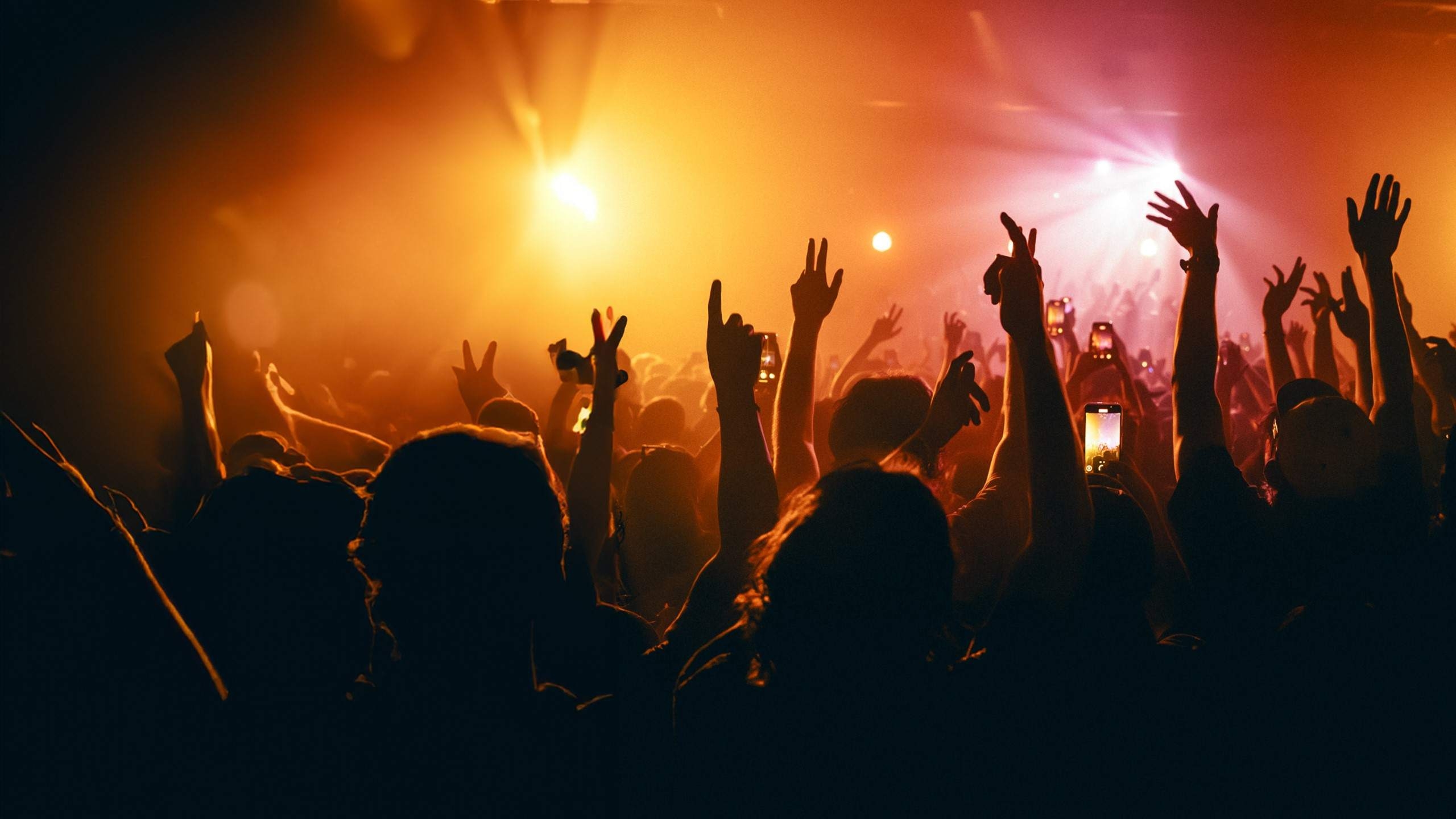
A new psychology study suggests that live concerts can boost happiness days after the music stops. The research looks at what happens in our minds and between people when a crowd sings, sways and moves together at a show. It also hints at why some concerts feel almost spiritual, while others are “just fun.”
In work published in the journal Personality and Social Psychology Bulletin, a team of psychologists led by Nicole Koefler examined how live music affects people’s sense of joy, meaning and connection. They focused on a concept called collective effervescence, which is a kind of shared emotional high that can rise when many people are tuned in to the same moment.
For anyone who loves concerts, festivals, or club nights, the study offers language for a familiar feeling. It also gives early evidence that this shared energy is linked to stronger wellbeing, at least for some people and for at least a week after a show. The study does not offer medical advice and the results will not apply to every person or every concert, but it adds an interesting layer to how we think about music and mood.
Researchers examine why live music feels so powerful
Many people say their favorite concert was one of the best nights of their lives. Yet scientists still know surprisingly little about why some shows feel so powerful. Koefler and colleagues wanted to understand what makes a live music experience feel deep, meaningful and even sacred, not just entertaining.
Instead of looking only at whether people like a concert, the team asked what is happening in the crowd itself. When hundreds or thousands of people move, sing and feel together, does that create a special kind of group-based joy? And if it does, could that shared feeling be part of why people leave shows glowing and keep that glow for days?
The researchers focused on collective effervescence. This idea, which has roots in sociology, describes a shared emotional high in a group. It can show up at concerts, protests, religious services, or sports games. The team suspected that this intense crowd energy might be one key reason live music feels so powerful and might help explain its longer lasting effects on mood.
The full details appear in the study, which tests these ideas in several different ways. Across a series of studies, the researchers looked at real concert memories, fresh event reports and follow-up surveys to track how people felt during and after live music experiences.
Four studies track concertgoers’ emotions and wellbeing
To build a fuller picture, the team ran four separate studies with a total of 789 participants. Some were university students. Others were adults from the general public. By using different groups, the researchers tried to see patterns that would hold up across age and background, at least within the samples they had.
In the first study, participants were not asked about concerts at all, at least not at first. Instead, they were asked to recall any group experience that felt especially meaningful and connected. Many people described events that involved music, like ceremonies, services and, yes, live shows. This early result suggested that music often sits at the center of powerful group moments.
The second study moved directly into live music. People were asked to describe a past concert in detail, then rate how they felt during that event. The researchers measured several emotional states. These included awe, which is a sense of wonder, emotional synchrony, which is feeling in step with others and flow, which is deep absorption in an activity. They also measured collective effervescence as its own distinct feeling.
Two more studies dug deeper. In these, people reported on specific live shows, including who they went with, how close they felt to the artist, how much they focused on the lyrics and how in sync they felt with the crowd. Then, one week later, participants answered questions about their levels of happiness and life meaning. This design helped the team see which parts of the concert experience were tied to wellbeing after some time had passed.
Collective effervescence beats awe and flow during shows
One of the clearest findings across the research was that collective effervescence predicted enjoyment and meaning at concerts more strongly than other emotional states. People who reported a stronger shared high with the crowd also said the event felt more fun and more meaningful, even when the researchers took awe, flow and basic positive mood into account.
This suggests that there is something special about feeling in sync with the crowd, not just feeling good as an individual. Awe and flow are powerful on their own and they matter in many settings, but in the context of a show, the shared emotional wave of the group seemed to stand out. It was the best signal that people were having a peak experience, not only a pleasant night out.
Feeling close to the artist and crowd strengthens the effect
The research did not stop at “the crowd felt good.” The team wanted to know which parts of the concert made collective effervescence more likely. They looked closely at factors like personal connection to the artist, focus on lyrics and social details such as whether someone attended alone or with friends.
Participants who reported a strong parasocial bond with the artist, meaning a one-sided but emotional connection, tended to feel more of that shared high. If you feel like the singer “gets” you, or you have followed a band for years, you may be more open to a deep emotional moment at their show. That bond can make the performance feel personal, even in a huge arena.
Immersion in the music itself also mattered. People who really paid attention to the lyrics and who let themselves feel the emotions in the songs, were more likely to say they felt collective effervescence. This kind of focus can help bridge the gap between self and crowd. The music becomes a common emotional language and everyone is speaking it together.
Finally, social context played a role. Attending with friends or loved ones was linked to stronger collective effervescence than going alone. Sharing the concert with people you care about can make it easier to open up, sing loudly, move freely and lean into the moment. The study suggests that the social circle around you at a show can shape how intense that shared high feels.
Happiness and meaning stay higher a week after the event
The most eye-catching result for many readers is that the impact of collective effervescence did not vanish once the amplifiers turned off. In the follow-up surveys, concertgoers who had felt more collective effervescence reported higher happiness and a stronger sense that their life had meaning, even a week later.
Importantly, this link held when the researchers controlled for other emotions. It was not just that people who felt good at the concert also felt good later. The unique part of the shared high still mattered. This suggests that feeling deeply connected to others during a show may leave a kind of emotional afterglow that sticks around for several days.
Of course, a week is not a lifetime. The study does not show whether these boosts last for months or years and it does not say that concerts are a cure for sadness or stress. What it does suggest is that, for many people, a powerful shared music experience can brighten the days that follow and add a lasting sense of meaning to their memories.
Limits of the research and open questions
Like any study, this work has limits. Much of the data came from people remembering concerts after the fact. Memory can be biased. People may forget details, or they may smooth out the rough parts of an event and focus on the big emotional moments. The design was also correlational, which means the researchers cannot prove that collective effervescence causes higher happiness. It is possible that people who are already happier are more open to feeling that shared high.
There are also questions about who these findings apply to. Most participants came from Western settings and many were college students. People from other cultures, ages, or backgrounds might experience concerts in different ways. Future research could track people in real time during live events, test other group settings like sports or religious services and explore whether there are downsides to seeking big emotional highs in crowds.
How these findings connect to everyday music fans
For regular concertgoers, these results may feel like a scientific nod to something they already sense. There is a reason people chase that feeling of being “lost in the crowd.” The study suggests that this is not only about the music quality or the ticket price. It is about emotional connection, both to the artist and to the people standing around you.
The findings also hint at simple ways to make live music feel richer. They are not strict rules and they will not work the same for everyone, but they line up with what the research found. For example, you might:
- Choose artists whose music and message you truly care about.
- Go with friends or loved ones you feel safe being emotional around.
- Let yourself sing, move and notice what the lyrics mean to you.
Nobody needs to “optimize” their concert experience. Sometimes you just want to hear a few songs and head home. Still, it can be helpful to know that leaning into the shared moment might give the night a deeper glow. The study suggests that being present with the crowd, instead of staying locked in your own head, is part of what makes live music so special.
Finally, the research adds to a larger picture of how humans use groups to feel better. From sports arenas to street festivals to choirs, people keep finding ways to gather, move and feel in time with one another. Live music is one vivid example of this and it may be one reason fans are willing to save money, travel far and stand in long lines. That intense sense of “we” rather than “me” might be one of the hidden rewards of being a music fan in the first place.