


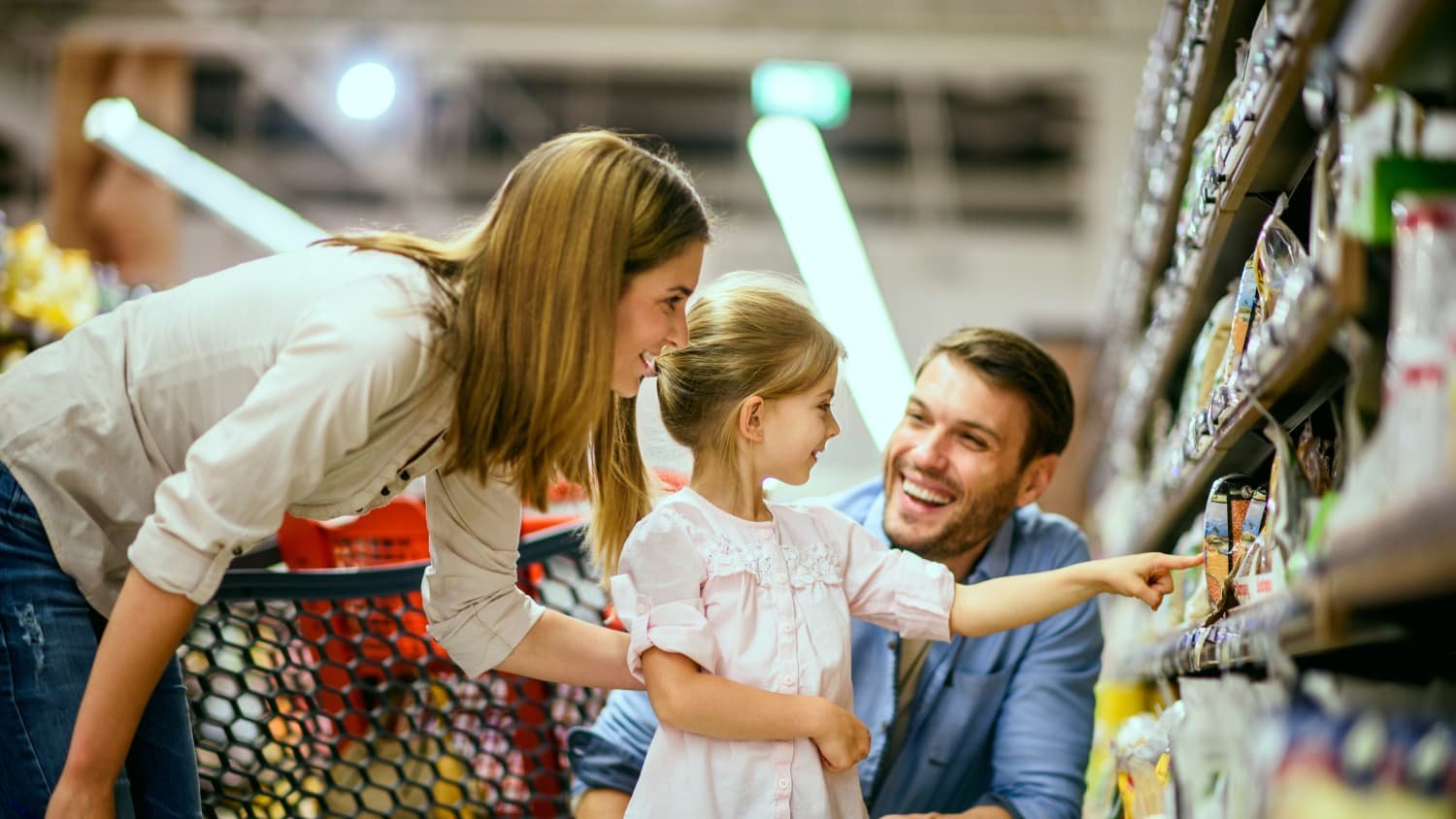
I remember standing in a grocery store aisle as a kid, holding a cereal box like it was a major life decision. The bright colors made it feel exciting. The price tag changed the whole mood. An adult in my family glanced at the shelf, then at the cart, then said something simple that landed with more force than I understood at the time. “We have food at home.”
Years later, I realized how many of those small lines stayed with me. They were ordinary phrases. Nobody announced them like lessons. Still, they shaped how I think about money, waste, comfort, pride and what counted as a “treat.”
If you grew up lower-middle class, you probably know the feeling. Your childhood may have looked stable from the outside. Bills got paid, most of the time. There was food, usually enough. You had what you needed and wants were filtered through timing, strategy and patience. That in-between space leaves a very specific memory trail.
I’ve talked about this with friends who had similar upbringings and the same phrases come up again and again. We laugh when we say them. Then we go quiet for a second, because each one carries a full scene with it, a kitchen light switched off, a coupon drawer jammed shut, a pair of shoes worn a little past their prime.
There’s also real psychology behind why these memories stick. Early experiences around money can shape your habits, stress responses and sense of safety for years. One Nature study even found links between family income, parental education and differences in children’s brain structure. You do not need a research paper to feel that truth, though. Sometimes one sentence from childhood tells the whole story.
These phrases may sound funny, sharp, practical, or deeply familiar. If they send you right back to childhood, you’re probably remembering more than words. You’re remembering a whole way of living.
1. “We have food at home”
I can still feel the tiny heartbreak of hearing this after spotting a snack that looked magical in the store. It was rarely said in a cruel tone. It came out tired, efficient and final. The grown-ups around me had a plan and impulse had no place in it.
“We have food at home” taught a very specific kind of restraint. You learned that hunger and craving were two different things. You learned that home food took priority over convenience, novelty, or the thrill of packaging. That lesson can follow you into adulthood every time you hesitate before ordering takeout or talk yourself out of buying a coffee.
There was also a quiet dignity inside that phrase. It said the house was stocked enough to feed people. That mattered. In lower-middle-class homes, stretching what you already had was a skill and sometimes a source of pride.
I admit I still hear that sentence in my head when I pass an overpriced snack display. Part of me smiles at it now. Part of me feels the old tension between wanting something small and wondering whether wanting it is already too much.
When a phrase gets repeated often in childhood, it becomes part of your inner voice. That’s one reason these words feel so powerful years later. They shaped how you weigh desire against practicality and how quickly you learned to talk yourself out of little luxuries.
2. “Wait till payday”
This one had a different emotional texture. It carried hope. It also carried delay. Something might happen, just later, after the money arrived and the math got done.
I remember hearing it over things that seemed small to me at the time, a school shirt, a fast-food meal, a field trip extra. As a kid, payday sounded almost magical, like a gate opening. As an adult, I hear the pressure inside it. Money was moving in and right back out.
Waiting till payday teaches children that time and money are linked. You stop seeing money as a fixed amount. You start seeing it as a cycle. This can create patience and planning. It can also create a background hum of uncertainty, because what you want depends on a date on the calendar.
For many families, this phrase was part of survival. It helped organize decisions without long explanations. A child did not need to know every bill in the stack. They only needed the family version of the truth, which was simple and clear enough to repeat.
It took me a long time to realize how much that mindset stayed with me. Even now, when I can buy something, I sometimes feel an urge to wait a few days just to feel safe. Delaying the purchase makes it feel earned, measured and somehow more responsible.
That reaction makes sense. Childhood financial rhythms often become adult habits. If you grew up hearing “wait till payday,” your nervous system may still associate spending with timing, caution and checking the ground beneath your feet before taking a step.
3. “Turn that light off”
Some households say this once in a while. In others, it’s practically background music. In the home I remember, lights were never just lights. They were part of the electric bill and the electric bill had emotional weight.
I can picture someone calling out from another room the second an empty room stayed bright for too long. It felt almost supernatural, like adults had a hidden sensor for waste. I used to think the reaction was a little dramatic. Later, I understood that recurring bills can make tiny habits feel huge.
“Turn that light off” teaches you that resources are finite. It turns everyday behavior into a form of responsibility. Water, electricity, heat, air conditioning, all of it becomes something to watch. You learn to notice what other people leave running.
That can be useful. You may grow up more conscientious, less careless, more aware of what things cost. At the same time, it can make relaxation harder. Plenty of adults from lower-middle-class homes struggle to fully enjoy comfort because part of their mind keeps calculating the price of it.
My friend once laughed after catching themselves switching off lights in somebody else’s house. Then they got embarrassed. I understood immediately. Some lessons move so deep into your body that they come out before thought does.
4. “Name brands are a treat”
Few childhood experiences are as revealing as realizing there are “regular” groceries and then there are the groceries other kids seem to get without discussion. Brand-name cereal, certain chips, the good cookies, the shampoo with the fancy scent, those things could feel almost glamorous.
In many lower-middle-class homes, name brands carried a special status. They appeared on holidays, after a good week, or when the sale lined up just right. That made them feel exciting. It also taught you that quality, image and price were always part of the same conversation.
I remember opening a lunchbox and instantly knowing which kids came from homes where the label mattered less than the convenience of grabbing what they liked. Meanwhile, some of us were fluent in store brands before we knew what “budgeting” meant. You learned to compare sizes, prices and substitutions early.
There’s a psychological side to this too. Kids quickly absorb what objects signal in a social setting. A branded item can feel like belonging. A generic one can feel practical, familiar, or slightly exposing, depending on the room and the age you were at the time.
Years ago, I bought a brand-name pantry item without checking the price and felt a weird burst of freedom. Then I laughed at myself in the checkout line. One small purchase had reached all the way back into childhood and touched a memory of what counted as a rare little win.
Treat thinking often lasts into adulthood. You may still split purchases into categories like necessary, sensible and special. That habit can make you intentional with money. It can also make everyday enjoyment feel like something you have to justify first.
5. “Put it back”
This phrase had a sting to it, especially in public. It could come after a few minutes of hope, after carrying the item around, after imagining it as yours. Then came the reset. Back on the shelf it went.
I remember the feeling more than the object. It was the flush in the face, the quick scan to see if anybody noticed, the effort to look unbothered. Childhood teaches pride early and money can sharpen that lesson fast.
“Put it back” often meant the budget had already been stretched. It could also mean the item never belonged in the plan to begin with. Either way, it taught that wanting something did not create room for it. Plans mattered more than impulse.
This kind of moment can shape how a person handles desire later on. Some adults become very disciplined shoppers. Others overcorrect and buy things quickly because old deprivation still echoes inside them. Both reactions can come from the same childhood scene.
There was a time when I watched a parent gently ask a child to return a toy to the shelf. The child’s face dropped in that familiar way and I felt an immediate ache of recognition. It brought back the emotional mathematics of those moments, the split second where hope meets reality and has to adapt.
6. “It still works”
If you know this phrase, you probably grew up around repaired furniture, older appliances, taped-up drawers and clothes that got one more season because they could. Replacement was rarely the first option. Function mattered more than freshness.
I have a soft spot for that mindset now. It taught creativity. It taught maintenance. It taught the satisfying art of making things last. At the same time, it could make you hold onto worn-out items for far too long because throwing something away felt almost irresponsible.
“It still works” reflects a worldview built on usefulness. When money has to be spread carefully, aesthetics move down the list and durability moves up. Children raised around that logic often become adults who hate waste and feel suspicious of anything designed to be temporary.
My family once kept a chair that creaked every single time someone sat down. We all knew the sound. We all adjusted our weight in the same careful way. Looking back, that chair feels oddly symbolic, a little inconvenient, a little stubborn and fully accepted because replacing it would have meant spending on something that was still technically doing its job.
There’s wisdom in that phrase. It pushes back against constant consumption and the pressure to upgrade for the sake of appearances. It can also blur the line between thrift and self-denial. If you grew up hearing it, you may still need a minute before agreeing that worn out really is worn out.
Making do becomes part of identity for many lower-middle-class kids. You learn that care can look like repair. You learn that keeping something going is its own kind of competence.
7. “Coupons are in the drawer”
Some childhood homes had a junk drawer. Some had a coupon drawer. If yours had both, they may have been the same drawer, full of rubber bands, old batteries, takeout menus, receipts and clipped little rectangles that promised savings if you stayed organized enough to use them.
I loved the ritual of it. The sorting, the clipping, the checking dates, the tiny thrill when one matched something already on the list. It made shopping feel strategic. Every discount felt like proof that careful people could outsmart high prices, at least a little.
Coupons represent more than saving money. They represent effort. Lower-middle-class families often manage pressure through systems, lists, routines, envelopes, drawers and mental math. Those systems offer a sense of control when the margin for error feels slim.
I still catch myself saving store offers I may never use, just because the act itself feels comforting. That reflex comes from somewhere old. It comes from watching adults treat preparation like protection.
There’s also a quiet emotional message in this phrase. It says your family did not drift through expenses casually. People were paying attention. They were trying. Children pick up on that seriousness even when nobody sits them down to explain it.
8. “You can get one thing”
This phrase carried possibility. It also carried boundaries. For a kid, those two feelings arriving together could be almost unbearable. Excitement rushed in first. Then the internal debate began over which single thing deserved the golden ticket.
I remember standing frozen in front of too many options, afraid of choosing wrong. One toy, one snack, one shirt, one little reward. Scarcity can sharpen decision-making and it can also make even pleasant choices feel heavy.
“You can get one thing” teaches prioritizing early. It asks a child to rank wants, delay the rest and live with the choice. That can build thoughtfulness. It can also leave a person second-guessing themselves long after the shopping trip is over.
The thing is, this phrase also held tenderness. It meant there was room for something small. Maybe the budget had a little give that day. Maybe an adult wanted to offer joy without losing control of the total. In many homes, love showed up through careful limits, because limits were what kept the whole system standing.
I think that’s why these phrases stay so vivid. They were never just about money. They were about mood, order, hope, caution and the daily effort of making enough feel steady. If you grew up hearing them, you likely learned financial caution before you ever heard the term. You may also have learned gratitude, resourcefulness and the habit of reading a room before asking for more.
And if these words still echo in your mind, that makes sense. Childhood language becomes adult memory. A simple phrase can hold a whole house inside it, right down to the lights, the checkout line, the kitchen drawer and the sound of someone saying you can pick one thing, so choose carefully.