


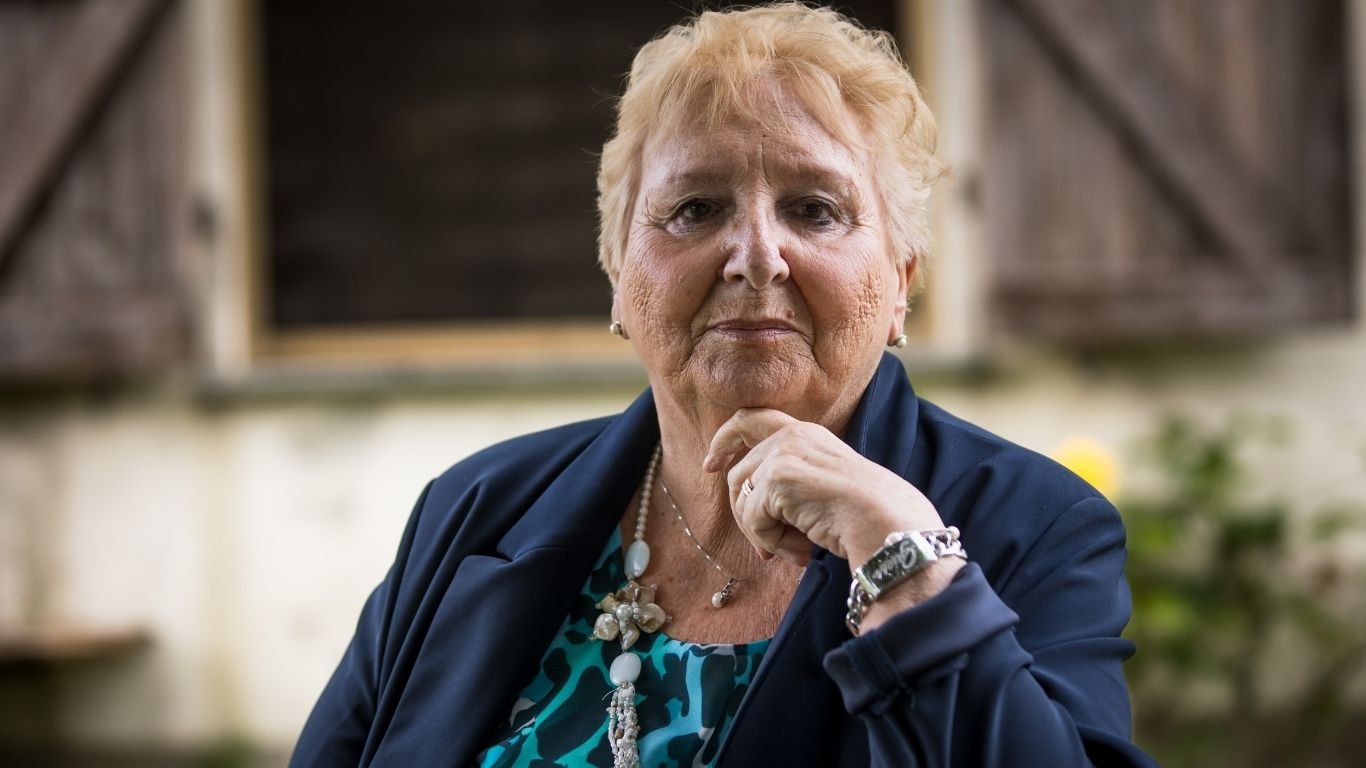
I remember standing by the fence one evening while my neighbor watered a row of plants that always seemed to look better than mine. She was talking in that calm way some people have, the kind that makes you stop pretending you are too busy to listen. Then she said something that stayed with me for days. She told me that if she could speak to her 40-year-old self, she would say, “Become her now.”
I did what most of us do when a sentence hits a little too close. I smiled. I nodded. Then I went back inside and opened my laptop and answered emails that could have waited until morning. I told myself I was being responsible. The thing is, I knew exactly what she meant, because there were parts of my own life I had been placing on a shelf for “later.”
There was a season when I kept saying I would start once things settled down. Once work got lighter. Once family needs changed. Once I felt clearer. Once I had more savings. Once I was more confident. That season lasted much longer than I expected. It had a sneaky way of looking practical while quietly stealing time.
A few days later, I saw my neighbor again. She laughed about old hairstyles, old jobs and old dreams she had delayed for years. Her tone was warm, even playful. Still, there was a kind of wisdom in it that felt sharp. She was talking about the cost of postponing your own life and she made it sound very ordinary, which somehow made it more powerful.
Many of us think of change as a future event. We picture a better version of ourselves waiting somewhere up ahead. Psychology gives us a useful way to think about this. When your future self feels distant, your present habits keep winning. That gap can shape your choices more than you realize.
The future self feels far away
My neighbor told me that when she was younger, 70 sounded like another planet. She could picture gray hair and slower mornings, but she could not feel any real connection to that older woman. So the choices she made at 40 felt separate from the person she would become. She said it was like mailing packages to an address that did not feel real.
I have felt that too. You tell yourself that next year will be different. You assume your later self will be more rested, more disciplined, more certain. Meanwhile, your current self keeps making quick decisions that soothe today and shape tomorrow. The distance feels emotional before it feels logical.
This matters because people often protect what feels close. You save money for a trip you already booked. You show up for a friend you love deeply. You care for a plant that sits right in front of you. Your future identity can feel abstract, which makes it easier to delay actions that would support it.
That is one reason a study on future optimism and severe procrastination caught my eye. In plain language, it points to a simple truth. People who feel more connected to the future often have an easier time acting in the present. You do not need a perfect five-year plan for this. You need a stronger sense that the person arriving later is still you.
Sometimes the easiest way to shrink that distance is to get specific. What does that future version of you wear on a regular Tuesday? How do they spend a free hour? What do they stop apologizing for? Clear details make a hazy identity easier to care about.
I once wrote down a list of qualities I wanted to grow into. I expected dramatic words. What came out was simple. Calm. Reliable. Curious. Present. That list changed the way I saw my next day. It turned “someday” into a person I could start practicing.
Delay slowly becomes a pattern
Years ago, I thought delay was a series of isolated moments. I believed each postponement lived alone. Skip one phone call. Put off one application. Wait another month to take the class. But life has a way of stitching those moments together. Before long, what felt like a handful of choices becomes a delay pattern.
My neighbor described it with a sad little smile. She said the first delay always sounded reasonable. Then the next one borrowed its tone. Soon, she had a whole language for postponement. She had become excellent at explaining why later would be better.
Patterns matter because they shape your self-image. If you often wait, you may begin to see yourself as someone who circles change instead of stepping into it. That identity can become heavier with time. It follows you into work, relationships, health and even joy.
There is also a reward loop involved. Delay often brings quick relief. You escape discomfort for the moment. Your brain remembers that relief and offers the same move again next time. Short-term comfort becomes very persuasive when long-term meaning feels far away.
I admit I have had months where I kept promising myself a fresh start every Monday. It felt hopeful for a few hours. By Tuesday afternoon, I was back to the same habits. What finally helped was seeing the pattern as something built from very small repeats. Small repeats can be interrupted.
Comfort can keep you stuck
One afternoon my neighbor said, very gently, that comfort can be a beautiful home for recovery and a terrible home for growth. I wrote that down as soon as I got inside. It sounded wise because it was true in a way I had lived through many times.
I think about the periods when I kept life very manageable. Same routine. Same conversations. Same risks avoided. On paper, everything looked stable. Inside, I felt a faint restlessness that would show up when I saw someone else take a brave step. Their movement reminded me of my own stillness.
The comfort zone has a strong sales pitch. It offers predictability. It lowers uncertainty. It protects you from embarrassment. All of those things can feel deeply appealing when life is already full. Still, comfort can slowly become a quiet agreement to stay exactly as you are.
You can usually spot this when your reasons sound mature but feel dead. You say the timing is tricky. You say you need more clarity. You say you will revisit it after the busy season. Then another busy season arrives. Growth tends to ask for some friction, some awkwardness and some willingness to be seen trying.
My own clue is boredom mixed with envy. When those two show up together, I know there is something I have outgrown. That feeling does not mean I need to burn down my life. It usually means I need one honest move toward the person I keep talking about becoming.
Small choices build your identity
I used to imagine identity as a giant statement. A reinvention. A dramatic turning point. Then I watched my neighbor live her days with quiet consistency. She took walks. She learned new recipes. She said yes to invitations. She spoke to herself with surprising kindness. Her life made a strong case for the power of small choices.
Identity forms through repetition. You become more of what you practice. If you practice avoidance, avoidance starts to feel natural. If you practice honesty, honesty gets easier to access. Repeated action gives shape to your sense of self.
This can feel frustrating if you want immediate transformation. It can also feel freeing. You do not need to solve your whole life by next month. You can choose one behavior that matches the person you want to be and repeat it long enough for it to feel familiar.
I remember a stretch when I wanted to be someone who read more and scrolled less. I kept waiting for a more disciplined version of myself to arrive. One night I put a book on my pillow before dinner. That tiny move changed my evenings more than any speech I gave myself.
Your habits carry messages. They tell you whether you trust yourself. They tell you what matters enough to protect. Over time, these signals create identity from the inside out.
When people say they want a new life, they often mean they want new evidence. They want proof that they can act differently. Small choices provide that proof. One repeated action can make your next action easier.
Fear gets louder with time
My friend once told me that fear grows in the dark. I think delay gives it a room with very good acoustics. The longer you postpone something meaningful, the more dramatic it can start to feel. A simple step becomes loaded with pressure.
My neighbor said she had dreams that got scarier simply because she waited so long to approach them. By then, they carried history. They carried all the years she had thought about them. The dream itself did not grow teeth. Her relationship to it changed.
I know this feeling well. Send the email today and it is an email. Wait six months and it becomes a referendum on your courage. Have one honest conversation this week and it feels hard. Wait two years and it feels like it could crack open your whole life.
Fear often feeds on imagination. Your mind fills empty space with scenes of failure, rejection and regret. That mental movie can feel so vivid that you respond as if it is already happening. The body reacts. The heart speeds up. You pull back.
A useful way to handle this is to make the feared action smaller and sooner. Smaller lowers the emotional cost. Sooner prevents the story from expanding. This is how many people reclaim motion. They trade a giant leap for a real step.
Energy changes across the years
I still think about something my neighbor said while carrying grocery bags to her porch. She laughed and said, “I had more strength than I knew and I spent too much of it waiting.” That line landed in a very physical way. Time changes your body, your focus and your available energy.
We often speak as if the future will offer endless capacity. Yet anyone who has lived through different seasons of life knows this is rarely true. Demands shift. Recovery takes longer. Priorities become clearer. Some doors stay open, though they may ask for different effort than they once did.
This is where urgency can become healthy. Healthy urgency does not create panic. It creates respect for the fact that your resources are real and changing. Your attention, stamina and freedom all have seasons.
I have had periods where I assumed I would eventually have more time to write, more patience to learn, more emotional space to repair a drifting relationship. Sometimes that happened. Sometimes life got fuller instead. The lesson was simple. If something matters deeply, it deserves some of your energy while you have it.
That idea can help you make kinder choices too. You stop spending your best hours on things that only make you feel numb. You begin protecting your mornings, your weekends, or your quiet time with more care. The person you want to become will need that care.
The right moment rarely appears
There was a time when I treated the future like a neatly set table. I believed the right moment would arrive with enough money, enough confidence, enough calm and enough certainty. I waited for all the lights to turn green at once. Life rarely works that way.
My neighbor said she lost years to the myth of readiness. She kept believing one more season would make action easier. In some cases it did. In many cases, waiting simply kept her in rehearsal mode. She had ideas. She had plans. She had very polished hesitation.
The truth most of us discover late is that motion creates clarity. You learn by participating. You get stronger by doing. You become more ready through contact with the thing itself. A perfect moment is often just a story that helps delay feel elegant.
This does not mean rushing into every impulse. It means making peace with the fact that most meaningful steps happen in ordinary conditions. You begin the project while still uncertain. You apply while still improving. You speak while your voice shakes a little.
I once waited months to start something that took me twenty minutes to begin. That still makes me laugh. The barrier lived in my head much longer than it lived in reality.
If you want a useful question, try this one. What can I begin before I feel fully prepared? That question respects reality and invites momentum. Momentum can do more for your life than endless private planning.
Regret grows in the gap
I have learned that regret often gathers in the distance between what matters to you and what you actually do. The wider the gap, the heavier the feeling. You may still function well. You may still look successful. Yet some part of you keeps taking attendance.
My neighbor spoke about regret in a way that surprised me. She did not talk much about spectacular failures. She talked about years when she abandoned pieces of herself in small ways. The classes she never took. The apologies she delayed. The joys she treated as optional.
That kind of regret can be hard to name because it hides inside regular life. You go to work. You buy groceries. You answer messages. Everything appears normal. Still, there is a steady ache in living too far from your values.
Psychologically, this gap can wear you down because people tend to feel better when their behavior matches their beliefs. That alignment supports a sense of integrity. When the mismatch goes on for too long, you may feel flat, irritated, or quietly disappointed in yourself.
I know that feeling from times when I kept saying creativity mattered to me while giving every ounce of attention to urgent noise. I was tired in a way sleep could not fix. What I needed was alignment, even in small doses.
Ordinary days decide who you become
For a long time I thought life changed during breakthroughs. Big decisions seemed like the main drivers. Then I watched my neighbor over many months. Her wisdom showed up in how she used a Tuesday afternoon, how she spoke to the cashier, how she kept promises to herself and how she returned to what mattered after a rough week.
That is the heart of it. Ordinary days are where your life is shaped. Grand visions have their place. Yet your real direction comes from repeated daily choices. They tell the truth about what you are feeding.
You do not need to reinvent everything to honor the person you know you can be. You can clear ten minutes for a skill. You can take the walk. You can make the call. You can stop filling every empty pocket of the day with distraction. Tiny acts create a living identity.
I still hear my neighbor’s voice when I catch myself saying “later” too casually. It reminds me that later is made from todays. Each day carries a vote. Each vote shapes a self.
So if there is a version of you who keeps visiting your thoughts, treat that as useful information. Give that person one visible place in your schedule this week. Protect it. Repeat it. Over time, your life begins to reflect your deepest intentions and that may be the most honest form of hope.