


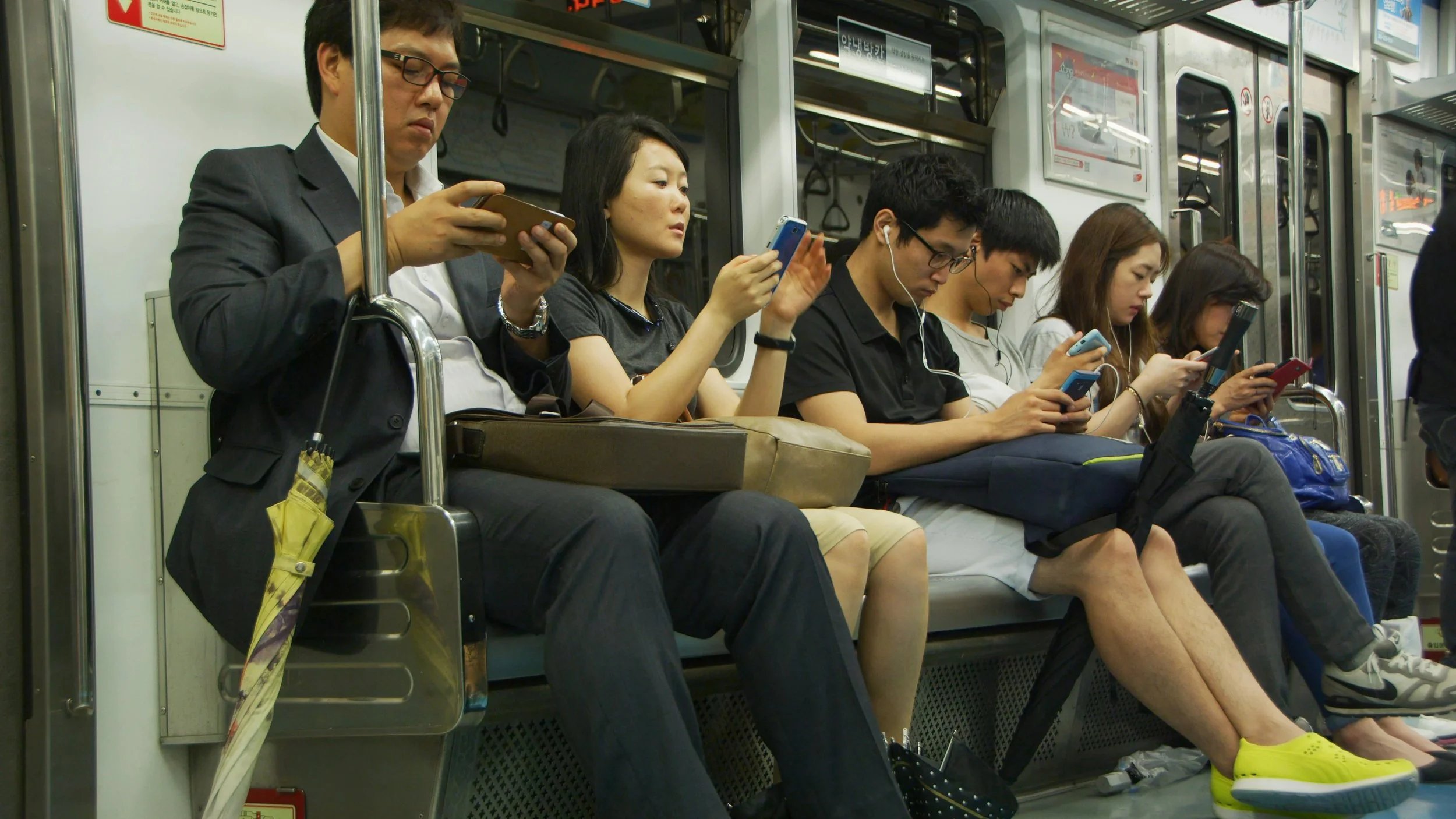
Picture a crowded train carriage. People are tired, distracted and focused on getting where they need to go. Then someone suddenly collapses. In that moment, a simple question becomes powerful: who helps and why?
That question sits at the heart of Piliavin et al, one of the best-known studies in social psychology. The research explored helping behavior in a real public setting, using a New York subway train as the scene. Because the event looked genuine to passengers, the study gave researchers a rare look at how people respond during an apparent emergency.
The topic still matters because you see versions of it everywhere. A person drops their groceries on a busy street. Someone faints in a hallway at school. A stranger looks distressed on public transport. In each case, people quickly read the situation, judge the risk and decide whether to step in.
Piliavin et al became especially important because it added depth to ideas about the bystander effect. Many students first learn that crowds reduce individual action. This study showed a more detailed picture. It suggested that the type of victim, the setting and the personal cost of walking away all shape the choice to help.
To put it simply, this is a study about human responsibility under pressure. It helps you understand how people behave in public emergencies, why some victims receive help faster than others and how classic theories of social behavior work in the real world.
Who Piliavin et al were and why this study is famous
Piliavin et al refers to a team of researchers led by Jane Piliavin. The group became famous for studying prosocial behavior, which means actions that benefit another person. Their subway research remains a classic because it examined helping in a natural public environment rather than a tightly controlled lab room.
At the time, psychologists were deeply interested in why people sometimes fail to assist others in emergencies. Public concern had grown after highly discussed cases of bystander inaction. Researchers wanted clearer evidence about what people actually do when a crisis unfolds around them.
One reason this study stands out is its field experiment design. The researchers placed the situation inside everyday life. Passengers believed they were witnessing a real event, so their reactions carried the force of ordinary social reality. That gives the study strong ecological validity, a term that means the findings feel close to real life.
For many students, this study becomes memorable because of its setting. The image is easy to picture: a moving subway train, a stranger collapsing and dozens of people deciding how to respond. The design turned an abstract theory into a vivid social moment. You can still feel the tension just by hearing the description.
The research is also famous because it led to a broader explanation of helping. The team linked their observations to a theory often called the cost-reward model or arousal cost reward model. If you want to see the APA record, it connects to the classic study that helped shape later discussions of emergency helping.
The subway Samaritan experiment in simple terms
In simple terms, the researchers created a staged emergency on a subway train. A man entered the carriage, stood for a short time and then collapsed. The surrounding passengers believed the event was genuine, so their behavior could be observed as it naturally unfolded.
The victim appeared in one of two conditions. In one version, he carried a cane and seemed physically unwell. In another, he appeared drunk. That small change mattered a great deal because people often respond differently depending on whether they see someone as ill, vulnerable, or responsible for their own condition.
Another member of the research team watched what happened. In some trials, a model stepped in after a set amount of time if no one had helped yet. This allowed the researchers to track how long passengers waited and whether the presence of early help influenced others.
Imagine being on that train. You hear the movement, feel the carriage shake and notice a stranger fall to the floor. You cannot easily leave. Other passengers can see it too. That setting creates social pressure, emotional tension and a strong awareness that everyone is sharing the same moment.
That is why the experiment is often called the subway Samaritan study. It focused on whether ordinary people would act like “good Samaritans” in a crowded public space. The researchers were especially interested in speed of response, type of victim and how the crowd shaped the decision to help.
The aim, method and variables
The main aim was to examine how people respond to an apparent emergency in a public setting. The researchers wanted to know which factors increase helping and which factors slow it down. They also wanted to test whether ideas from earlier bystander research would hold up in a more realistic situation.
The method was a covert field experiment. “Covert” means the passengers did not know they were part of a study. This was necessary because open observation would have changed the situation. If riders had known the collapse was staged, the emotional force of the event would have disappeared.
The independent variables included the type of victim and aspects of the social setting. The victim either appeared ill with a cane victim presentation or intoxicated with a drunk victim presentation. The race of the victim was also varied in the original research and the researchers recorded who helped, how fast help arrived and how other passengers reacted.
Researchers also used a helping model in some trials. A model is a person who demonstrates a behavior for others to observe. Here, the model helped after a planned delay if bystanders had not already acted. This allowed the team to compare spontaneous helping with helping that followed another person’s lead.
Because the study took place on a subway journey, the setting itself became part of the method. Passengers were in a closed space. They had limited ability to avoid the incident. They were close enough to see the victim clearly. Each of these details shaped the emotional and social pressure of the moment.
From an exam point of view, this is a rich method section. You have clear variables, repeated trials, direct observation and a realistic setting. You also have the usual trade-off of field research: strong realism, paired with less control over every outside influence.
What happened in the train carriage
Once the subway train was moving, the victim behaved in a standardized way. He stood near a pole, then staggered forward and collapsed. He remained on the floor until someone helped or until the model stepped in after the planned waiting period.
Passengers reacted in several different ways. Some moved quickly and directly to assist. Others stared, spoke to each other, or hesitated while checking what everyone else was doing. A few appeared uncomfortable and shifted their attention elsewhere, which is a common human response during tense public moments.
What makes this scene so interesting is the social atmosphere inside the carriage. People were close together, yet they were also strangers. Each person could see that others had also seen the collapse. That created a shared awareness and shared awareness often changes how responsibility feels.
Meanwhile, the type of victim affected the mood of the carriage. When the man appeared ill and carried a cane, passengers tended to interpret the event as a clear emergency. When he appeared drunk, the social meaning became murkier. Some riders seemed more cautious and helping was slower.
Another striking feature was conversation. Riders sometimes discussed the situation with each other, especially in trials where the victim seemed intoxicated. Those moments show that helping is often a social process. People do not only react to the victim. They also react to the crowd, the tone and the signals around them.
What Piliavin et al found about helping behavior
The clearest finding was that help usually came quickly, especially for the cane victim. In many trials, passengers offered assistance before the model had to act. This suggested that people often do help in a visible public emergency, especially when the victim appears deserving and the situation feels unambiguous.
The difference between the two victim conditions became one of the study’s most quoted results. The cane victim received help more often and faster than the drunk victim. This tells you that helping is shaped by social judgment. People respond more warmly when they view the victim as blameless or physically vulnerable.
Men were also more likely than women to give direct physical help. That pattern may reflect social expectations around strength, safety and public action. In a moving subway carriage, lifting or supporting a fallen stranger could seem like a task some passengers felt more prepared to handle.
Another finding involved crowd dynamics. Earlier theory often emphasized diffusion of responsibility, which means responsibility feels spread across many people. Piliavin et al found a more nuanced picture. In the subway setting, the emergency was hard to ignore and hard to escape, so helping remained fairly high.
Consider how often public behavior depends on the exact scene. In an online group chat, people may wait for someone else to answer. In a train carriage with a person on the floor, delay feels heavier. The findings suggest that visibility, urgency and physical closeness can push people toward action.
What the arousal cost reward model means
The researchers used their results to build a wider explanation of helping called the arousal cost reward model. The idea begins with emotional arousal. When you see a person in distress, you often feel tense, alert, uneasy, or concerned. That uncomfortable state motivates you to reduce the feeling.
From there, you weigh the likely costs and rewards of different actions. Helping may bring effort, risk, embarrassment, or delay. Walking away may bring guilt, social disapproval, or continued emotional discomfort. The decision that lowers inner tension most effectively is often the one people choose.
This makes the model practical and easy to apply. If helping seems safe and socially approved, action becomes more likely. If helping seems dangerous, confusing, or personally costly, hesitation grows. The model connects emotion and decision-making in a way that feels very human.
Take the subway study. Assisting the cane victim may have seemed relatively safe and morally clear. Ignoring him could have created strong guilt in full view of other passengers. By contrast, approaching a drunk victim may have felt less predictable. Riders may have worried about smell, aggression, or social awkwardness.
That is why the model is so useful in sociology and psychology classes. It explains helping through a mix of feeling and social calculation. You can use it to think about emergencies, charity, friendship and even workplace support. People often act after quickly evaluating emotional pressure and situational cost.
How the study connects to the bystander effect
The bystander effect describes a pattern where people are less likely to help when other witnesses are present. Responsibility feels shared, attention spreads out and hesitation can grow. Many students meet this idea through classic lab studies and textbook examples of public emergencies.
Piliavin et al connects to that theory because the subway carriage was full of bystanders. A crowd was present and everyone could see that everyone else was present. This makes the study a strong test of whether bystander inaction always appears when many people are around.
The results showed that the story is more textured than a simple rule. Help still occurred at high rates, especially for the cane victim. In a closed and visible setting, social pressure can work in favor of action. People know they are being watched and they also know the victim cannot be ignored easily.
Here is the useful takeaway. The bystander effect remains important, yet its strength changes with context. Visibility matters. Escape options matter. Clarity matters. So does the way the victim is perceived. A public emergency with a clear need can produce help quickly, even in a crowd.
For everyday life, that means you should think beyond crowd size alone. A busy room does shape behavior, but so do urgency, shared attention and social expectations. The subway study helps you see the bystander effect as a pattern influenced by situation, meaning and emotional intensity.
Piliavin et al and Latané and Darley
Latané and Darley are closely linked to classic bystander theory. Their work examined how people interpret emergencies and how the presence of others can slow helping. They proposed a decision process that includes noticing the event, interpreting it as an emergency, taking responsibility, knowing what to do and choosing to act.
Piliavin et al built on that foundation but shifted the focus toward a more immediate real-world emergency. Their subway research emphasized emotional arousal and cost calculation. So, when you compare the two, you are looking at two classic ways of explaining why people help or hesitate.
One useful way to frame the comparison is this. Latané and Darley give you a step-by-step social decision model. Piliavin et al give you an emotion-plus-cost model rooted in a real-life emergency. Both approaches help explain helping and together they create a fuller picture.
In an essay, you might say that Latané and Darley highlighted social interpretation and shared responsibility, while Piliavin et al highlighted arousal, escape limits and victim type. This comparison works well because the studies point to different psychological pressures within similar emergency situations.
Students often remember the difference through setting. Latané and Darley are often associated with controlled situations and staged ambiguity. Piliavin et al are strongly tied to the moving train, the fallen passenger and the social tension of strangers trapped in one visible moment.
Strengths, limits and ethics
A major strength is realism. The study captured behavior in a natural public setting, which gives the findings strong ecological validity. Participants reacted to an event they believed was real, so the helping behavior had emotional weight and practical relevance.
Another strength is direct observation. The researchers did not rely on what people said they would do. They recorded what people actually did. That matters because helping is one of those topics where self-report and real behavior can drift apart.
Still, the design also has limits. Field settings are messy. Noise, crowd mood, time of day and passenger differences may all affect behavior. Those factors make it harder to control every variable with precision. So the study gives rich realism, yet slightly less neat control than a laboratory experiment.
There are also questions about sample and generalizability. The passengers were drawn from one public transport system in one city and during a particular historical moment. Human behavior changes across cultures, places and time periods. That means the findings are powerful, though they should be applied with care.
Ethics deserve close attention too. The passengers did not give informed consent in advance and they were exposed to stress during the staged emergency. At the same time, the natural setting was essential to the research question. This creates a classic ethical tension between realistic observation and participant protection.
How to use Piliavin et al in essays and class discussion
If you are writing about helping behavior, Piliavin et al gives you a strong case study with memorable detail. Start by identifying the study as a covert field experiment on a subway. Then explain the basic design, the victim conditions and the main findings about speed and likelihood of helping.
For class discussion, focus on why the cane victim received more help than the drunk victim. That opens the door to social judgment, perceived blame and emotional comfort. It also helps you show that helping depends on how observers interpret the person in need.
Another strong move is to connect the study to diffusion of responsibility and the bystander effect. You can explain that the crowd did matter, yet the closed setting changed how bystanders experienced responsibility. This shows a thoughtful understanding of theory rather than simple memorization.
When evaluation is needed, use a balanced structure. Mention realism, observation of genuine behavior and practical relevance. Then discuss control, ethics and generalizability. Teachers usually reward answers that combine accurate method detail with clear evaluation and links to theory.
Finally, keep the core message simple. Piliavin et al shows that people often do help, especially when the emergency is clear and the victim seems deserving. It also shows that social behavior is shaped by context. A crowded public space can produce hesitation, discussion and quick compassion all within the same few seconds.