


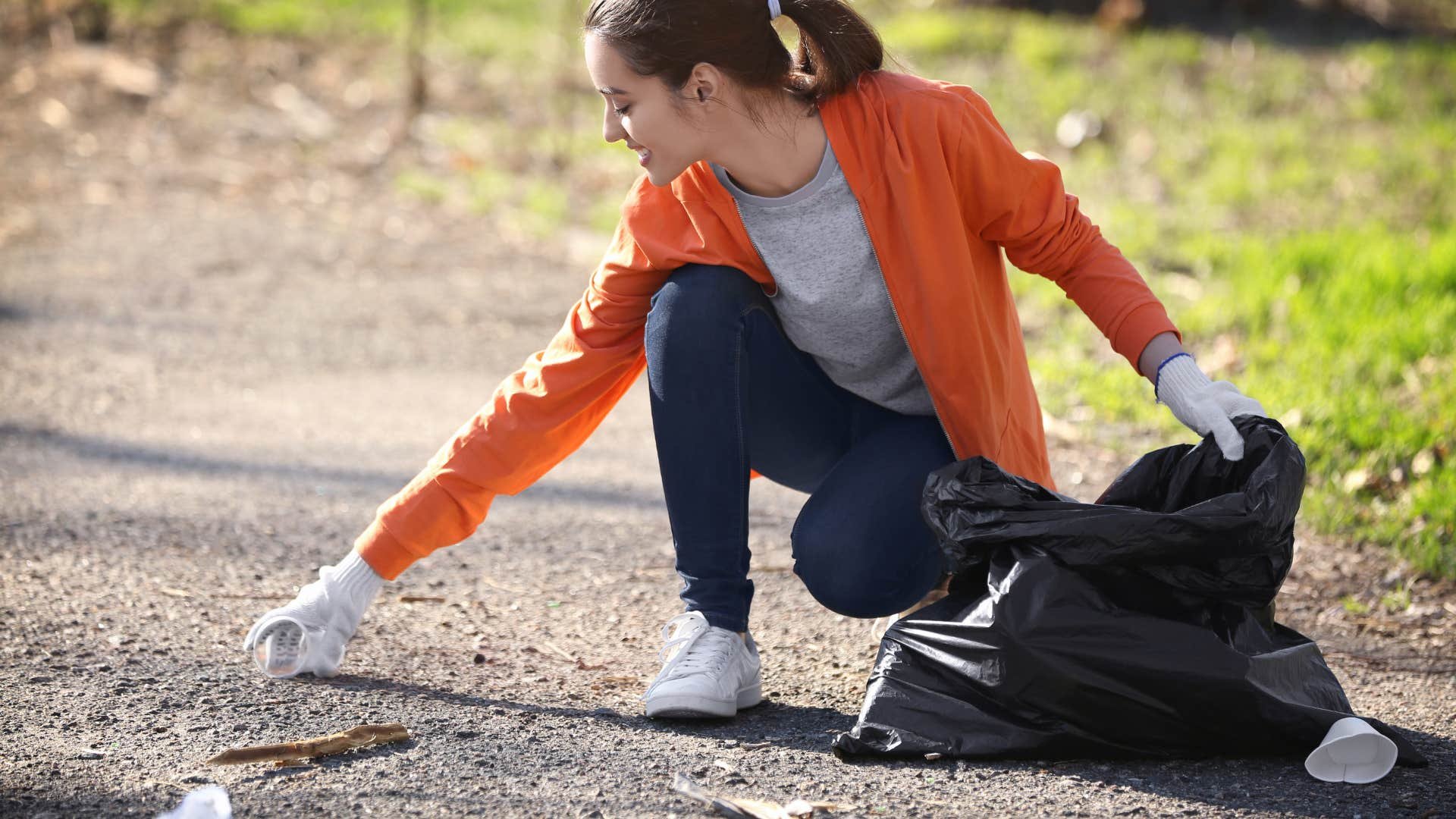
I remember bending down in a grocery store parking lot to grab a crushed cup that kept rolling toward a storm drain. My hands were full, my mind was loud and I still did it. A car paused nearby and I felt my face heat up like I was performing for an audience.
A few minutes later, I was pushing my cart back and I spotted two more things, a receipt stuck to a tire and a plastic wrapper by the curb. I hesitated. Part of me wanted to keep walking, because I had places to be and nobody asked me to do anything.
Then I thought about the next person who would step out of their car with a kid, or with a coffee in one hand and keys in the other. I pictured that wrapper lifting in the wind and landing in the bushes. So I picked those up too and I felt a tiny wave of calm that surprised me.
On the drive home, I kept replaying it. The cup was small. The effort was smaller. Still, it felt like a vote for the kind of world I want to live in.
The thing is, people notice these moments, including you. Maybe you do it without thinking. Maybe you do it and wonder why it matters. Either way, there’s a psychology story underneath it and it has a lot to do with how you treat strangers when nobody is keeping score.
Below are eight traits that often show up in people who pick up litter without being asked. You’ll see some practical, everyday ways these traits show up too, because this habit tends to spill into the rest of your life in the best way.
You Notice What Others Walk Past
Years ago, a friend and I were walking through a park after an outdoor event. Confetti was everywhere and the bins were full. My friend kept stopping to scoop up handfuls and stuff them into a spare bag they had brought. I asked why they bothered and they shrugged like it was obvious.
That moment stayed with me because it showed a kind of attention that feels rare. You can move through the same space as everyone else and see a different reality. You spot the bottle cap in the grass, the napkin under the bench, the little mess that becomes a bigger one later.
Psychology often links this to social awareness and attention. When your brain is tuned to your surroundings, you catch details faster. You also tend to notice other people’s small struggles, like someone looking for a dropped key or a person searching for a trash can while juggling bags.
I’ve caught myself doing this in a hurry too. I’ll be late, I’ll see a piece of trash and my feet slow down anyway. It feels like my eyes send a message to my values before my schedule can argue.
If you want to strengthen this trait, try a simple practice: scan one small area as you walk, like the edge of a sidewalk or the base of a bench. It builds a gentle habit of noticing. Over time, that same “spot it” skill can help you notice when a friend seems off or when a coworker needs help.
You Treat Shared Spaces Like Home
One afternoon, I watched a neighbor pick up litter along the curb with a little grabber tool. They moved slowly, like they were tidying a living room. When I waved, they smiled and said, “It’s nicer to look at on walks.” The tone felt warm and practical.
When you pick up litter, you’re acting like the public commons belongs to all of us. This mindset shows up in small choices, like pushing a stray cart into the corral or wiping down a gym bench for the next person. It’s a kind of stewardship that makes shared life smoother.
Researchers often talk about “civic behavior” or “prosocial behavior,” which includes actions that help your community without direct rewards. One factor that can support these choices is moral identity, which means your values feel like part of who you are. When values feel personal, helpful actions can feel natural.
I notice this trait in myself when I travel. I’m more likely to tidy a table or pick up a stray fork if I’ve decided the place deserves care. The choice changes the whole vibe of the experience, because I feel like a guest who respects the space.
You can build this “shared space” mindset with one question: “How do I want the next person to find this?” It works in a park, in a hallway and even in your own kitchen. The habit of care tends to travel well.
There’s also a quiet confidence in it. You’re sending yourself a message that your choices matter, even in spaces you do not control. That’s a powerful form of everyday integrity.
You Move Fast When Something Feels Off
I once saw a plastic bag swirling toward a storm drain during a windy afternoon. I grabbed it fast, almost like I was catching something fragile. A stranger nearby nodded and we both kept walking like we had an unspoken agreement.
People who pick up litter often have a quick “this needs fixing” reflex. It can be a sign of strong internal cues. Your brain flags a problem and your body responds before you talk yourself out of it.
This trait shows up outside of litter too. You might be the person who points out a spill so someone does not slip. You might be the one who notices a friend’s unsafe situation and steps in with a simple, calm question.
I admit I used to overthink these moments. I would ask myself if it was my place. Then I started paying attention to what happened after I acted. Most of the time, the world got a little safer and a little kinder and my anxiety settled.
Action can be a form of regulation. When you do a small helpful thing, you give your nervous system a clear job. That creates a sense of agency and agency often reduces helplessness.
If you want to keep this trait healthy, pair speed with simplicity. Pick up the trash, then move on. You do not need to police the whole block. A steady rhythm of micro-actions is enough to make a visible difference.
You Handle Mild Discomfort Without Drama
There was a time when I avoided picking up litter because I felt grossed out. I would stare at a sticky cup like it was radioactive. Then I started carrying a small napkin in my pocket and suddenly the “ew” factor felt manageable.
This is where emotional maturity sneaks in. People who pick up litter tend to tolerate small discomforts for a bigger purpose. It’s the same muscle you use when you hold the door even though your arm is tired, or when you let someone merge in traffic even though you are in a rush.
In plain terms, you can feel a brief wave of disgust, awkwardness, or inconvenience and still choose your values. That’s a form of self-control that does not require perfection. It requires a pause and a decision.
My friend once teased me for using a tissue like it was a hazmat suit. We both laughed and that laughter made it easier the next time. A little humor can lower the stakes and lower stakes make good habits easier to repeat.
Try keeping a tiny “clean-up kit” in your bag or car, like hand sanitizer and a couple of tissues. The goal is comfort and practicality. When the barrier drops, the helpful choice gets more consistent.
You Keep Your Standards When Nobody Watches
I’ve picked up litter on empty streets where nobody could have seen me. Those moments feel different. They feel quieter, almost private, like I’m making a promise to myself.
Keeping standards in private often points to a strong inner compass. You have a sense of “how I do things” that does not depend on praise. That’s one reason this habit can feel so grounding.
Psychologists often describe values-based actions as choices guided by internal principles. When your behavior matches your values, you tend to feel more coherent inside. That coherence can show up as calm, consistency and a lower need to prove yourself.
Oddly, these private standards can also reduce resentment. When you do something because it fits you, you feel less trapped by other people’s choices. You might still wish others did more and you stay focused on what you can control.
If you want to strengthen this trait, pick one tiny standard you can keep daily. It could be throwing away a piece of trash you see on your walk, or returning your cart every time. A simple standard creates a reliable identity cue and that cue supports quiet responsibility.
Over time, this can spill into other areas. You might answer emails with more care. You might be kinder when you are tired. Standards in small places teach you that your character shows up everywhere.
You Feel Responsible Without Feeling Superior
I’ve had moments where I worried someone would think I was trying to look virtuous. That worry can make you freeze. Then I watched someone pick up trash with zero attitude. They did it like they were tying a shoe, simple and unremarkable.
People who do this well tend to carry responsibility with humility. They take action and they leave room for others to be human. That balance matters, because shame rarely inspires lasting change.
One healthy way to think about it is that you’re reducing friction for other people. A cleaner sidewalk helps a person in a wheelchair. A cleared path helps a parent pushing a stroller. Your action supports strangers you may never meet.
I try to keep my inner voice gentle when I do it. I remind myself that everybody has blind spots. I have mine too and I’ve walked past plenty of things when I was distracted or overwhelmed.
If you catch yourself feeling irritated, choose a softer frame. Treat it like a small gift to your future self and your neighborhood. That mindset protects your energy and it keeps your civic kindness from turning into bitterness.
You Imagine the Next Person’s Day
My partner once pointed out a broken bottle near a bus stop. I pictured someone stepping off the bus in thin shoes. I grabbed a nearby cardboard piece and nudged the glass into a safer spot until I found a bin. It took two minutes and it changed the risk for everyone who came after.
This trait is empathy in motion. You’re running a quick mental simulation of someone else’s day. You can almost feel what it would be like to deal with that mess, that smell, that hazard, or that ugly moment in an otherwise normal commute.
Empathy gets talked about like it’s a feeling and it can also be a skill. You notice, you imagine and you choose a response. People who practice this skill in small ways often bring it into conversations too, like pausing before a sharp comment or offering patience when someone is flustered.
I’ve also seen this trait show up at work. A coworker would tidy the shared kitchen before a busy meeting day. Nobody praised them. Everyone benefited, especially the people who were already stressed.
If you want to practice “next person” thinking, pick one setting where it’s easy. Try it in a restroom, a break room, or a trailhead. A tiny act of care can strengthen your empathy habit in a way that feels natural and steady.
And yes, it can feel lonely sometimes. When it does, remember that your action is a vote for the culture you want. Culture changes through repeated, ordinary choices.
You Let One Good Choice Spark Another
One day I picked up a single receipt near my car and it somehow turned into a five-minute cleanup. I found myself scanning for more. It felt like my brain had switched into “reset mode,” and I wanted the area to look better than I found it.
Behavior change often works like that. A small action can create momentum, because it shifts your self-image. When you see yourself as someone who cares, you start looking for chances to live that out.
This is one reason tiny habits matter. They can be easier to repeat than big, dramatic changes. They also create quick wins and quick wins tend to keep you engaged.
I’ve noticed this spillover in other parts of life too. After I clean up a sidewalk corner, I’m more likely to drink water, answer a message kindly, or put away a dish. The world feels a little more workable and I feel more capable inside it.
If you want to use this effect on purpose, set a “one item” rule. Pick up one piece of litter when you see it. Stop there if you want. Plenty of days you’ll walk away after one and some days you’ll do more, because the first choice unlocks your positive momentum.
Over time, these small acts form a quiet identity. You become someone who leaves places better. That identity can shape how you treat strangers, how you handle stress and how you relate to the planet you live on.