


I was sitting at my kitchen table in Metairie, the one with the magnet clip holding three grocery lists like they are competing for first place. The February light was doing that Louisiana thing where it looks gentle but still feels like it could turn humid on a dare. Beignet was under my chair, asleep in a tight little comma. My phone was face down, mostly because I have learned that one quick glance can turn into a whole scroll.
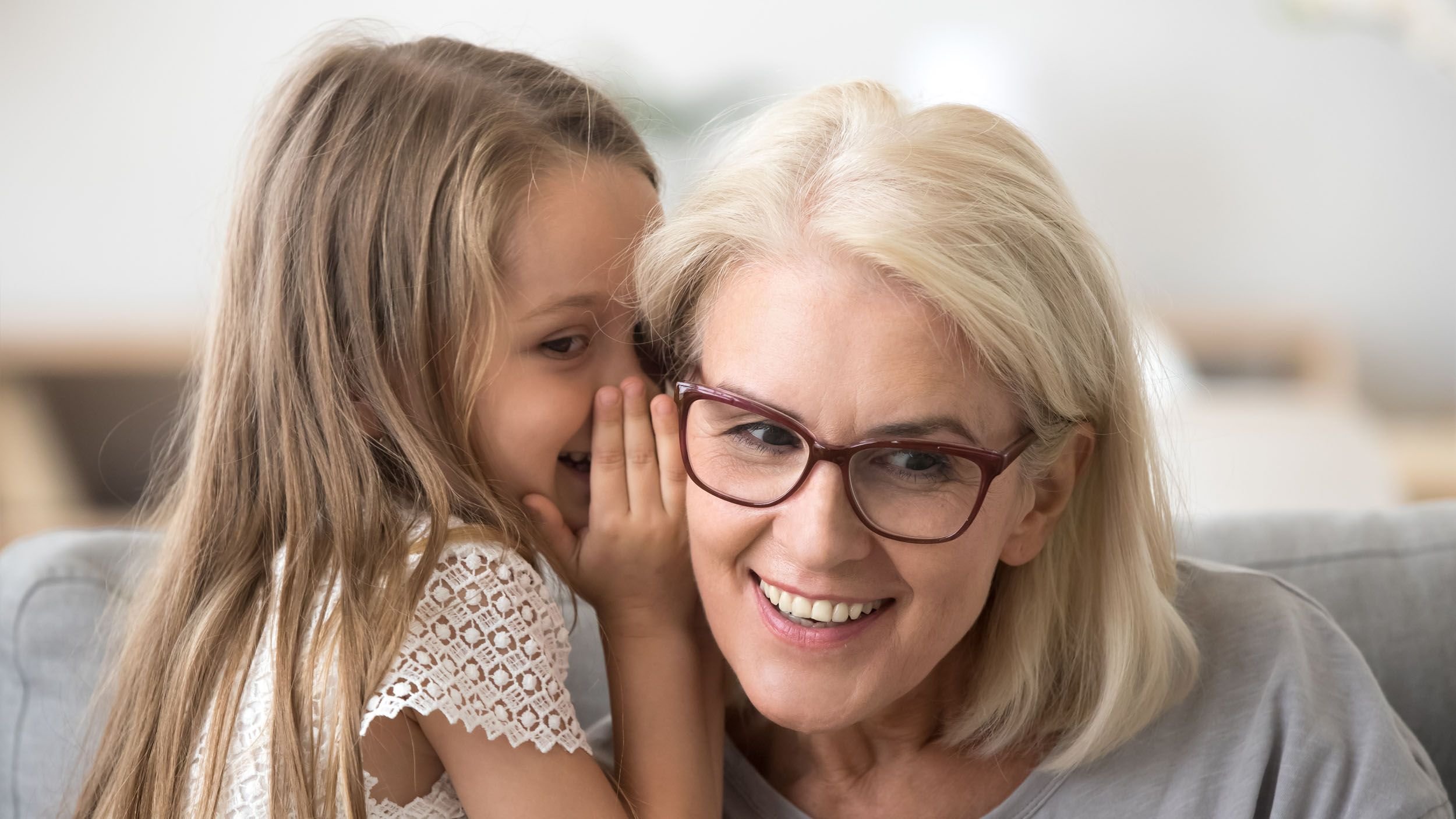
My grandson was talking. He was talking the way kids do when they are deciding whether you are safe for the real story or only safe for the short version. His small hands kept busy with a library tote bag strap he found by the back door. He told me about a classmate who “always interrupts,” and his eyebrows did a serious little pinch that made me want to laugh and cry at the same time.
Then he said, very casually, “You’re the only person who never looks at their phone when I’m talking.” He did not say it like a compliment. He said it like a fact, the way you might say the porch light is on.
I felt something in me go soft. I have spent decades believing closeness came from being useful. I could locate the right book, the right form, the right phone number, the right answer. Listening felt like the part you do before you get to the real work.
Yet there we were and the real work was simply staying. No fixing. No quick advice. No “did you eat?” text. Just attention, held like a warm cup in both hands.
If you have ever wondered what children remember, I can tell you what my family seems to notice first. They notice where your eyes go.
1. The sentence my grandson said like it was nothing
I remember the exact sound of my phone when it buzzes on the table. It makes a tiny, impatient rattle, like a spoon tapping a glass. That day, I had it turned down, but I still felt the phantom buzz in my body. Years of “be reachable” will do that to a person.
My grandson kept talking and I kept my eyes on his face. I noticed the freckles across his nose. I noticed the way he watched my mouth when I answered, like he wanted to make sure I meant it. When he said that line about the phone, I did what I always do when I am trying to be calm, I said, “Let me think a minute.”
Here is what I think he was really saying and you might recognize this in your own life. When someone keeps their eyes on you, you feel like your words have a place to land. Your brain relaxes. Your shoulders lower. Your story gets longer because you sense it will be received.
I admit, part of me wanted to turn it into a joke. I have a dry streak. I could have said, “That’s because I’m old-fashioned,” and let it end there. But that would have made it a cute moment and I could feel this was bigger.
If you are raising kids, loving kids, teaching kids, or simply trying to stay close to people you care about, you have probably seen what happens when attention gets sliced into pieces. A conversation turns choppy. The person talking speeds up. They start competing with your screen. Eventually, they stop.
That day, I made myself say something plain. “I hear you,” I told him. “I like listening to you.” I watched his face loosen. It was the smallest change and it felt like a door opening.
2. The phone habit I kept from the reference desk
There was a time when my “phone habit” was a work habit. At the East Bank Regional Library, you learned quickly that the smallest interruption could derail the whole flow. A patron would finally say what they needed and if you glanced down at a ringing desk phone or a blinking computer, you might miss the real question. So I trained myself to look up, stay steady and use what we called a calm desk voice.
My friend Patricia Gomez, who still meets me once a month “just to browse,” teased me about it after I retired. We were standing near the new releases and she said, “Elodie, you still do that librarian stare. The one that says, ‘Go ahead, I’ve got time.'” I told her that is fair and I laughed, because it is true.
At home, I kept the good part of that habit. I also carried home the pressure that came with it. When you spend forty-three years being the person who can handle emergencies, you start believing every ping deserves a response. You start believing silence equals neglect.
But family life runs on different rules. Your daughter Camille does not need you to solve her feelings. Your son Julian does not need a list of steps. Your youngest, Sophie, does not need a perfectly polished text. They need you to be available in a human way.
If you have a “work brain” that follows you into your living room, you are in good company. Your nervous system learns patterns. It learns “respond fast.” It learns “stay useful.” Then it brings those rules to a Sunday family call and wonders why everyone sounds tired.
It took me a long time to see that I could bring my best librarian skill home. The skill was steady attention. The skill was letting the person in front of me feel like they matter more than the next interruption.
3. What “full attention” looks like in an ordinary Louisiana afternoon
My version of full attention looks simple from the outside. It looks like the phone staying in my bag during “Library Saturday.” It looks like one photo, then the phone goes away again. It looks like my reading glasses on the same coaster in The Chair, with WWNO low in the background while I fold laundry.
One Wednesday after my Dorignac’s grocery run, I had Theo over for a bit. He is loud, fast and full-volume feelings. He was telling me about a “monster” at school, which turned out to be a boy who cut in line. I had the urge to reach for my phone because I wanted to text his mom a quick update. I also wanted to look up a fact, because I always want to look up a fact.
Instead, I stayed. I nodded. I asked one question. “What did you do when he cut?” His answer was messy and honest. It was the kind of answer you get when a child feels safe enough to show you the whole story.
If you are picturing some perfect, serene moment, I will be honest. Beignet barked at a delivery truck and I had to clip his leash and take him to the back door. Theo got distracted by the library tote bags hanging on the hooks. Full attention still happened. It happened in between real life. It happened through returning again and again.
Psychology has a simple truth here. People open up when they feel someone is truly with them. Your face, your eyes, your small responses, they send signals. “I’m here.” “Go on.” “You make sense.” Kids read those signals like they are reading street signs.
Later, when Theo was eating apple slices at the counter, he said, “Grandma, you’re good at listening.” I wanted to say, “I’m trying.” I said, “Thank you.” Then I rinsed the knife slowly, like I was washing off an old habit.
4. Why kids open up when we stay with them
My friend Renee Landry used to be a school counselor and she has a way of saying things that land. We were at Cafe du Monde in City Park on a Friday, my powdered sugar already everywhere it shouldn’t be. She watched a dad at the next table keep half-listening to his child while he scrolled. Renee leaned in and said, “Kids bring you their truth in small packages. If you keep dropping it, they stop delivering.”
When you stay with a child, you give their brain a kind of relief. Their body feels less alone. Their thoughts line up. They do not have to perform to win your attention. They can simply speak. That is when you hear the real stuff, the friend drama, the worry, the secret pride.
I used to think kids opened up because you asked the right questions. I still love a good question, so I am not giving that up. Yet I have noticed something else. They open up when you hold a steady presence long enough for their own thoughts to catch up with their mouth.
Adults work the same way, by the way. Camille wants direct emotional language and I tend to default to practical help. If I stay off my phone and keep my eyes on her, I can catch the moment when she needs a simple sentence like, “That sounds hard.” She softens when I say it.
If you have ever felt someone’s attention slide away from you mid-sentence, you know how quickly it changes the room. Your voice tightens. You shorten your story. You start editing yourself. A child does that too, only faster.
Staying does not require perfection. It requires returning. If your mind wanders, you come back. If your phone calls to you, you let it call for a while. When you do that consistently, you become the person a child trusts with the longer story.
5. My three tiny rules that make presence easier
I like routines because they hold me steady. They also give me a way to practice something without turning it into a big emotional project. So I made three small rules for myself, the kind you can follow even on a day when the weather feels like soup.
First, the phone lives in my bag when I am with my grandkids and it stays zipped. I started this during “Library Saturday” because I wanted the kids to feel my attention as a default. I keep the phone in there for one photo, then it goes back. That is my little ritual of phone stays in my bag.
Second, I place one object on the table that says, “We are here.” Sometimes it is a plate of satsumas. Sometimes it is a library book we picked out together. Once, it was Lucie’s handmade bookmark that I keep in the same novel for months. This gives a child’s eyes somewhere to rest when they are thinking.
Third, I make my body match my listening. Feet on the floor. Shoulders down. Face turned toward them. People can tell when you are listening while leaning away. My retired librarian body knows how to sit like I mean it. I call it listening with my whole face.
If you want to try this, start small. Choose one daily moment. It could be the walk to the carpool line. It could be brushing your child’s hair. It could be the first five minutes after you get home. You give that moment your full attention and you let it be enough.
These rules sound almost silly and they work because they remove decision fatigue. I do not have to debate with myself. The routine already decided. Then my heart gets to show up without negotiating with my screen.
6. The 20-second repair when I slip and glance down
I slip sometimes. You slip sometimes too. A text pops up from Danny, or a calendar reminder flashes, or you remember you forgot to thaw chicken. Your eyes dip and the person in front of you feels it immediately.
One afternoon, Lucie was telling me something careful and detailed, the way she does. She had a question and she wanted exact follow-up questions in return. My phone lit up with a message from Julian. My reflex kicked in and I glanced down.
Lucie stopped mid-sentence. She did not pout. She simply paused and that pause carried a message. She was deciding whether to keep going. I felt that familiar shame script rise up, “I said too much,” “I made this logistics again,” all my old background noise.
So I did a small repair. I put the phone face down. I looked up. I said, “I’m here with you. Please keep going.” I kept my voice steady and I kept my face open. That was it, about 20 seconds.
Repairs matter because they teach a child what happens when connection breaks. They learn that breaks get addressed. They learn that attention can return. Your relationship becomes flexible and that helps kids feel safe.
Later, when I finally checked Julian’s message, it was something simple. “Hey Mom, you free Sunday?” The world did not end. The connection at the table mattered more and the phone could wait its turn.
7. “Library Saturday” as a practice, not a performance
I started “Library Saturday” because I missed the children’s section after I retired. I missed the bright book covers and the soft chaos of story time. I also needed a way to be with my grandkids that did not revolve around errands or chores. I wanted participation over performance and I wanted it to be repeatable.
Some Saturdays, we do the East Bank Regional Library first, then Storyland in City Park, then a snack stop. My rule is simple, the phone stays in my bag except for one photo. I carry a library tote bag the way other people carry a purse. It has become a signal. When the tote is on my shoulder, I am in listening mode.
Ava, my notebook kid, once drew a picture of Beignet and labeled it “Grandma’s dog who listens.” I laughed so hard I had to sit down, because she was telling the truth in a child’s sideways way. She sees listening as a family trait. That felt like a miracle and a responsibility.
If you are trying to build connection with a child, it helps to have a ritual that does not require constant creativity. Kids relax when they know what comes next. They spend less energy scanning for surprises. Then they can spend that energy telling you what they think and feel.
Sometimes I feel the urge to make it “special.” A museum membership. A fancy lunch. A bigger plan. Then I remember the smallest things carry the biggest weight. A shared bench pause at Lafreniere Park. A book chosen together. A quiet moment in the Sydney and Walda Besthoff Sculpture Garden, where you can walk without explaining yourself.
At the end of “Library Saturday,” I usually find a coffee ring on an old circulation note I used as a bookmark. That little stain makes me smile. It tells me we were here and we did not rush through it.
8. How this changed my talks with Camille, Julian, Sophie and Danny
It surprised me how quickly this phone choice spread into the rest of my life. When you practice attention with a child, you start noticing all the places you drift away from adults too. I caught myself doing it with Danny, especially when he jokes while tense and I want to plan while tense. We have done that dance for years.
One evening, Danny started talking about a spur-of-the-moment road trip. My mind went straight to monthly numbers and buffers. I could feel myself reaching for my phone to check the calendar, check the bank app, check something. Instead, I stayed with him for two minutes. I said, “That is fair.” Then I asked, “What part of that trip feels good to you?” His shoulders dropped. He wanted the feeling of freedom more than the destination.
Camille and I have our own pattern. She wants direct emotional language and I default to practical help. When she calls, I now put my phone down even if I am already holding it. I sit in The Chair. I let her finish a thought without me supplying the conclusion. Sometimes I say the plain sentence I used to avoid, I am here with you. It changes the whole call.
Julian is warm but sporadic and our best conversations happen side-by-side. When he visits, we do small tasks, yard work, a trip to the hardware store, or a drive along Veterans Memorial Boulevard. The phone can stay out of it. I have learned that a quiet drive with steady attention gives him room to talk when he is ready.
Sophie sends voice notes and photos and she gives me a low-pressure doorway into honesty. I used to rewrite my replies to sound “right.” Now I send a plain voice note back. I let my first honest sentence be the one she hears. It feels like small moments of connection stacking up into something sturdy.
When I think about my grandson’s sentence, I understand it as a kind of family feedback. He was telling me what lands. He was telling me what lasts. So I keep practicing, one conversation at a time and I keep asking myself a quiet question. Where do my eyes go when someone I love is trying to find their words?
Note from Cottonwood Psychology:
- When a child has a caregiver’s focused attention, their body often settles. This supports emotional safety, which helps them share more of their inner world in everyday moments.
- Phones pull attention in quick, bright bursts. Many families feel this as “half-listening,” even when the adult cares deeply. Small, consistent routines can protect connection during busy days.
- Repair matters. When you catch yourself drifting to a screen and you return with eye contact and a simple sentence, you model that relationships can handle interruptions and reconnect.
- Research supports the idea that device use during parent-child interaction can reduce responsiveness. One observational study in Academic Pediatrics found that mobile device use during a structured interaction task was linked with fewer verbal and nonverbal prompts toward the child. You can read it here: PubMed record.
- “Micro-rituals” such as one phone-free car ride, one screen-free meal, or one weekly outing can build a reliable pattern of attention. Over time, this can strengthen trust and make hard conversations easier.
- If phone use feels compulsive or driven by anxiety, gentle support can help. Many people benefit from learning practical attention skills, values-based boundaries and calming strategies that fit real family life.