


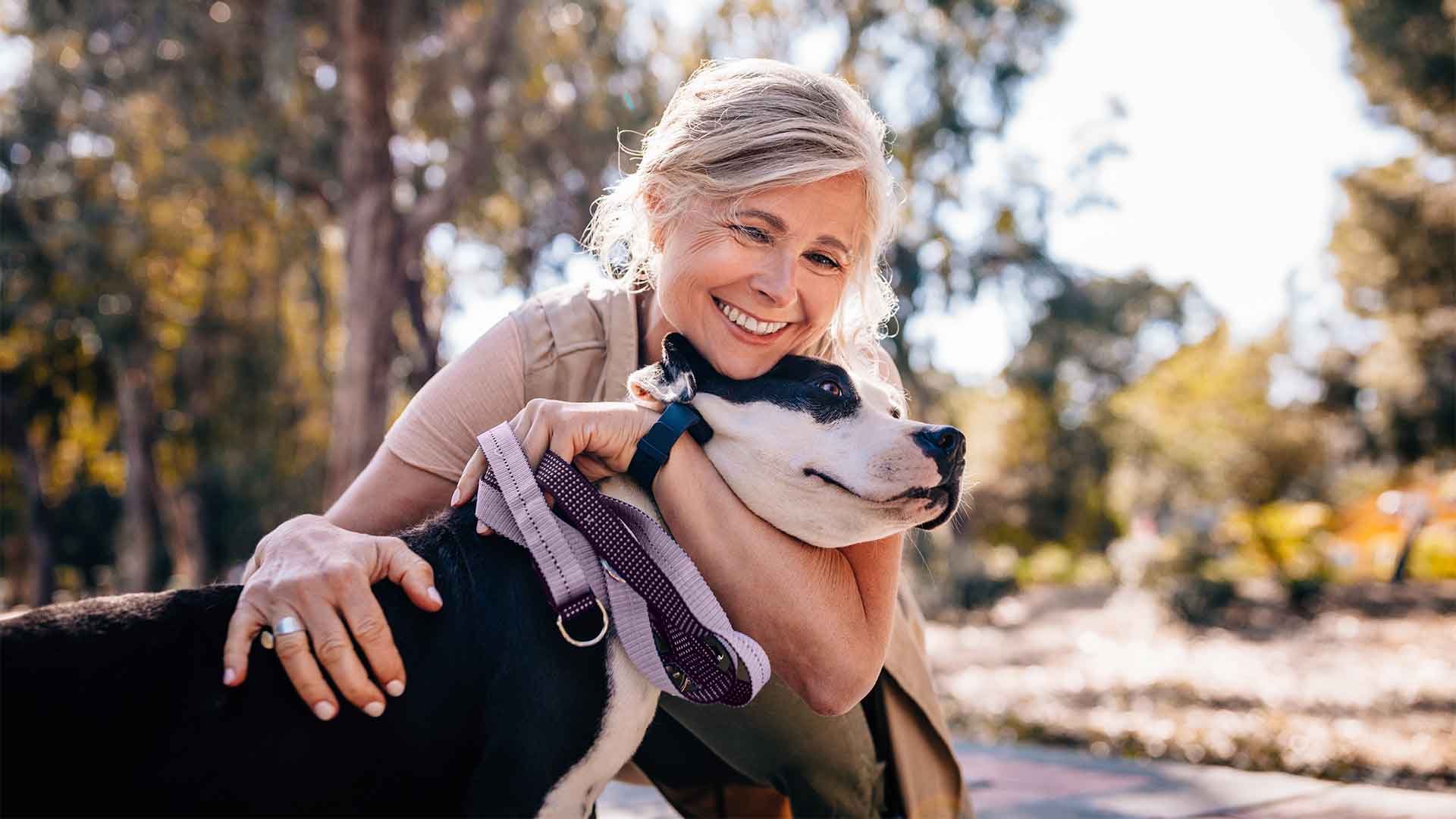
I remember the exact sound my kitchen window made when the wind shifted that morning. A tiny rattle, like the house clearing its throat. I had coffee in my “NWS” mug and Juniper, my mixed-breed rescue, had her nose pressed to the glass like she was reading the sky.
Retirement was supposed to feel like exhaling. By the time I hit 62, my pension estimates and my boring-on-purpose TSP habits were finally lining up in a way that surprised me. I kept re-checking the numbers the way I used to re-check a radar loop. Same result every time. My body still waited for the hook, for the last-minute model wobble.
I live in Laurel Park, North Carolina, where you can watch weather approach like it has an appointment. I used to love that, the visible certainty. Now I see it as a temptation. When something feels uncertain, I reach for a “fact” the way you reach for a porch rail in the dark.
The first time someone asked, “So what did you end up with?” I answered too quickly. I told myself I was being straightforward. I told myself it would be weird to dodge the question. I heard my own voice get crisp and efficient, the voice I used at NWS Greenville – Spartanburg when I needed people to listen.
After that, something changed in a set of friendships that had survived raising kids, divorces, job losses and a couple of truly questionable haircuts in the 1990s. The vibe turned careful. Compliments started arriving with tiny calculations attached, like someone doing long division behind their smile.
So I stopped sharing the number. I kept sharing the person. And I learned that privacy can be a form of tenderness, especially when money makes everyone feel like they are being graded.
1) The question I answered too fast
Years ago, I was at a backyard get-together with two couples we have known since our kids were small. David was at the grill, telling the same bridge joke he tells every summer and I was lining up paper plates like I was building a tiny runway. Someone leaned in and said, “Madison, you’re retired now. What are we talking, exactly?”
I felt my chest do that quick lift it does before a thunderstorm warning. You know that feeling when a conversation turns and you realize you have one second to respond. I answered. I gave the number, rounded, like that made it safer. I even laughed, a little too brightly, like the laugh could absorb the impact.
The next ten minutes were normal enough. Then the air got weird and I noticed it the way you notice pressure dropping. Someone said, “Well, good for you,” and it sounded like they were speaking through a mouthful of gravel. Another friend asked what our mortgage was. Someone else made a joke about adopting them.
When you share a big number, you can feel your own identity shift in the group. People start scanning you for clues. Are you generous. Are you stingy. Are you secretly judging them. Are you the same as you were at 35. It is like you walked in wearing a new outfit nobody can stop staring at.
I drove home that night with Juniper’s dog hair on my black pants and a strange kind of shame. I kept thinking, “I should’ve known.” It is the same sentence my brain used when a forecast busted. The sentence sounds responsible. It also sounds lonely.
At home, I opened the drawer that never opens smoothly, the one with our labeled folders and I stared at the retirement paperwork like it could explain what just happened. David walked by and said, “You okay?” I said, “Okay. Okay.” My tone told on me.
2) The moment “good for you” started sounding like math
My friend Marilyn Ortega, retired nurse and faithful walking partner, met me on the Oklawaha Greenway a few days later. We started at the usual spot and hit the first mile marker, the one I love because it refuses to flatter you. Marilyn looked at me and said, “You’ve been speed-walking. Talk.”
I told her what happened. I told her how the compliments had a sharp edge. I told her how I kept replaying the scene while I washed dishes, hard, like scrubbing could erase a sentence. Marilyn said, “Money makes people count. Even when they don’t want to.”
After that conversation, I began to hear the math hiding in ordinary talk. Someone would ask about our Asheville day trip and then ask, “Did you stay overnight?” like they were estimating a budget. Someone would say, “Must be nice,” and my body would brace for the next line.
When “good for you” starts sounding like math, it can make you feel like your comfort is a provocation. Your brain starts searching for the right way to stand, the right way to mention your life without sounding like a brag. You start editing yourself in real time.
I noticed it at The Book & Bee too, during my Friday tea ritual. I was stirring honey into my cup and someone I know from the Henderson County Public Library book club asked, “So are you traveling a lot now?” I heard myself say, “Here and there,” while my mind ran through a spreadsheet of which details would spark a reaction.
3) How I learned my comfort could land like a threat
It took me a long time to realize that financial comfort can land in a friendship like a threat, even when nobody says a rude word. People can feel left behind. People can feel judged. People can feel like your life is proof they did something wrong, even when you are standing right there holding a plate of potato salad.
I saw it in tiny ways. Invitations shifted from relaxed to performative. One friend started pointing out every coupon she used, like she needed a witness. Another friend began telling me, in detail, about the price of everything her adult son “should be paying” her back for. The conversations had a new tightness, like a knot pulled too fast.
At home, David and I had our own version of this. He wanted longer trips and more spontaneity. I wanted a plan, a backup plan and a printed copy of both plans in the glovebox. Our difference was never about greed. It was about security. We just speak different dialects of it.
Rachel, my heart-forward daughter in Durham, asked me one day, “Mom, do you feel guilty?” She asks real questions at inconvenient times, usually right when I am checking the weather out of habit. I said, “I feel responsible,” which is my generation’s way of saying, “Yes and I don’t like it.”
If you have ever felt like your own good news created distance, you know how confusing it is. You want to celebrate. You also want to keep everyone close. Your nervous system starts treating friendship like a fragile object you have to carry without dropping.
4) Social comparison, envy and the weird little stage we build
I used to think envy was something obvious, like jealousy in a movie. In real life, it can arrive wearing polite shoes. It shows up as teasing. It shows up as a sudden silence after you mention a trip. It shows up as a friend asking for “advice” that feels like a test.
There was a moment when I understood it in my bones. I was scrolling through photos on my phone, a waterfall day at DuPont State Recreational Forest, that rinsed my brain clean. I almost posted one. Then I pictured the comments. I pictured someone reading it while eating leftovers in a quiet kitchen, feeling a small sting they would never confess.
Psychology has a simple phrase for what happens next: social comparison. People size themselves up, often without meaning to. Money, travel, free time and ease become measuring sticks. Your friend does not need to dislike you for their brain to start measuring.
I read a research article that hit me hard because it put numbers to a feeling. Researchers looked at envy on social network sites and found that posts about experiences, like travel, can trigger envy because they feel more personally relevant. That lined up with what I was seeing around me. The “stage” gets built fastest when you show the parts of life people want for themselves.
When retirement and comfort enter a friendship, the stage can appear in person too. Someone becomes the “doing great” friend. Someone becomes the “struggling” friend. These roles can trap everyone. The one with money feels watched. The one without it feels unseen.
I started asking myself a gentler question. What if my job was to protect the friendship from the stage. What if privacy was part of that protection, the way you close a window before a storm so everyone inside can relax.
5) My old habit: treat feelings like weather hazards
My whole career trained me to identify, classify, issue a warning and move on. I spent 43 years at NOAA and the National Weather Service. By the end, as a Warning Coordination Meteorologist, my job was translating risk into plain language without sounding dramatic. That skill kept people safe. It also shaped how I handle emotion.
When money tension showed up in friendships, I treated it like a hazard. I tried to “solve” it with the right explanation. I tried to offer context, like, “We lived modestly,” and, “We saved consistently,” and, “We had stable government work.” My voice sounded calm. My friends looked tired.
If you have this habit too, you already know the problem. A clean explanation does not always calm a feeling. Feelings have their own weather system. They move when they move.
One Tuesday at Blue Ridge Humane Society, I was folding laundry while Tanya Patel, our volunteer coordinator, talked with another volunteer about her rent going up. I almost jumped in with suggestions. Then I watched Tanya simply listen. She nodded and she said, “That’s a lot.” The room softened.
I went home and looked at my Weather Shelf, the old NOAA badge on its hook, the barometer I insist is still accurate, the zip bag labeled “HURRICANE: CHARGERS.” I realized I had been trying to prepare for a different kind of storm. The one where someone decides my comfort means I am no longer safe to be close to.
6) The boundary that saved my friendships
My boundary started small and I practiced it like a routine. I stopped answering number questions. I stopped explaining. I focused on what people were truly asking. Sometimes they wanted reassurance. Sometimes they wanted connection. Sometimes they wanted a comparison that would help them make sense of their own life.
I remember sitting at Jackson Park on a cool afternoon, Juniper chewing a stick like it was an important project. A friend asked again, “So what did you retire with?” I felt my mouth prepare the old response. Then I looked at the pond, the way the geese moved like they owned the place and I said, “We’re comfortable and I keep the details private.”
My heart raced anyway. Boundaries can feel rude when you grew up with “handle it” as your religion. The truth is, a boundary can be an act of care. It keeps you from turning a friendship into a financial report.
David was relieved when I started doing this. He said, “I hate when you get that tight look.” I said, “I’m not worried, I’m… attentive,” which made him laugh. Humor is one of his bridges. I am learning to walk across it.
You can set a boundary and still be generous. You can offer help without offering your whole spreadsheet. In my case, the boundary was also about staying human. I did not want to become a walking symbol of retirement anxiety for anyone else.
Later, Calvin Brooks, a former NWS colleague, texted me one of his “did you see this model run?” messages. I replied with my usual short practicality. Then I added, “Also, retirement friendships are weirder than hurricanes.” He sent back, “Confirmed.” It helped to name the weirdness out loud.
7) What I say now when someone asks for the number
I keep a few phrases ready now, the same way I keep weather radio batteries checked on Sunday afternoons. It lowers my stress because I do not have to invent language under pressure.
If someone asks for the number, I say, “We’re doing okay and I keep exact numbers between me and David.” If the moment feels warm, I add, “I’ve learned it changes the vibe.” Most people understand immediately. Some people laugh with relief, like they were hoping I would make it easier.
When someone keeps pushing, I use a line Rachel helped me practice. “I care about you and I want our friendship to stay simple.” That sentence feels like setting down a heavy bag. It also feels brave, which is funny because it is only words.
I admit I sometimes offer a different kind of detail. I will talk about habits. I will say, “We saved steadily,” or “We live in our same ranch house,” or “We buy quality once and keep the receipt in a folder we never open again.” People can learn from habits without turning it into a contest.
If you want a script, here is one you can borrow: “I talk about money in general and I keep my exact number private.” You can say it kindly. You can say it once. You can repeat it like a mile marker, steady and boring and true.
8) How I handle the guilt, the hiding feeling and the second-guessing
I still wrestle with guilt. Some days it shows up when I am steeping tea, watching the timer tick like it has opinions. I will think, “Why did this work out for us?” Then I will remember coworkers who worked just as hard and had different life storms.
The hiding feeling is real too. Privacy can feel like secrecy if you grew up believing that honesty means full disclosure. I remind myself that privacy is a relationship skill. It lets you choose what strengthens connection and what simply invites comparison.
When I second-guess, I do what I used to do with a forecast. I check my assumptions. Am I protecting myself from shame. Am I protecting the friendship from strain. Am I avoiding a conversation I actually need to have. Those questions keep me honest without pushing me into oversharing.
My son Ethan in Chattanooga, the solve-it one, tried to fix this for me. He sent me a link to a personal finance forum and said, “People debate this all the time.” I told him, “I don’t need a solution, I need a minute.” That sentence is a small miracle in our family.
If you feel guilty about having more, I get it. Guilt is your empathy trying to find a job. You can give it a better job than self-punishment. You can let it guide your generosity, your listening and your respect for other people’s dignity.
9) The routines that keep me steady when money talk gets slippery
My routines keep me from spiraling into the old “issue a warning” mode. Every morning, I still check current conditions out of habit. Then I do my porch scan, sky, trees, flag, bird sounds. I tell myself, “Just noting.” The same phrase works for emotional weather too.
On the Oklawaha Greenway, the mile markers give me a kind of honest comfort. When a conversation with a friend feels tense, I take Juniper out and walk until my shoulders drop. The body understands safety before the mind does.
Fridays at The Book & Bee are another anchor. I sit with my tea and something small to eat and I practice being around people without performing. If money comes up, I breathe, I answer simply and I turn the conversation toward what actually matters. Health. Kids. Sleep. The books we are reading.
My Sunday battery check loop helps too, weather radio, flashlights, pantry, dog treats. David calls it my apocalypse hobby. I call it preparedness that calms my nervous system. When money talk makes me feel exposed, doing this small ritual reminds me I can care for myself without proving anything.
One day, I reorganized the emergency bin with a little too much intensity. David watched me label a zip bag and said, “You’re doing the thing.” I asked, “What thing?” He said, “Cleaning feelings.” He was right.
So now I add one more routine. I sit outside and do nothing for five minutes. No forecast, no list. Just air on my face. I let the world keep moving without my supervision. That practice makes it easier to let other people have their feelings without my management.
10) Letting closeness stay close, even without full disclosure
Closeness used to mean sharing everything for me. Over time, I learned a steadier version of closeness. It includes kind boundaries that protect friendship. It includes letting someone be curious without feeding the comparison machine.
I remember a Saturday when Rachel and the kids came to Laurel Park for our “Weather Day” tradition. Lena collected smooth rocks and named them like they were neighbors. Owen bounced around like a human pinball. I left my phone in my bag and I let myself enjoy their faces without scanning for danger.
Later, Rachel asked, gently, “Did you ever feel like you had to hide your comfort?” I told her, “I feel like I’m choosing what to share.” That was my attempt at a softer truth. Rachel nodded like she could hear the work underneath it.
My friendships have improved since I stopped sharing the number. The conversations feel more like they used to, easy and human. When someone vents about money stress, I listen. I say, “That’s a lot.” I do not rush to prove I earned my comfort. I do not rush to fix their life.
You can keep your friendships from turning into a performance by watching for the early signs. Tight laughter. Little digs. Questions that feel like audits. When you notice those signs, you can choose warmth and simplicity. You can say, “We’re okay,” and then ask, “How are you, really?”
Sometimes, late in the afternoon, I stand by the kitchen window and hear that small rattle when the wind shifts. I still want to predict everything. I still want to keep everyone safe. Then Juniper leans into my leg and I practice being here anyway.
Note from Cottonwood Psychology:
- Social comparison happens fast and quietly. When someone hears details about your retirement funds, their brain may start measuring their own life against yours, even if they love you.
- Envy often shows up as jokes, distance, or sudden awkwardness. These reactions can protect self-esteem in the moment and they can strain connection over time.
- Research suggests that sharing experiences can trigger envy because experiences feel personally relevant. This study on envy and shared purchases helps explain why travel stories, lifestyle upgrades and retirement talk can shift a friendship’s tone:
https://pmc.ncbi.nlm.nih.gov/articles/PMC5990704/ - Boundaries support relationships when they are clear and kind. A simple script like “I keep exact numbers private” gives your friendship a calmer container.
- Emotional regulation gets easier when you use routines that settle your body, like walking, breathing slowly, or taking a short pause before you answer a loaded question.
- If money differences keep creating tension in your relationships, a therapist can help you build language for privacy, generosity and closeness that feels natural for you.
I keep the number to myself and I keep the people close, one honest sentence at a time.