


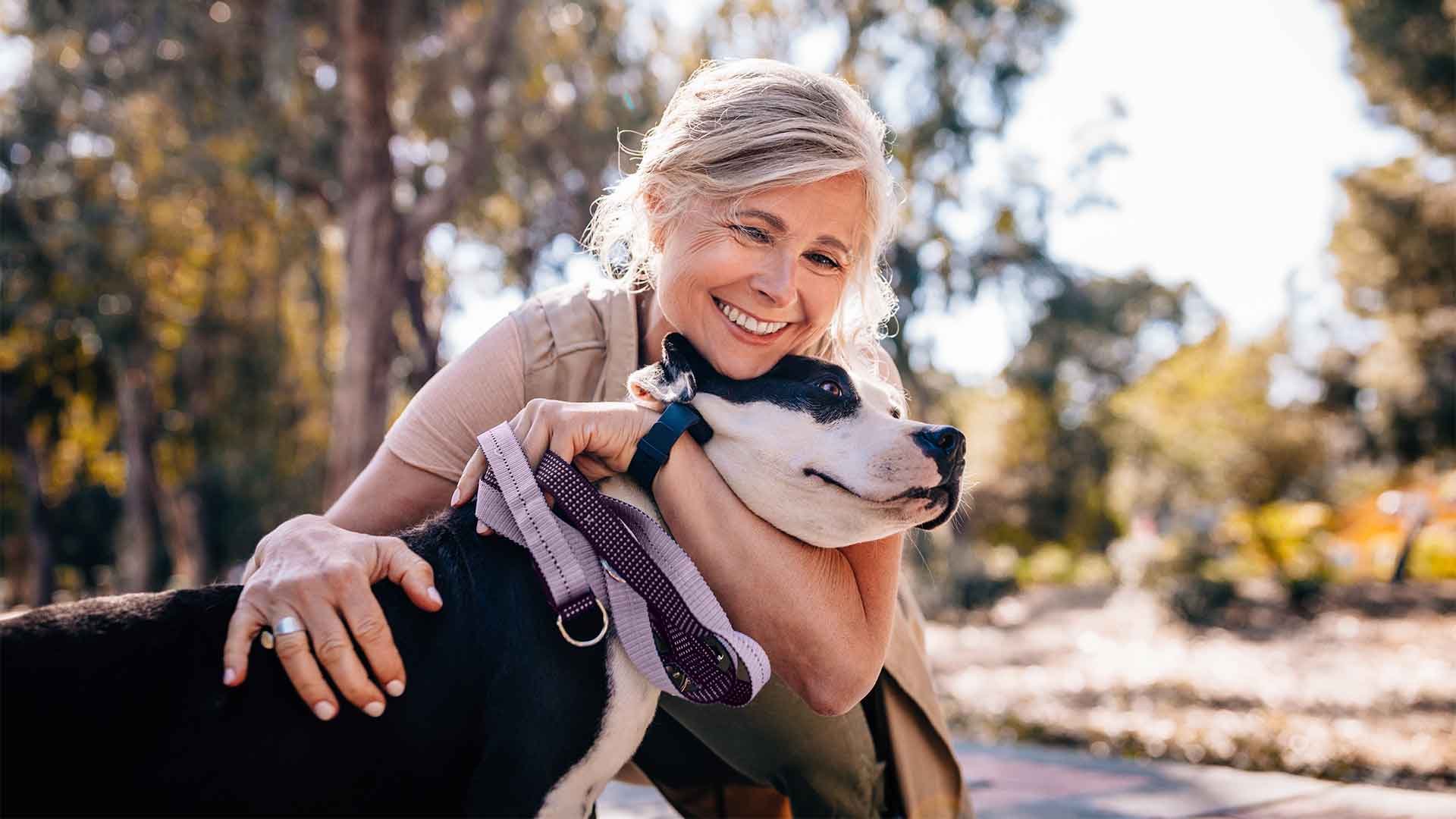
I retired on September 30, 2021 and the next morning I woke up at 5:58 a.m. anyway. That part felt almost funny, like my body had signed a contract my calendar never got. I shuffled to the kitchen in Laurel Park, North Carolina, stepped over the one drawer that still sticks and started coffee I did not actually need. I still checked current conditions, because habits love an empty space.
The porch scan followed. Sky, trees, flag, bird sounds. The routine was familiar enough to make me feel safe and unfamiliar enough to make me feel lonely. For forty-three years with NOAA and the National Weather Service in Greer, South Carolina, the day had a shape. Even chaos had a shape. This morning had good light and no purpose.
I had told everyone I was ready. I was sixty-five, my pension was “boring on purpose,” my labeled folders were in labeled folders and my husband, David, had a list of road trips that could have qualified as an engineering capstone. I kept saying I wanted rest. I kept picturing slow mornings and a quiet brain, like a lake after a thunderstorm when the wind finally lets go.
Nine months later, I was walking the Oklawaha Greenway with Juniper and I did not even have Juniper yet. That sentence tells you the problem. I had the mile markers, the steady pavement and the deer that stare at you like they pay rent. I also had a fog that would not lift and I did not have a name for it that felt respectable.
Rachel, my daughter in Durham, called one day and asked, “Mom, what are you excited about right now?” I looked at my weather radio, the one that is louder than necessary and I said, “Battery longevity.” She was quiet for a moment. Silence after vulnerability has always sounded like failure to me. I cleaned the kitchen hard, because that is how I spell worry.
A few weeks after that, I walked into Blue Ridge Humane Society for the first time as a volunteer. I told myself it was just something to do on Tuesdays. A reasonable person’s hobby. Then I met a shaking dog who made my own chest feel busy and my whole retirement took on a new pressure pattern.
1. The day my work badge came off and the fog rolled in
I remember the exact sound of my badge coming off the hook. A small metal click, then that soft scrape as I slid it into the desk drawer. I had kept my old NOAA badge on my “weather shelf” at home too, because apparently I like souvenirs of responsibility. That day, David hugged me in the kitchen and said, “We did it.” He meant we made it to retirement together. I heard, “Now what?”
The first week felt like a vacation that forgot to end. I drank coffee on the porch, watched clouds move over the mountains and told myself I was finally learning to sit still. I even tried to read a novel without checking the radar, which sounds small until you have spent decades translating risk into plain language while phones buzzed and sirens tested. I kept hearing my old office in my head, the hum of printers and the calm voice I used when everyone else got loud. I missed the hum more than I expected.
Years ago, I believed that if I explained the risk clearly enough, people would be safe and I would not have to feel helpless. Retirement pulled that belief out of its packaging and set it on the counter like a strange appliance. Without a forecast to make, I had fewer “action items,” and more feelings. My generation’s favorite solution is to handle it. So I tried.
David wanted longer trips and more spontaneity. He is a retired civil engineer and he loves a clean plan, yet he also loves a surprise detour for barbecue. I wanted a plan, a backup plan and a printed copy of both plans in the glove box. We kept negotiating, him joking and me tightening. The thing is, we were both trying to feel secure, we just spoke different dialects of it.
My friend Marilyn Ortega, a retired nurse who walks with me sometimes, called it before I did. We were at Jackson Park, circling the same loop we always do and she said, “You look like you’re waiting for a warning that never comes.” I laughed, because it was accurate and rude in the kindest way. Then I stared at a bench as if it had answers. The fog was not dramatic. It was quiet, persistent and oddly tiring.
When you retire, people ask what you are doing with your time. You can feel pressure to provide a satisfying answer, like you are pitching your own life. I tried “gardening,” which lasted two afternoons. I tried “travel planning,” which turned into printing weather averages for towns we had not even picked. The fog stayed. It turns out your identity can linger in the air, like humidity, even after the front has passed.
2. Why my nervous system stayed on shift
I admit something that would have made my younger self roll her eyes. My body did not understand retirement. My calendar knew. My pension knew. My nervous system stayed at the forecast desk, waiting for the next urgent thing.
For decades, my job rewarded alertness. During hurricane seasons, especially the brutal 2004 one that shaped my “prepare early” reflex, being attentive felt like love. If you are the Warning Coordination Meteorologist, you translate uncertainty into clear steps and you do it fast. That habit turns into a posture. Chin slightly up, ears straining, brain scanning. I have mild hearing loss now, noted in 2020, so I strain even more and I hate admitting it more than I ever hated issuing a tornado warning.
My former colleague Calvin Brooks still texts me, “Did you see this model run?” I love him for it. I also feel my pulse rise when I hear my phone buzz, because my body remembers that a buzz can mean someone needs you. When you spend forty-three years being useful on demand, your system learns a simple equation: being needed equals safety. Retirement can disrupt that equation.
My “tell” shows up in chores. I re-check forecasts I do not need. I organize the emergency bin. I date leftovers with Sharpies like I am running a lab. On Sunday late afternoons, I do my “battery check” loop, weather radio, flashlights, pantry, dog treats. David calls it my apocalypse hobby. I call it being normal.
There was a time when I believed feelings should behave like weather hazards. Identify, classify, issue warning, move on. Yet emotions do not leave the area because you named them. If anything, naming them can turn the volume up, especially if you have lived by the rule, “Don’t make it worse.” Retirement gave my feelings more room and my old strategies tried to shrink them back down.
If you are in this stage, you might recognize the strange mix. You have freedom and you feel restless. You have quiet and you feel edgy. You love your family and you feel oddly alone. The fog can come from many sources, including identity shifts, changes in routine and the sudden absence of external deadlines. For people like me, who like mile markers and checklists, the open space itself can feel like weather that might turn.
3. The shelter visit I told myself was “just looking”
My first Tuesday at Blue Ridge Humane Society, I arrived ten minutes early, because of course I did. Tanya Patel, the volunteer coordinator, handed me a pile of laundry and said, “Thank you. We always need hands.” She said it in that warm, direct way that makes you want to stand up straighter. I felt a little spark in my chest and I pretended it was caffeine.
I started with towels. I can fold towels with the focus of a person landing a plane. I listened to the building, the echo of barking, the squeak of kennel doors, the low murmur of staff voices. Animals have their own kind of weather. You can sense it in the air. The sound is loud, yet you can also pick up on one dog’s quiet panic if you pay attention.
“Just noting,” I told myself, walking past a run where a dog sat very still. Her body was tense and her eyes tracked every movement like a radar sweep. When I crouched down, she backed into the corner and started shaking. Not dramatic shaking, yet continuous, like a tremor you cannot stop. I felt something in me soften and tighten at the same time.
Tanya came over and said, “That’s Juniper. She’s sweet. She’s scared.” She said it like a fact, no judgment, no story about how the dog should feel. I asked what Juniper needed, because that is my default question. Tanya said, “Time, steady voices, gentle routines.” The word routines landed like a key finding the right lock.
My daughter Rachel would later say, “Mom, you started talking about that dog like she was a weather system.” She was right. I went home and told David about Juniper’s shaking, about her ears twitching at every sound, about the way she kept her paws tucked under like she was trying to disappear. David listened, then asked, “Do you want to adopt her?” I said, “We should think through logistics.” He smiled and said, “That’s a yes in your language.”
When you tell yourself you are “just looking,” you give your heart room to walk forward without announcing itself. That is what happened to me. I kept showing up on Tuesdays. I kept folding towels. I kept sitting near Juniper’s kennel and reading aloud in a voice I used for grandkids, calm and steady. Each week, she shook a little less. Each week, I felt a little more anchored.
4. Juniper’s shaking and my old habit of trying to fix it fast
When Juniper came home, I did what I do best. I prepared. I bought a crate, a leash, treats, a bed and a water bowl that matched our kitchen because apparently I have standards even under stress. I labeled a zip bag “DOG: VET” and put it on the shelf beside “HURRICANE: CHARGERS,” which made David laugh until his knee osteoarthritis reminded him stairs are the enemy.
The first night, Juniper paced. Her nails clicked on the floor like a metronome set too fast. She flinched when the ice maker dropped cubes. She jumped at the sound of a car door outside. I tried to solve it. I tried white noise. I tried soothing music. I tried moving her bed three times. At one point I was standing in my own living room at 2:10 a.m. whispering, “Okay. Okay,” which is my secret code for “I am not okay.”
My instinct was to issue a warning and then end the event. Fix, fix, fix. Yet Juniper did not need a perfect solution, she needed a steady presence. That was uncomfortable for me, because presence feels inefficient. I spent decades turning uncertainty into action steps. Now the action step was sitting on the floor with a trembling dog and letting time do what time does.
Marilyn once told me, “Madison, you can’t file feelings away like receipts.” I hated that sentence. I also needed it. With Juniper, every attempt to rush her nervous system made her more alert. Every time I slowed down, she leaned in, even if it was just a fraction of an inch.
It took me a long time to realize Juniper was teaching me my own pattern. When someone I love is upset, I offer plans. When David is worried, I print directions. When Rachel is overwhelmed, I send soup and a kids’ rain jacket and text “roads look okay.” Those are loving things. They are also a way of staying in control.
One afternoon, Rachel visited from Durham with Lena and Owen, my grandkids. Owen ran through the house like a pinball, asking “why” until adults confess they do not know. Juniper shook at first, then she hid behind my legs and I felt the strange privilege of being someone’s safe place. Lena, careful observer that she is, crouched down and whispered, “She’s doing her best.” I wanted to tell Lena I was too. Instead, I just nodded and stayed still.
5. What “purpose” looks like when it’s small and daily
Purpose used to mean a shift schedule. It meant briefing emergency managers. It meant translating radar signatures into plain language and keeping my voice calm so other people could be calm. Retirement tried to hand me “free time” as a gift. My brain treated it like a blank worksheet and waited for instructions.
Then Juniper started changing the shape of my days in tiny ways. She needed breakfast at a consistent time. She needed a walk that did not feel rushed. She needed me to notice when her ears went back, when her tail tucked, when her breathing sped up. You might think that sounds like stress. For me, it felt like quiet, steady meaning.
I remember the first morning she trotted to the door without hesitation. It was cold enough that the kitchen window sounded different, a slight rattle when the wind shifted. I steeped my tea for exactly four minutes, because habits die hard and I watched Juniper sniff the air like she was reading the day’s forecast. I realized I was smiling with my whole face. That had been rare in the fog months.
On the Oklawaha Greenway, the mile markers do not lie. I started noticing how my own body felt at mile one, mile two, mile three. Some days my shoulder, the one with the rotator cuff repair back in April 2019, reminded me to keep my arm swing gentle. Some days my mind ran ahead, building imaginary problems. Juniper always brought me back to the present with a sudden stop to inspect a leaf like it was breaking news.
Fridays, I still go to The Book & Bee in Hendersonville for tea. I like being around people without having to perform. I started bringing Juniper sometimes, sitting at an outdoor table when the weather behaved. The barista asked her name and I felt that little spark again, the one that comes when you belong somewhere. It was simple. It was enough.
If you are looking for purpose after a big transition, you might think it has to arrive as a grand plan. Mine came as daily care. It came as refilling a water bowl. It came as noticing a dog’s nervous system settle. Purpose can live in small repeats. It can live in the choice to show up again tomorrow.
6. The psychology of being needed, without losing yourself
One of the strangest parts of retirement is realizing how much of your identity came from being useful. I spent years being the person who had answers, or at least a probability range. When that role ends, you can feel untethered. You might also feel guilty for wanting to be needed, because you think it sounds selfish. In my house, it sounded practical. I wanted a reason to get up that felt solid.
Psychology has a word I like because it feels plain enough to hold. Purpose. Researchers have connected a sense of purpose with health and longevity. The line that stuck with me came from researcher Patrick Hill, who described purpose as “finding a direction for life and setting overarching goals for what you want to achieve can help you actually live longer.” That idea lands differently when you are seventy and you can feel time more clearly.
My friend Joan Whitaker from book club at the Henderson County Public Library once said, “Your purpose doesn’t have to be loud.” We were returning books and I was fussing with the self-checkout like it had personally offended me. She said it gently, then slid her book into the slot and smiled. I thought about how my old work purpose had sirens attached and how my new purpose had dog hair on my sweater. Both were real.
There is also research showing that volunteering can support mental health in older adults. I felt that in my bones at the shelter. When Tanya handed me a task, my brain relaxed. When I walked a nervous dog and saw her tail lift, I felt competent in a way that did not depend on a job title. A public health article I read later included a line from Yitao Xi, MPH, that stayed with me: “Our findings help strengthen the existing research on the epidemiology and prevention of depression in older adults.” I heard that and thought, yes and I also want to add, it strengthens the part of you that remembers you matter.
Still, being needed has a shadow side. If you tie your worth to how much others rely on you, you can lose yourself in caretaking. I have done that with my family in subtle ways. I bring logistics when someone asks for comfort. I offer solutions when David wants warmth. I start managing the moment when Rachel wants me to sit in it with her.
Juniper helped me practice a healthier version. She needed me and she also needed me to stay steady. That steadiness included boundaries. I could not be on high alert all day. I had to sleep. I had to eat. I had to let David help, even when my brain wanted to run the whole operation. Caring for something living can teach you that support works best when it is shared.
7. My repeatable routine for building meaning after retirement
I still love routines and I have stopped apologizing for that. My retirement meaning did not arrive as a lightning bolt. It arrived as a set of repeatable steps, like a checklist that leaves room for weather.
I start most mornings the same way. 6:05 a.m., I check current conditions out of habit and pretend it is curiosity. 6:20 a.m., coffee and porch scan. I listen for bird sounds and I watch the flag for wind shifts. Then I do something I never did well while I was working. I pause. Ten breaths, slow enough to feel my shoulders drop. That pause is a small vote for presence.
After that, Juniper and I walk the Oklawaha Greenway. Some days I walk faster when I feel anxious and I catch myself because the mile markers tell on me. I soften my pace. I let Juniper sniff. If you want to borrow this, the principle is simple: give your body regular proof that life can move at a humane speed. Your nervous system learns from repetition.
Tuesdays, I volunteer at Blue Ridge Humane Society. The tasks change, laundry, dog walks, quiet pep talks to nervous animals, yet the feeling stays steady. I leave feeling tired in the best way, like my energy went somewhere honest. This is where I also practice “no-warning conversations,” the skill of being with discomfort without turning it into action items. Tanya will mention a dog who is struggling and I will say, “Okay,” and breathe. I do not have to fix everything to be useful.
Fridays at The Book & Bee, I let myself be a person who simply exists in public. I drink tea, I people-watch and I keep my phone in my bag unless there is an actual warning. Sometimes I bring a small notebook and write down one good thing I noticed that week. A kitchen window rattling in the wind. David laughing at his own joke. Juniper resting her head on my foot. Those details are evidence of connection.
On Sundays, I still do my battery check loop, because I am who I am. Yet I have added one gentle question at the end: “Where did I feel needed in a good way this week?” Sometimes the answer is “Juniper ate without pacing.” Sometimes it is “Rachel called to ask my opinion.” Sometimes it is “I sat beside David on the couch and did not try to optimize the evening.” Meaning shows up when you start looking for it with a softer gaze.
Note from Cottonwood Psychology:
At Cottonwood Psychology, we let real authors share their real-life stories and struggles and we explain how these psychological concepts affect us in daily life.
- A sense of purpose can support long-term health, especially during life transitions like retirement. Research shared by Patrick Hill highlights how purpose relates to longevity, including his line that “finding a direction for life and setting overarching goals for what you want to achieve can help you actually live longer.” You can translate this into daily life by choosing one steady “overarching goal,” like caring for a pet, building community routines, or volunteering. Source: Association for Psychological Science on purpose in life (Patrick Hill)
- Volunteering provides structure, social contact and a felt sense of contribution and it may also support mental health for older adults. In a Columbia Public Health article, Yitao Xi, MPH, notes, “Our findings help strengthen the existing research on the epidemiology and prevention of depression in older adults,” which fits with many people’s lived experience of feeling steadier when they have meaningful roles. In Madison’s story, the shelter’s Tuesday rhythm becomes a predictable anchor that reduces the “fog” feeling. Source: Columbia Public Health on volunteering and depression odds (Yitao Xi, MPH)
- Retirement affects people differently and mental health patterns during retirement vary widely. The HEARTS Study paper in Frontiers in Psychology states, “the retirement process cannot be properly characterized in terms of universal trends and statistical main effects.” This matters because it gives you permission to stop comparing your adjustment timeline to someone else’s and to focus on what your own nervous system needs. Source: Frontiers in Psychology (PMC) on heterogeneity in the retirement process (Magnus Lindwall and colleagues)
- Pets can support emotional regulation by adding routine, connection and a sense of responsibility that feels personal. Jeremy Barron, M.D. at Johns Hopkins writes, “Caring for a pet provides a sense of purpose to the owner,” which mirrors Madison’s experience of feeling anchored by feeding times, walks and the slow trust-building with Juniper. For many people, this “needed” feeling supports mood when work roles change or shrink. Source: Johns Hopkins Medicine on pets, purpose and wellbeing (Jeremy Barron, M.D.)
- “Being needed” feels good when it includes boundaries and shared support. Madison’s shift from fixing fast to staying present reflects a common psychological skill, tolerating discomfort long enough for safety to build through repetition. You can practice this by choosing one small caretaking routine and pairing it with one self-care routine, like a short walk after volunteering or a quiet tea ritual, so your worth does not depend on constant availability. Source: Frontiers in Psychology (PMC) on the varied retirement process and adjustment patterns