


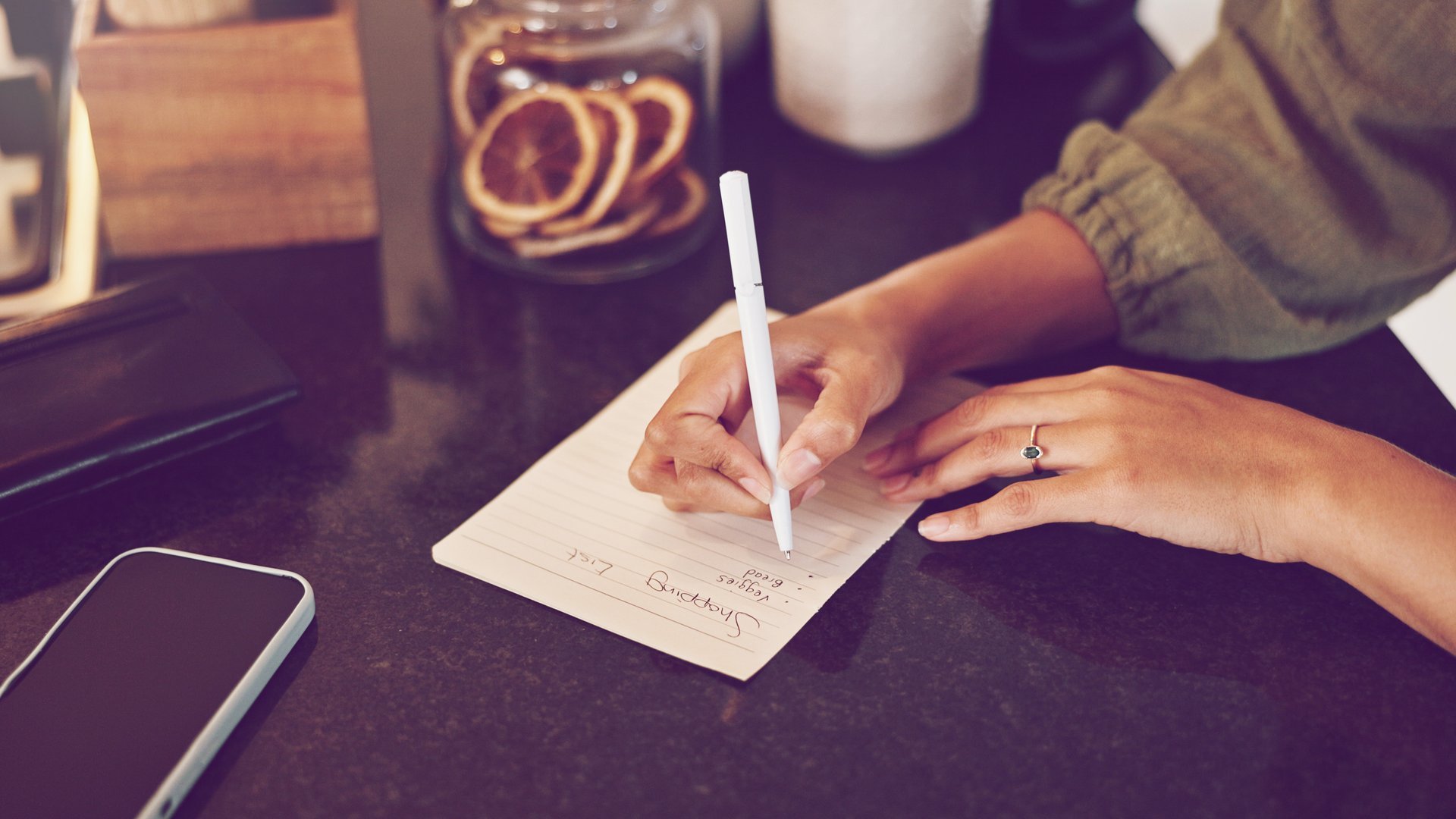
I keep a small notebook in the spot where my keys land. If I miss that spot, I miss the notebook. Then the day starts with a tiny scavenger hunt and I can feel my brain rev up before I even drink water.
One morning, I tried to be “efficient” and move everything into an app. I typed tasks fast, added cute little icons and felt strangely proud. Ten minutes later, I opened the list again and my eyes slid right off it. It looked like a wall.
So I grabbed a pen and wrote three lines on paper. The room felt quieter. The list looked smaller, even though the tasks were the same.
Later that week, a friend texted me a photo of their own page. It was messy, crossed out and covered in arrows. It also looked alive. I realized my lists always become a snapshot of what my mind is trying to hold.
When life gets busy, my thoughts stack up like dishes by the sink. Writing them down feels like putting each one in its place. I can finally see what belongs today, what belongs later and what belongs in the trash.
If you still make a handwritten to do list, you may already know this feeling. You are building mental clarity in a way your body can sense. You are also practicing self trust, because you are choosing a system you can return to when your day gets loud.
You give your brain a clean desk
I notice it when my counter is crowded. One mug becomes three, then mail appears, then a charger snakes across everything. My attention does the same thing. It spreads out and starts tripping over itself.
When I write a list by hand, I feel a little reset happen. The page becomes a home for loose thoughts. Even my shoulders drop a bit.
Psychology has a simple idea here: your brain can only hold so much at once. When tasks stay in your head, they compete for space. That competition can raise stress and make decisions feel heavier. Writing tasks down can lower cognitive load because the page does some of the holding for you.
The clean-desk feeling also comes from boundaries. A page has edges. That seems minor, yet it quietly tells you, “These are the items.” Your mind can stop scanning the horizon for hidden tasks.
Sometimes I add a line called “parking lot.” I put worries there that do not need action today. The act of placing them somewhere keeps them from buzzing in the background. It turns vague pressure into something you can point to.
If your days feel crowded, try keeping the first list small. A short page can function as an attention anchor. You glance, you act, you come back and your brain learns that it does not need to keep shouting reminders.
You think in steps that you can actually do
Years ago, I wrote “Get life together” on a list. It sat there like a dare. By noon, I felt behind and the day had barely started.
Handwriting has a way of pushing you toward plain language. Your hand slows you down. That slow-down can nudge you to translate big wishes into doable actions.
A useful trick is to write tasks so they begin with a clear verb. “Email the dentist.” “Wash the greens.” “Open the document.” Each one has a finish line you can see. Your brain enjoys finish lines.
This connects to motivation in a simple way. When a step feels possible, you start. Starting creates momentum. Momentum reduces the urge to avoid.
I also like to give myself a “two-minute doorway.” I write the smallest step that opens the door. When I write “Put shoes by the door,” I often end up taking the walk. When I write “Chase fitness,” I end up staring at the ceiling.
There is a quiet confidence in a list full of next right step items. It tells you the day can move forward in real actions, even when your emotions feel complicated.
You remember plans better when your hand moves
My phone can remind me of anything, yet I still forget what I promised myself by lunch. I have looked at a digital list three times, then asked, “Wait, what was the point of today?” That question feels dramatic. It also feels honest.
When I write something down, the memory sticks in a different way. I can picture the word on the page. I can remember where I wrote it and the little scribble next to it.
There is research that helps explain why. A well-known paper in Psychological Science found that taking notes by hand can support deeper processing than typing for many people. You can read the handwriting study if you like the details. The big takeaway is easy to feel in daily life: writing can push you to think about meaning, not only capture words.
That deeper processing matters for to do lists too. When you write “Call Alex about the appointment,” you are also replaying the context. You are building a tiny story around the task. That story acts like a memory cue.
I sometimes test this on purpose. I write a list, then leave it in another room for an hour. When I come back, I can recall more items than I expect. The page trained my brain while I wrote.
If you want to lean into this benefit, add a short reason next to one task. “Pay bill, so Friday feels free.” “Prep lunch, so afternoon stays steady.” Meaning makes tasks easier to remember and easier to choose.
You choose clear priorities fast
A friend once watched me stare at a long list and said, “Pick the one that buys you oxygen.” That line made me laugh. It also changed how I plan.
Handwritten lists make it easier to see what matters because you can shape the page. You can circle one item. You can draw a box. You can move tasks into a “later” corner. The layout becomes a quick map for your eyes.
In psychology terms, your attention follows what stands out. A paper page lets you create that contrast with simple marks. You do not need a special system. A star, an underline and a short note can become your priority filter.
I also notice a honesty effect. If I write ten items, I can feel how unrealistic that is. My hand knows how long writing takes. That time sense can help you choose fewer priorities and protect your energy.
Try this when you feel overwhelmed: write every task once, then draw a line under the three that make the rest easier. Those three become the spine of the day. Everything else can flex around them.
You trust visible progress
I love the moment a task gets crossed out. The line is simple, yet it feels like closing a door gently. On a hard day, that tiny motion can be the best part.
Visible progress matters because your brain likes feedback. When you can see that you moved from “open” to “done,” you get a small reward feeling. That reward can help you keep going, especially when tasks are dull.
Paper gives you a physical record of effort. Apps can track progress too, yet a page shows the whole story at once. You see the scribbles, the revised plan and the tasks that turned out to be unnecessary. That snapshot can build visible progress and a realistic sense of what your day contained.
I keep some old pages folded in the back of my notebook. When I think I never get anything done, I flip through them. I see groceries, calls and tiny admin tasks that kept life moving. The proof changes my mood.
If you crave this kind of evidence, try leaving completed tasks on the list for one day. Let the check marks sit there. Let your brain absorb the fact that you showed up.
You build calm through a simple daily ritual
There is a specific time of day when my mind gets slippery. It is usually late afternoon. I can feel myself reaching for snacks, tabs and distractions. A page and a pen can bring me back.
I sit down and rewrite the list for the rest of the day. I do not copy everything. I choose what still matters. That choosing is the calming part.
Rituals work because they reduce decision fatigue. When you repeat the same small action, your brain spends less energy figuring out what to do next. A daily ritual creates a predictable doorway into focus.
My ritual is simple. I write the date, then three priorities. Then I write one care task, like “drink water” or “step outside.” The care task keeps my list from turning into a machine voice.
The thing is, calm can come from structure that feels friendly. A handwritten list can hold your plans and your humanity in the same space. It can remind you that your life includes work, errands and breathing.
If you want to try this, pick one consistent moment. Morning coffee works. So does the last five minutes of your workday. The habit will start to feel like calm momentum, because you will know you have a way to reset.
You keep small promises to yourself
I admit I used to treat my own plans like suggestions. If a friend asked for something, I showed up. If my list asked for something, I negotiated with it all day.
Handwritten lists can change that relationship. When you write something in your own handwriting, it feels personal. It feels like a message from you to you.
This is where tiny promises come in. A promise does not need to be dramatic to matter. “Send the email.” “Stretch for two minutes.” “Put the laundry in.” Each one is a chance to practice follow-through.
I once wrote “start” as a full task. That was it, just “start.” I crossed it out five minutes later and felt ridiculous. Then I felt proud. I had kept the promise to begin.
If you struggle with consistency, try making one promise so small it feels almost silly. Put it on paper. Then complete it early. That early win can build self trust in a way your nervous system understands.
Over time, those small completions add up. You begin to believe your own plans. You also learn which promises fit your real life and which ones belong in a future season.