


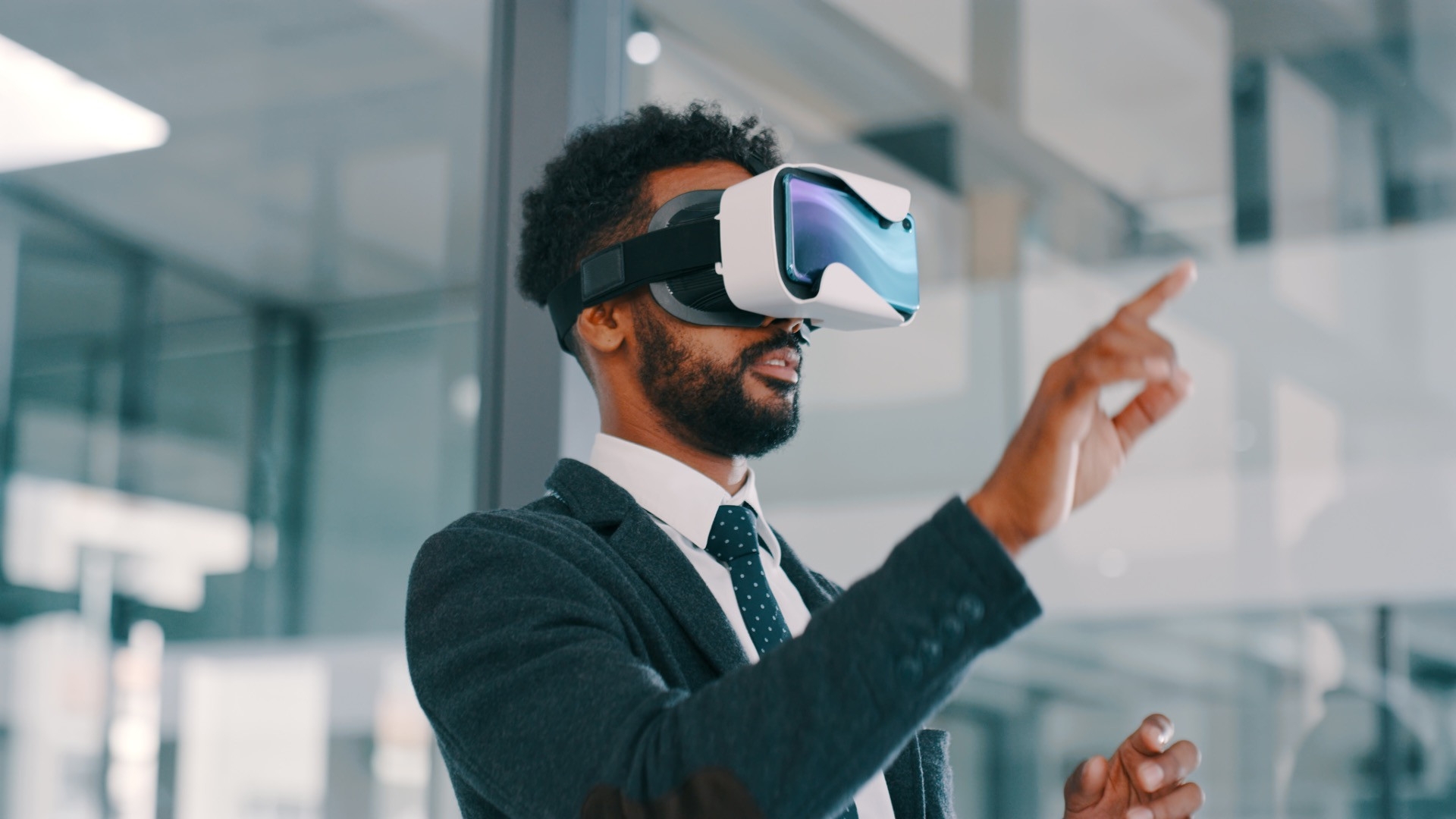
A study by Kazuki Yamamoto and Takashi Nakao, published in Frontiers in Psychology, found that people felt less connected to a virtual body when they imagined that body was in pain. In the experiment, participants “owned” an avatar through synchronized touch and sight, then watched a brief threat scene. When they had been guided to picture abdominal pain imagery in the avatar, their bodies showed a weaker automatic reaction.
That may sound niche, yet it points to something many people recognize in everyday life. When the mind expects discomfort, it can change how close the body feels. This line of research helps scientists map the links between body ownership, attention and emotion, using immersive tools like VR. You can read the study for the full methods and measures.
Why Body Ownership Matters
Most of the time, your body feels like home. You reach for a cup, you step off a curb, you scratch an itch and it all feels “obviously you.” Psychologists call that basic feeling the sense of owning your body.
Body ownership supports safety and movement. It also helps you decide what matters right now. A sharp sound behind you pulls your shoulders up. A hot pan makes you yank your hand away. Those quick reactions depend on the brain treating the body as a protected part of the self.
Some people experience this connection as less steady. Depersonalization involves feeling detached from one’s body or experiences. Research often talks about it in clinical settings, yet milder versions of disconnection can show up during stress, fatigue, or strong emotion.
Because body ownership sits at the center of self-experience, researchers want to know what strengthens it and what weakens it. This study asked a focused question: can imagining pain reduce how strongly someone “claims” a body, even when that body is virtual?
Testing Body Ownership With a Virtual “Full-Body Illusion”
To study body ownership, scientists often use illusions that blend senses. A classic example uses a fake hand. When you see a rubber hand stroked in time with your real hand, your brain may start treating the rubber hand as part of you.
Virtual reality makes this idea bigger. Instead of a hand, you can create a full avatar. When the avatar’s body is touched in sync with a person’s real body, many people start to feel a form of full-body illusion.
In Yamamoto and Nakao’s experiment, participants wore a VR headset and saw an avatar from behind. During the setup, the researchers stroked the participants’ backs while participants watched the avatar’s back being stroked. Sometimes the timing matched, which is called synchronous stroking. Sometimes the timing did not match, which is called asynchronous stroking.
This timing matters because the brain is a pattern detector. When sight and touch line up, the brain often binds them together. When they drift apart, the illusion tends to weaken. That gave the researchers a way to test how strong ownership became under different instructions.
Neutral Versus Painful Interpretations of the Same Virtual Body
The study focused on “top-down” interpretation. That phrase refers to the meaning you apply to what you see. Two people can look at the same picture and feel different things because they frame it differently.
Here, the “picture” was a virtual body. Participants were asked to think about the avatar in different ways. In one condition, they treated it as a body with no special personal link. In another condition, they were guided to treat it as one’s own virtual body in a neutral state.
Then came the key condition. Participants were guided to treat the avatar as their own body while imagining it experiencing abdominal pain. The avatar itself did not change into a grimacing character. The manipulation was mainly in the participant’s mind, through instructions and guided interpretation.
This design let the researchers ask a practical question. When sensory cues say “this is your body,” can a negative internal story pull you away from that feeling?
Threat Responses Fell When Participants Imagined the Body in Pain
After the stroking phase, the researchers introduced a brief threat scene. Participants saw a knife appear near the avatar’s back. This kind of cue often triggers a quick protective reaction when people feel ownership over a body.
The team measured skin conductance, a signal tied to sweat gland activity. It rises with arousal and alertness. In many VR ownership studies, skin conductance response acts like a window into the nervous system’s “this matters” signal.
The main result showed up here. When participants were in the pain-imagery condition, their physiological reaction to the threat was weaker. That pattern suggests reduced body ownership, at least at the level of automatic bodily defense.
Quick takeaway: The body’s threat system seemed less willing to “protect” the avatar when participants imagined that avatar as a painful body.
Questionnaires Did Not Track the Physiological Shift
Participants also filled out questionnaires about their experience. These surveys asked how strongly they felt the avatar was their body and how much the touch felt connected to what they saw.
Those self-reports did not show the same clear drop that appeared in skin conductance. This mismatch is common in psychology, especially when a task includes strong instructions. People can sincerely report what they think they were supposed to feel. They also may struggle to describe subtle shifts in body feeling with words.
Physiological measures capture a different layer. Skin conductance is not “more true” than a questionnaire. It reflects a different system, one tied to automatic arousal. That system may shift even when a person’s conscious story stays steady.
The split also highlights a real-world point. People can say they feel fine in their body, while their nervous system stays guarded. The reverse can happen too. Research that uses both reports and body signals can reveal these layers.
Depersonalization Tendencies and a Possible Carryover Effect
The researchers also looked at depersonalization tendencies. Participants completed a measure that captures experiences like feeling detached from the self or from the body. This is a research tool and it is not a diagnosis.
Earlier studies have linked higher depersonalization tendencies with weaker body ownership in illusion tasks. In this experiment, the pattern appeared in a more complicated way. The relationship depended on the order of conditions.
When the neutral condition happened first, higher depersonalization tendencies were linked with lower ownership in that neutral setup. When the pain-imagery condition happened earlier, the later neutral trial seemed to carry some “aftereffects.” The researchers interpreted this as a possible carryover effect, where a negative body interpretation keeps influencing the next experience.
Order effects can happen for many reasons. People learn the task, get tired, or start anticipating what will happen. Still, the pattern fits an intuitive idea. Once the mind tags a body as “the painful body,” it may stay a little distant, even when the story changes.
Limits and Next Questions
Like most lab studies, this one comes with boundaries. The sample was small. The researchers recruited 32 healthy men and 27 were included in the final analysis after exclusions. Results can shift with larger groups, mixed genders and broader ages.
The VR view was third-person, meaning participants saw the avatar from behind. Some studies suggest first-person views, where the avatar lines up with your own perspective, can strengthen ownership. A stronger illusion might change how big the pain-imagery effect looks.
Another question involves mental effort. Imagining abdominal pain may require more attention than imagining a neutral body. If attention drifts from the synchronized touch, ownership may weaken for that reason alone. Future studies can try other negative states that vary in cognitive load.
There is also the issue of body-state mismatch. Participants’ real bodies were not in pain. The brain may prefer ownership when the virtual body matches current bodily signals. That opens an interesting next step: what happens if a person has real discomfort and the avatar is framed in the same way?
Why Body Ownership Matters
Virtual reality research can feel far from daily life, yet it often mirrors simple human habits. People constantly interpret body sensations through a story. A tight stomach can become “I’m unsafe,” “I’m excited,” or “I’m getting sick,” depending on context.
This study suggests that a pain-focused frame can loosen the bond between “me” and “my body,” even in a controlled lab task. That matters because disconnection can influence how people respond to stress. It can also affect how much someone listens to bodily cues.
There is a lifestyle angle here that stays grounded in science. When a person repeatedly expects discomfort, they may start approaching the body with distance. In some cases, that distance may feel protective in the moment. Over time, it can make self-care harder because it is harder to “check in” with a body that feels unfamiliar.
Researchers use these VR illusions for a reason. They provide a way to study self-experience without asking someone to rely only on memory or introspection. A headset, a controlled touch setup and a few clear measures can reveal small shifts that people may not easily describe.
Testing Body Ownership With a Virtual “Full-Body Illusion”
It helps to picture what participants faced. They were not watching a movie. They were inside an immersive scene, with an avatar placed where their body “should” be in the virtual space.
Synchronized stroking is a clever trick because it uses timing, which the brain treats as a strong cue. When the brain gets matched signals, it tends to bind them. That binding can create a feeling that the seen body is the felt body.
The researchers also used asynchronous stroking as a comparison. This creates sensory conflict. When touch and vision do not match well, ownership usually weakens. That helps confirm that the setup is actually producing the illusion, rather than just producing agreement on a questionnaire.
Because the study included both forms of stroking, it could separate two influences. One was sensory matching. The other was the meaning participants attached to the avatar, including the painful interpretation.
Neutral Versus Painful Interpretations of the Same Virtual Body
One of the most interesting parts of this study is how little had to change for ownership to shift. The avatar was the same. The lab room was the same. The touch was delivered the same way.
What changed was the mental label. Participants were asked to picture the avatar as their own body in a painful condition. That is a form of top-down interpretation, where the mind supplies a story that guides perception.
In everyday terms, this resembles how a single sensation can be read differently. A flutter in the stomach can feel like nerves before a talk. It can also feel like danger. The body is the same and the meaning changes the experience.
Second takeaway: Small shifts in interpretation can change how close a body feels, even when the sensory scene stays steady.
Threat Responses Fell When Participants Imagined the Body in Pain
Why did the knife scene matter? Threat cues are useful because they push the body to react fast. You do not have time to think through every detail. The nervous system makes a quick call about relevance.
When people strongly “own” a body, a threat to that body often creates a larger skin conductance spike. That spike reflects arousal and arousal tends to rise when something feels personally important.
In this study, pain imagery reduced that spike. That fits with the idea that the mind created distance from the avatar. When ownership weakened, the threat became less personal at an automatic level.
It is also possible that pain imagery shifted attention inward, toward the imagined stomach discomfort. Attention is a limited resource. If more attention went into imagery, less may have gone into binding touch and sight.
Questionnaires Did Not Track the Physiological Shift
Self-report measures are valuable. They tell researchers what people can notice and describe. In body-illusion studies, they also capture the “felt sense” of ownership that might not show up in a single body signal.
At the same time, questionnaires face limits. People may interpret a question differently. They may also prefer consistent answers across conditions. Some participants might answer based on the instructions they remember, rather than a moment-to-moment feeling.
The physiological measure offered a different angle. Skin conductance is sensitive to arousal. It is also noisy and it varies across people. That is why studies often focus on patterns across conditions rather than single numbers.
When a study finds a split between body signals and self-reports, it can guide the next research step. Future work can add more measures, like movement tracking, heart rate changes, or brain imaging, to map which part of “ownership” is shifting.
Depersonalization Tendencies and a Possible Carryover Effect
The depersonalization piece adds a human layer. Some people regularly report feeling less grounded in their body, especially during stress. A lab task cannot recreate someone’s whole life experience, yet it can reveal differences in how easily ownership forms.
The order effect in this study hints at a simple mechanism: once the avatar is framed as a painful body, it may become harder to fully adopt it later. That idea resembles how first impressions can shape later reactions.
For researchers, this raises practical design questions. If negative body interpretations have lingering effects, experiments may need longer breaks between conditions. They may also need counterbalancing, which means varying the order across participants, as this study did.
For readers, the result offers a gentle reminder about mental frames. Repeatedly imagining the body as a site of danger can build habits of distance. This is an educational point rather than a personal prescription. People differ widely and many factors shape how connected someone feels to their body.
Limits and Next Questions
One limitation is that the study used only men and it focused on a specific kind of pain imagery. Women may respond differently and other types of discomfort might show different patterns. Future studies can test different groups and different symptom stories.
Another open question concerns realism. Imagined abdominal pain is meaningful, yet it is still imagined. It would be informative to compare imagery with other negative body states, like fatigue, nausea, or soreness. Each state may change attention and emotion in a different way.
The study also leaves room for method tweaks. A first-person avatar view might strengthen ownership and produce larger or smaller effects. Researchers can also vary how “threatening” the threat scene is, since fear intensity can influence skin conductance.
Even with these limits, the study shows a clear theme. Body ownership is shaped by sensory cues and by mental interpretation. Virtual reality gives researchers a safe, controlled way to test how those pieces work together and how a painful frame can reduce the feeling of “this body is mine.”